Salesforce Launches Headless 360 for AI Agent Development
The company is exposing platform capabilities through tools, skills and a controlled experience layer that agents can use across different interfaces.
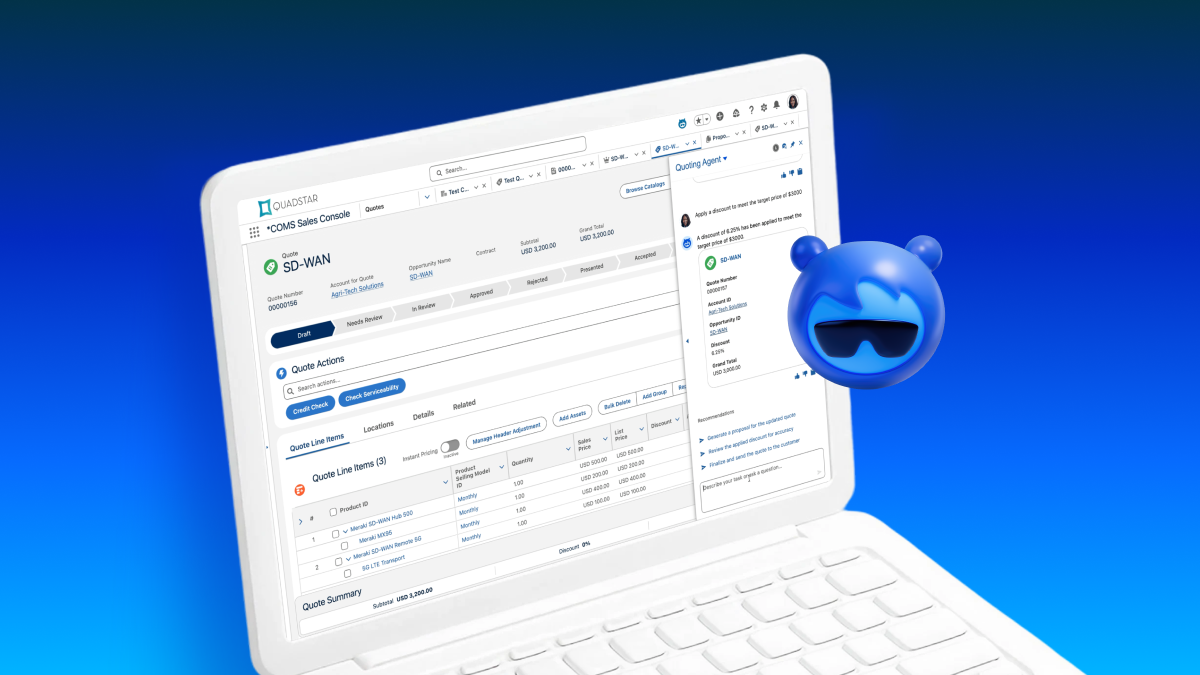
SAN FRANCISCO, Calif. - Salesforce has launched Headless 360, representing a strategic pivot toward making its customer-data and workflow platform available as underlying infrastructure for the burgeoning ecosystem of artificial intelligence agents. This new product offering exposes Salesforce's deep suite of enterprise capabilities without requiring every transaction or query to pass through a traditional application screen. By decoupling the back-end logic from the front-end presentation, the company is allowing autonomous agents to operate through conversational, embedded, and custom interfaces, fundamentally altering how its software is consumed in the workplace.
The launch comes at a critical juncture for Salesforce, as the enterprise software industry shifts away from traditional software-as-a-service models and toward agentic systems. Headless 360 includes more than 60 Model Context Protocol tools and over 30 coding skills, providing a robust library of resources for developers. These components give agents structured ways to retrieve customer data, apply complex business logic, and build on the company's existing platform. These tools are designed to serve as the building blocks for a new class of digital workers that can perform tasks with a degree of independence previously unavailable in standard cloud applications.
Market analysts have noted that the move is an effort to maintain Salesforce's position as the primary system of record in an era where users increasingly spend their time in integrated AI assistants rather than dedicated CRM windows. By offering an experience layer intended to keep interactions consistent across various surfaces, Salesforce is attempting to prevent its platform from becoming a siloed database. Instead, the company is positioning its workflow engine to be the invisible connective tissue that powers productivity across a variety of third-party environments and internal corporate dashboards.
Within the Headless 360 framework, the emphasis is heavily placed on the flexibility of the agent's environment. Rather than tying a workflow to a specific user interface, Salesforce is providing the means for capabilities to be called as modular services. This allows for a more fluid interaction model where a salesperson or service agent might trigger a Salesforce-backed automation from within a messaging app, a specialized data visualization tool, or a proprietary internal portal without ever opening a standard Salesforce tab.
The company is also placing significant emphasis on production controls for agent behavior, recognizing that the stakes for enterprise AI are substantially higher than those for consumer applications. Because customer records, sales processes, and service systems contain highly consequential and often sensitive data, the move toward autonomous agents introduces new layers of operational risk. Without strict guardrails, an AI agent could inadvertently expose private client information or execute unauthorized transactions that disrupt a company's financial records.
To mitigate these risks, Salesforce has integrated specific governance features into Headless 360. An agent working within this headless environment requires clearly defined permission boundaries, comprehensive audit records, and predictable rules governing which information it is allowed to access. Crucially, the system is built to determine which actions can be performed autonomously and which actions require explicit human approval before they are finalized. This human-in-the-loop philosophy is intended to provide the oversight necessary for large-scale enterprise adoption.
The headless approach responds to a fundamental change in enterprise software design that has been accelerated by the rapid advancement of large language models. As users begin to initiate more work through agents, established applications must evolve to expose their capabilities as callable services rather than pages built only for viewing by people. Salesforce is essentially betting that its data model and business rules will remain the essential operating layer of the modern corporation, even when the visible interface being used by the employee comes from another technology vendor entirely.
By adopting the Model Context Protocol, Salesforce is aligning itself with an emerging standard for how AI models interact with data sources. This standardization is intended to lower the barrier for developers who are currently struggling to bridge the gap between static databases and dynamic AI reasoning. The availability of over 30 coding skills further enhances this by providing pre-defined sets of instructions that agents can use to perform common tasks, such as updating a lead status or generating a service ticket, without requiring manual coding for every individual integration.
While the promise of Headless 360 is significant, the transition to such a decentralized model is not without its challenges. Industry observers have pointed out that while Headless 360 could make Salesforce easier to use inside new AI experiences, broad tool access inherently expands the attack and error surface of the enterprise network. Every new entry point for an agent is a potential vector for data leakage or system manipulation if the underlying security protocols are not rigorously maintained and frequently updated to meet new threats.
Security experts suggest that customers should begin their implementation of Headless 360 by establishing narrow permissions and limiting the initial scope of agent activity. It is critical for IT departments to test failure cases extensively, simulating what happens when an agent receives conflicting instructions or encounters corrupted data. Continuous monitoring of every external connection will be required to ensure that the autonomous agents are behaving within the bounds of corporate policy and that they are not making errors that could damage customer relationships.
The ultimate value of Headless 360 will depend on whether agents can complete useful, complex work without weakening the governance and reliability that enterprises have come to expect from a core system of record. If Salesforce can successfully prove that its headless infrastructure is both more flexible and just as secure as its traditional platform, it may successfully navigate the transition from a software provider to an infrastructure provider for the AI era. This shift would allow the company to capture value from AI interactions that occur outside of its own ecosystem.
Looking forward, the success of this initiative will likely be measured by the adoption rate among developers who are building bespoke AI agents for specific regional or vertical industries. As the competition among cloud giants intensifies, the ability to offer a platform that is both 'agent-ready' and strictly governed could become a primary differentiator. Salesforce's move to open its platform in this manner suggests a realization that the future of enterprise software is not a single destination, but a distributed network of automated services.
For the broader tech landscape, Headless 360 mirrors similar movements in the digital commerce and content management spaces, where 'headless' architectures have already become the standard for high-growth companies. By applying this logic to the CRM and enterprise workflow category, Salesforce is forcing its competitors to reconsider how they present their own tools to the next generation of AI-native developers. The focus on structured data retrieval and formalized logic is a clear sign that the company intends to lead the conversation regarding how AI agents are integrated into the modern corporate stack.
In the coming months, the technology community will be watching for the first major case studies of Headless 360 in high-compliance industries such as healthcare or finance. These sectors will provide the ultimate test for the production controls and audit capabilities Salesforce is touting. If these agents can be trusted to handle the most sensitive data in the world's most regulated industries, it will signal a major milestone in the maturity of enterprise AI and the efficacy of the headless delivery model.
Sources
Written by
The Company Wire
Inside the companies building what’s next. Reporting on startups, technology, funding and the people shaping them.