Stripe Gives AI Agents a Link Wallet for Controlled Purchases
The payments company is introducing scoped credentials and human review for software-driven spending.
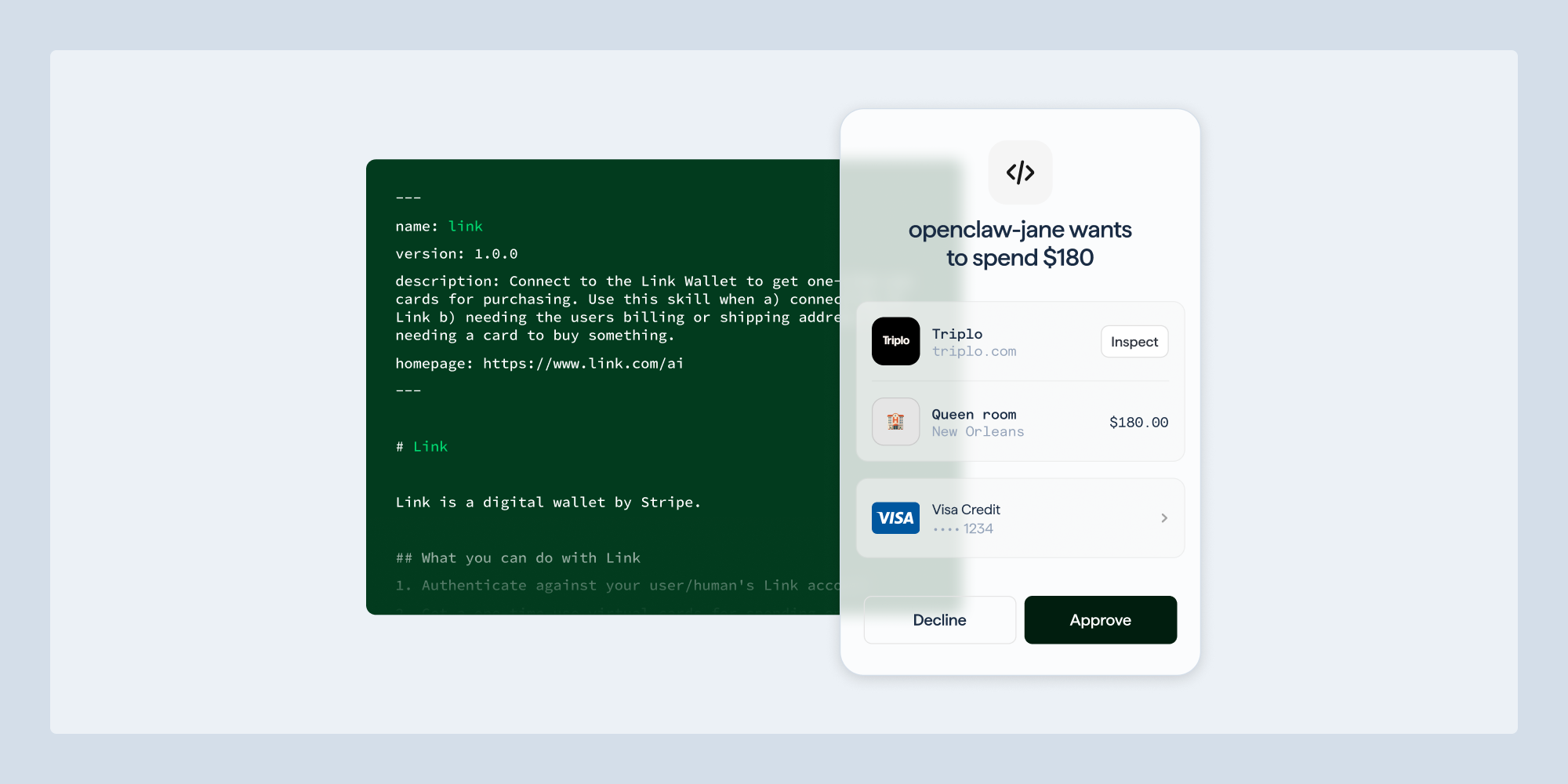
SAN FRANCISCO, Calif. - Financial infrastructure platform Stripe has introduced a specialized version of its Link wallet designed to allow artificial intelligence agents to conduct financial transactions on behalf of human users. The strategic product launch, announced during the company's annual Stripe Sessions conference, represents an effort to bridge the gap between autonomous software and the traditional global banking system. By providing software agents with programmatic access to approved payment methods, Stripe is positioning itself as the foundational layer for what many in the industry are beginning to describe as the agentic economy, where software does not just suggest purchases but executes them.
The new service allows an AI agent to receive either a one-time virtual card or a Shared Payment Token, which is backed by a credit card or bank account securely saved within the Link ecosystem. This architecture is designed to solve a significant hurdle in the adoption of autonomous AI: the risk of uncontrolled spending. By utilizing scoped credentials, the system applies strict limits around the specific merchant, the maximum transaction amount, the currency used, and even the duration for which the credential remains valid. This ensures that while an agent has the freedom to complete a task, it does so within a pre-defined sandbox that prevents financial runaway.
Central to this initial release is a rigorous oversight mechanism that balances automation with security. Stripe confirmed that at launch, every purchase initiated by an AI agent requires manual human review. This step gives the user a definitive opportunity to inspect the terms, verify the merchant, and confirm the specific price before the agent is permitted to complete the final checkout. While this introduces a moment of friction into an otherwise automated process, analysts note that such guardrails are essential for building the consumer trust necessary for agentic commerce to scale beyond early adopters.
Stripe is also extending its Stripe Issuing platform to cater specifically to businesses that want to provide their proprietary agents with controlled spending credentials. This corporate-facing feature allows developers to bake financial capabilities directly into their software products, enabling procurement bots or travel assistants to act as authorized purchasers. By treating the agent as a non-human employee or representative with limited spending power, Stripe is adapting its existing physical card-issuing technology for a purely digital and autonomous environment.
The move leverages a massive existing user base, as Stripe noted that Link currently serves more than 200 million consumers worldwide. This scale provides a significant head start for the new capability, as millions of users already have their payment information vaulted within the Link system. If merchants and developers move quickly to adopt agent-driven shopping and procurement models, Stripe’s established infrastructure could allow for a rapid transition from traditional click-to-pay checkouts to backend, agent-to-agent settlements.
The launch arrives at a critical juncture for both the fintech and AI sectors. Over the past year, massive investments have flowed into Large Language Models and agentic frameworks, yet the practical utility of these tools has often been limited by their inability to interact with the real world's financial systems. Most existing e-commerce platforms are built for human interaction, featuring CAPTCHAs and complex user interfaces that can stymie automated tools. Stripe's role here is one of a translator, converting a user’s natural language instruction into a standardized credential that conventional merchant systems are able to process and accept.
Industry context suggests that this move is a response to the growing 'agentic' trend identified by firms like Forrester, which has highlighted that Stripe is essentially rebuilding portions of its stack to accommodate a world where software acts as the primary consumer. As AI models become better at identifying the best deals or managing corporate supplies, the underlying plumbing of the internet must shift from being user-centric to being protocol-centric. Stripe’s scoped tokens are a technical answer to the question of how to grant power to a bot without granting it full access to a user's entire bank balance.
Payment authorization remains the most critical test for this technology. For the agentic economy to function, users need a transparent interface to understand exactly what an agent is buying and when its approval expires. There are also significant questions regarding how refunds, disputes, and chargebacks will work when the initiator of the transaction was not a human. If an AI agent misunderstands a prompt and orders the wrong product, the legal and financial responsibility remains a complex area of debate that Stripe’s review-step seeks to mitigate in the short term.
The competitive landscape for this technology is intensifying as other fintech giants and niche startups explore similar 'wallet for agents' concepts. However, Stripe’s advantage lies in its dual-sided network of both consumers and millions of global merchants. By controlling both the wallet and the merchant integration in many cases, Stripe can facilitate a more seamless exchange of data and authorization than a third-party plugin could. The success of this initiative will largely depend on how many merchants are willing to allow non-human traffic through their storefronts, which have traditionally been guarded against bots.
Technically, the use of Shared Payment Tokens represents a shift toward more granular security. Unlike a traditional credit card number that can be reused indefinitely until it expires or is cancelled, these tokens can be restricted to a single session. This reduces the surface area for fraud, as even if a token were intercepted, it would be useless outside the specific parameters defined at the time of its creation. For developers, this means they can focus on building intelligent agent logic without having to take on the massive compliance and security burden of storing raw financial data.
Looking forward, the execution risks for Stripe involve the complexity of the user experience. As agents handle more frequent and complex purchases, the company must ensure that these controls remain understandable to the average person. If the notification system for human review becomes overwhelming or if the scoping parameters are too rigid to be useful, users may revert to manual purchasing. Stripe’s challenge is to make the oversight process as intelligent as the agent itself, perhaps eventually using AI to help vet the AI’s spending requests.
The expansion into agentic payments is a clear signal that Stripe views its future as more than just a payment processor for websites. It is positioning itself as a comprehensive operating system for internet commerce, capable of handling the demands of a new generation of autonomous participants. As the capability rolls out, the industry will be watching closely to see if 'agent-driven shopping' becomes a significant portion of Stripe's total payment volume or remains a niche feature for tech enthusiasts.
Ultimately, the success of the Link wallet for agents will be measured by its ability to disappear into the background. In an ideal implementation, a user could give a high-level command—such as 'reorganize my office within a $500 budget'—and the agent could handle the sourcing, price comparison, and final settlement with minimal intervention. By establishing these initial boundaries and human-in-the-loop requirements, Stripe is laying the groundwork for a future where the distinction between software and consumer continues to blur.
As developments continue, the feedback from early developer integrations at Stripe Sessions will be telling. The company's ability to iterate on the scoped credential model will determine if it can keep pace with the rapid evolution of AI agents. For now, the introduction of the Link agent wallet serves as a foundational step toward a more automated economy, providing the necessary controls to ensure that when software starts spending money, it does so with a human's explicit, if supervised, permission.
Sources
Written by
The Company Wire
Inside the companies building what’s next. Reporting on startups, technology, funding and the people shaping them.