REGENT Completes First Crewed Flight Test of Electric Viceroy Seaglider Prototype
The Rhode Island startup's 15,000-pound electric ground-effect craft completed a 30-second flight over Narragansett Bay as it prepares for full-rate commercial production.
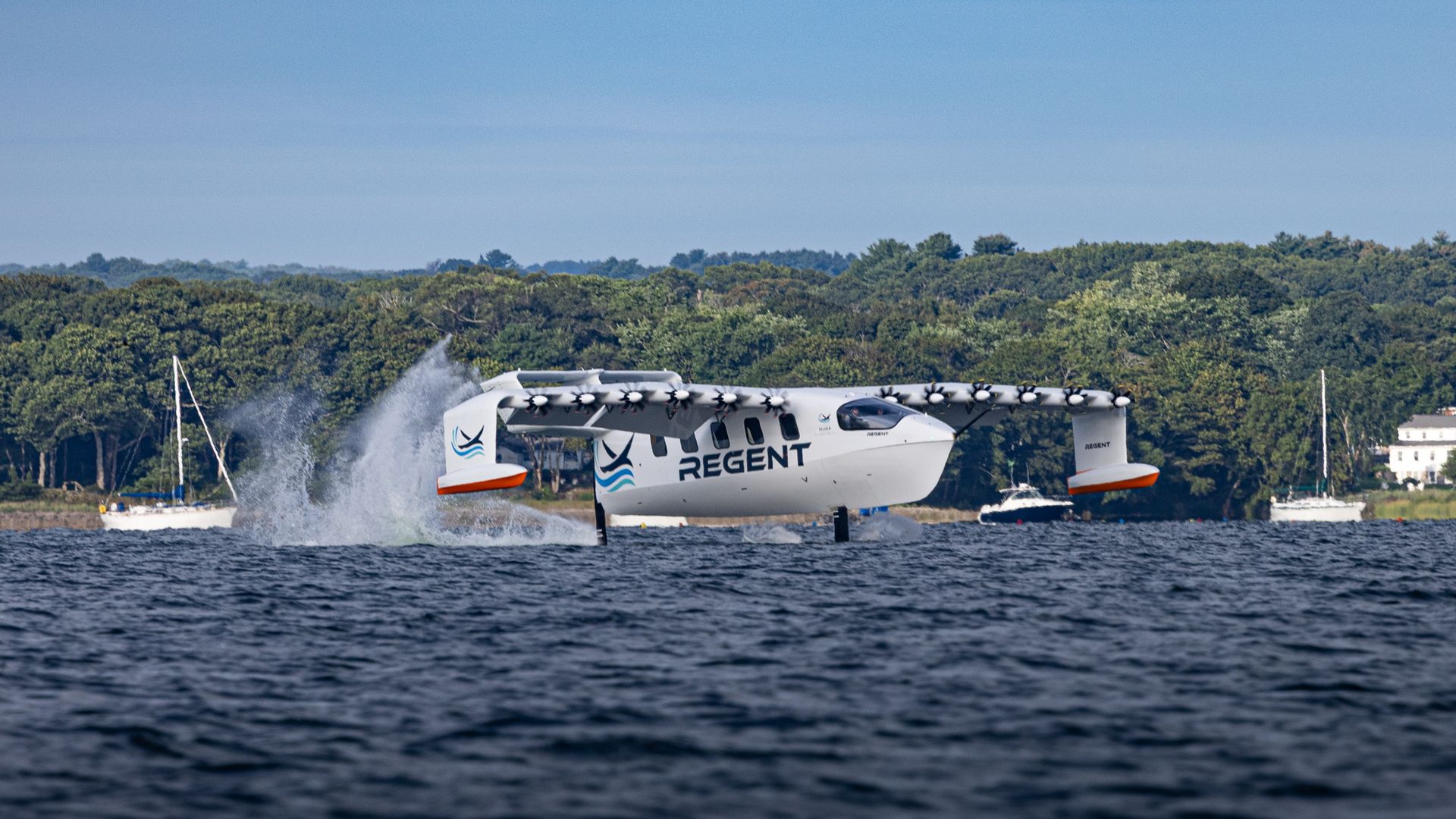
REGENT Craft has reached a key technical benchmark after executing the inaugural crewed test flight of its Viceroy Seaglider, an all-electric maritime aircraft designed to transform short-haul coastal transport, as first reported by TechRadar Pro. The trial occurred over Rhode Island's Narragansett Bay, where a prototype equipped with a two-person captain crew completed a 30-second flight, traveling a ground distance of 1,956 feet while maintaining a peak altitude of 33 feet above the water.
REGENT stated that the crewed demonstration marks the largest all-electric wing-in-ground-effect craft with human occupants to accomplish such a test. The Viceroy combines a maritime vessel hull, submerged hydrofoils, and aerodynamic wings, allowing the vehicle to shift between surface cruising and low-altitude flight. At low speeds, the craft rests directly on the water before hydrofoil blades elevate the hull above the surface, eventually allowing aerodynamic ground effect to carry the vessel within a single wingspan distance from the water.
Leadership at the aviation startup described the flight as a critical step toward commercial deployment. "This is the moment we have been envisioning and tirelessly pursuing for the past five and a half years: REGENT has successfully proven safe, efficient ground-effect flight," said Billy Thalheimer, co-founder and chief executive officer at REGENT. Co-founder and chief technology officer Mike Klinker added that the successful trial validates years of engineering and operational testing, giving the company the confidence required to transition the program into full-rate production.
The final production version of the Viceroy Seaglider is engineered to accommodate 12 passengers along with two crew members, featuring a maximum takeoff weight of 15,000 pounds. Designed for regional water-to-water transit, the electric vessel is targeted to reach operational flight speeds of up to 180 mph with a total range of 180 miles between coastal destinations. Inside the vessel, REGENT promises an upgraded passenger experience featuring large windows, generous legroom, and substantially lower cabin noise levels than standard fossil-fuel aircraft.
To facilitate operations within current maritime frameworks, the vehicle utilizes a proprietary three-layer digital control system that assists with flight stabilization while allowing traditional mariners to maneuver the vessel. Within United States territorial waters, operations will fall under the regulatory authority of the United States Coast Guard, and vessels will be captained by certified mariners. By leveraging existing dock and harbor facilities instead of requiring airport runway infrastructure, REGENT aims to target regional mobility markets serving the estimated 40 percent of the global population living in coastal communities.
The company has built significant commercial traction ahead of its initial deliveries, accumulating pre-orders from operators across six continents and reserving its factory throughput across several upcoming production years. Earlier this year, REGENT secured an agreement with operator The Twenty Five for up to 60 Viceroy units, establishing the firm as the startup's primary U.S. launch partner. In tandem with commercial orders, REGENT is adapting the platform for military logistics, surveillance, and casualty evacuation under a $15 million development contract with the United States Marine Corps Warfighting Laboratory.
To support its manufacturing commitments, REGENT finished building a 255,000-square-foot production facility in Rhode Island in June, with initial assembly activities starting this year. The site is equipped to handle structural assembly, wing and hydrofoil mounting, high-voltage battery installation, avionics integration, and live water testing prior to commercial customer deliveries.
Sources
Written by
The Company Wire
Inside the companies building what’s next. Reporting on startups, technology, funding and the people shaping them.