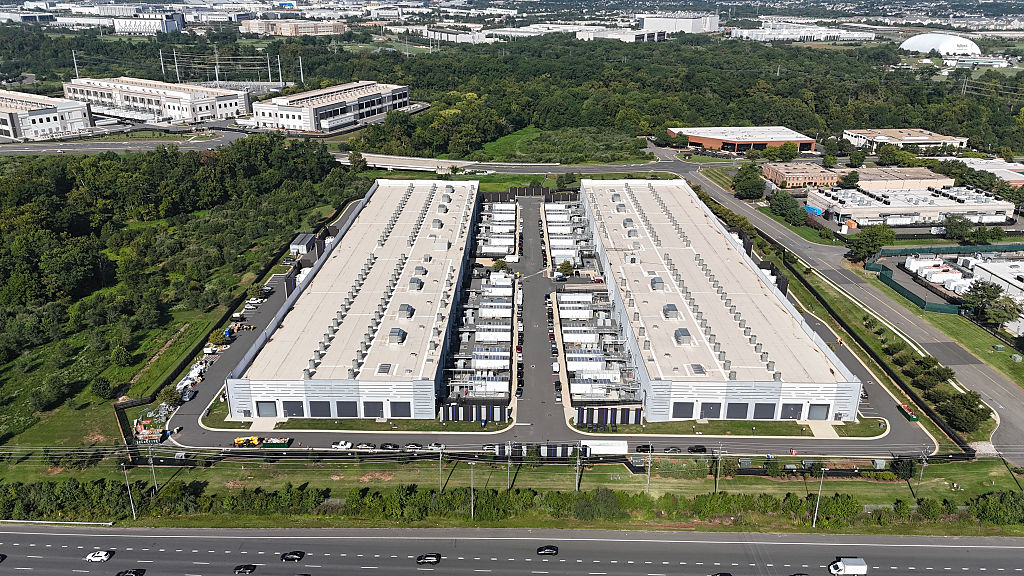
Amazon Commits $1 Billion Over Five Years to Counter Growing Public Opposition to Data Centers
The cloud giant is pledging investments in local education, infrastructure, and sustainability as it faces more than 100 proposed data center moratoriums across the U.S.

Amazon has committed $1 billion over the next five years to mitigate mounting public opposition to data center expansion across the United States. The capital deployment will target communities hosting Amazon facilities through investments in education, job training, local infrastructure improvements, and sustainability initiatives, as reported by The Register (https://www.theregister.com/systems/2026/10/02/shut-up-and-take-our-money-amazon-plows-1b-into-quashing-datacenter-dissent/5300914).
The initiative was detailed in an official Amazon blog post, where the cloud titan cautioned that local pushback threatens national economic and technological leadership. Amazon stated that local governments across the country are currently weighing more than 100 separate moratoriums on data center construction. The company warned that halting development could severely undermine U.S. competitiveness against foreign rivals, drawing a comparison between current digital infrastructure expansion and the national highway construction boom of the 1950s.
In its public push, Amazon attempted to address four common criticisms regarding data center expansion, classifying them as myths. Addressing water consumption concerns, Amazon claimed its facilities consume an average of 13,000 gallons of water per day—which it equated to the usage of 42 typical American households—rather than the 5 million gallons per day cited by critics. Amazon also asserted that U.S. golf courses consume 200 times more water than all of Amazon's data centers combined.
Evaporative cooling systems commonly used in data centers reduce direct electrical consumption by venting heat into the atmosphere, but they draw directly from local watersheds. Conversely, dry cooling and refrigerant-based methods conserve local water but consume substantially more electricity, which in turn relies on regional power generation methods that require water to operate turbines.
Amazon also pushed back against fears that large computing loads drive up residential electricity rates. The company argued that utility rate hikes stem from aging grid infrastructure, adding that responsible builders work directly with utilities to pay for the required capacity expansions. Industry analysts note, however, that if utilities build out expensive generation capacity for demand that fails to materialize, residential ratepayers risk absorbing the residual infrastructure costs.
Addressing concerns regarding air pollution from emergency backup systems, Amazon stated that its diesel generators almost never run and operate under strict regulatory permitting limits. Backup and temporary power solutions have increasingly generated community resistance across the industry, particularly in power-constrained regions where facilities require supplemental power generation.
Finally, Amazon pointed to the local economic benefits of its investments, stating that data center operators frequently become the single largest taxpayer in a municipality. The company noted that first-year upfront tax payments can surpass entire municipal budgets, highlighting an estimated $3 billion in total local taxes projected for St. Joseph County, Indiana. The $1 billion five-year community spending plan highlights the growing political and infrastructural headwinds confronting major cloud providers as they scale physical capacity.
Sources
Written by
The Company Wire
Inside the companies building what’s next. Reporting on startups, technology, funding and the people shaping them.