Australian Engineers Build Cyborg Cockroaches for Urban Search and Rescue
Researchers at the University of Queensland and UNSW have equipped live insects with cameras and micro-injectors to assist disaster victims trapped in debris.
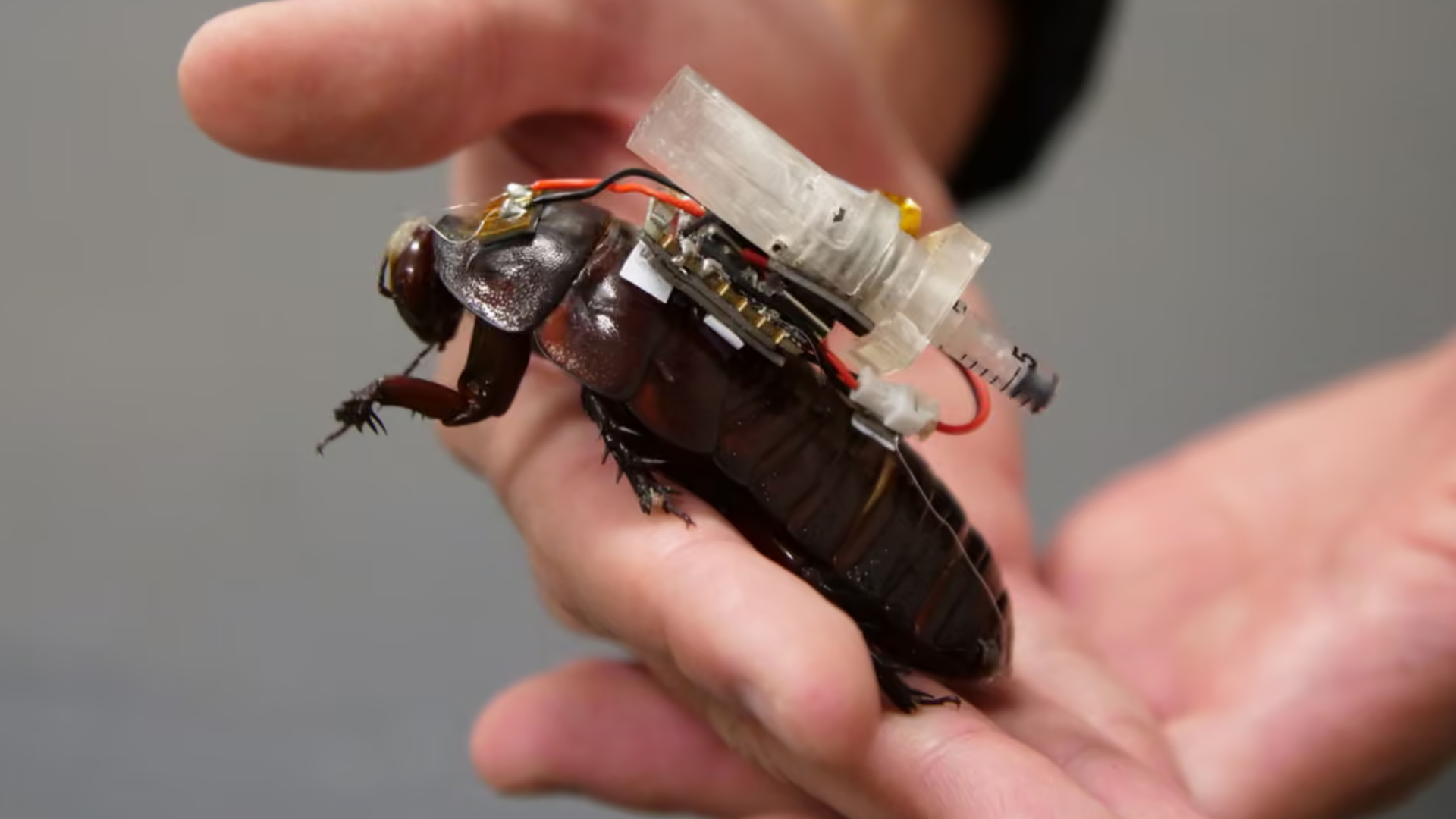
Australian engineering teams have developed a novel bio-robotic technology platform by integrating live insects with miniaturized electronic components, presenting a novel operational framework for search and rescue missions following natural disasters. The collaborative project, conducted by researchers at the University of Queensland and the University of New South Wales (UNSW), equips living cockroaches with specialized lightweight circuitry, micro-cameras, and automated injectors designed to penetrate hazardous debris and deliver critical care to trapped individuals, as first reported by TechRadar Pro.
The technological approach leverages the natural physical capabilities and extreme mobility of cockroaches, which can effortlessly navigate tight gaps, uneven rubble, and subterranean environments that remain inaccessible to conventional robotics or human response crews. During the preparation process, the insects are temporarily sedated to allow engineers to mount electrode harnesses and micro-electronic control systems onto their bodies. According to the research team, the cockroaches survived the installation procedure intact and showed no apparent signs of physical harm or long-term behavioral impairment, enabling them to retain their full biomechanical efficiency.
Highlighting the potential impact on emergency response operations, Thang Vo-Doan, a biorobotics engineer at the University of Queensland, emphasized how bio-augmented organisms could overcome persistent logistical barriers during search and rescue efforts. "Augmenting their natural biomechanics could allow these cyborg insects to deliver timely emergency assistance when direct access to people trapped in narrow, debris-filled spaces isn’t possible," Vo-Doan stated, pointing to the insects' ability to carry functional hardware into environments where traditional machinery cannot operate.
During rigorous laboratory trials, the researchers tested the practical performance of the hybrid systems across different phases of emergency intervention. In controlled test runs that isolated self-guided navigation toward a targeted location and close-range payload delivery, the cyborg cockroaches achieved a 95% success rate. However, when the research team measured the entire operational sequence—combining autonomous movement, precise physical alignment against a target, and the execution of a medical injection—the overall success rate dropped to 72% across all evaluated trials.
Ensuring steady navigation and accurate positioning under real-world disaster conditions remains a primary technical hurdle for the engineering team. Hai Nhan Le, a PhD candidate at the University of Queensland involved in the study, noted that managing the insect's direction while keeping it stable enough to execute precise physical interventions presents complex control challenges. "The cyborg insect has to navigate to the target, position itself accurately and remain stable enough to perform the injection," Le explained, underscoring the delicate balance between biological movement and electronic control.
In addition to engineering and biological constraints, the practical adoption of cyborg insects introduces significant public perception challenges. Le acknowledged that many individuals experience visceral discomfort when encountering large insects, which could complicate interactions with victims awaiting rescue. "A lot of people might not like the sight of a giant cockroach scurrying towards them, but if you're trapped in rubble or stuck in a cave and need help, it could make a real difference between life and death," Le noted, emphasizing that the potential to save lives outweighs initial psychological hesitation.
First responders have noted that the technology could significantly enhance the capabilities of emergency service units operating in high-risk zones. Tim Hassiotis, a superintendent at Fire and Rescue NSW, highlighted the potential for bio-robotic systems to extend the reach of urban search and rescue teams during major catastrophic events. "If cyborg insects can safely enter spaces we can't, locate casualties and ultimately help deliver emergency care, they could become another valuable tool in the future of urban search and rescue," Hassiotis said, pointing to the strategic value of remote bio-reconnaissance.
Looking toward future iterations of the technology, the research team aims to scale the system from individual bio-robots to coordinated multi-agent deployments. Vo-Doan outlined a long-term operational strategy involving specialized teams of cyborg insects, where individual units are assigned distinct supporting functions such as structural mapping, environmental sensing, or therapeutic delivery. "Hopefully, within the next five to 10 years, we could see cyborg insect rescue teams deployed to help people in real emergencies," Vo-Doan stated, setting a target timeline for real-world field readiness.
Transitioning the bio-robotic system from controlled university laboratories to active disaster zones will require further empirical testing, sustained financial investment, and regulatory approvals governing the deployment of bio-hybrid devices. Furthermore, achieving public comfort and institutional trust regarding the use of modified insects for medical and emergency tasks near vulnerable casualties will remain a key milestone as researchers work to transition the prototype technology into commercial and municipal emergency management toolkits.
Sources
Written by
The Company Wire
Inside the companies building what’s next. Reporting on startups, technology, funding and the people shaping them.