Bipartisan Opposition Emerges Against AI Data Center Construction
Across the United States, communities are uniting in opposition to the development of new AI data centers, transcending traditional political divides.
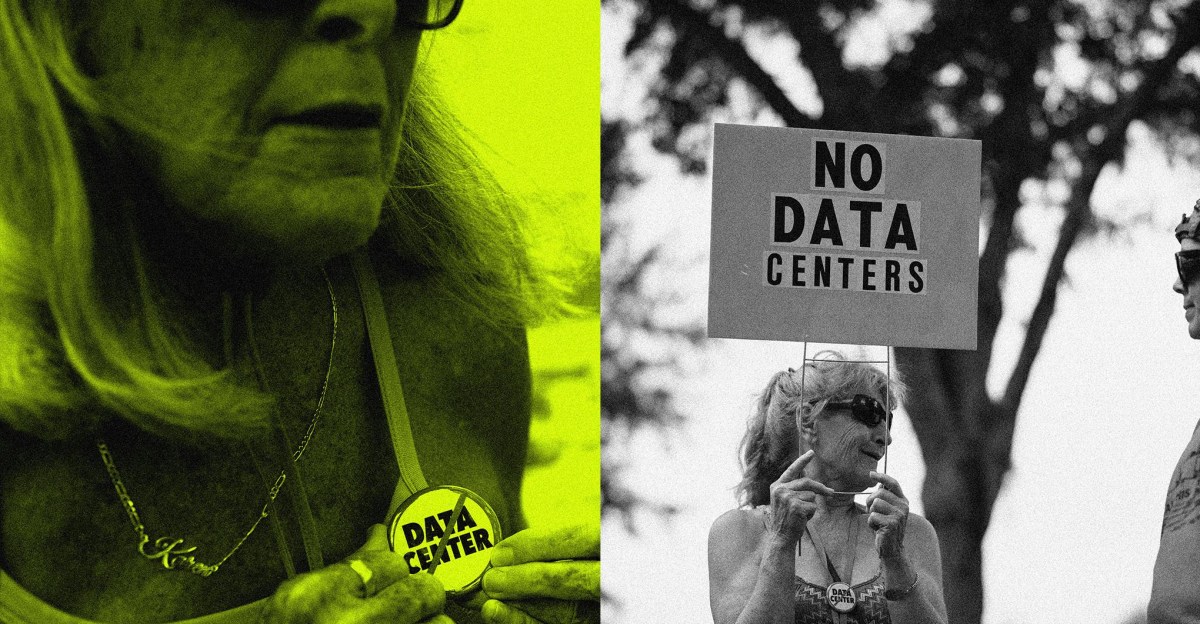
A notable increase in community opposition to artificial intelligence (AI) data center construction is unfolding across the United States. This resistance is characterized by a unique bipartisan alignment, bringing together individuals with diverse political affiliations who share common concerns regarding the rapid expansion of these facilities.
Gaby Del Valle, a policy reporter, recently highlighted a protest in Hernando County, Florida, where local residents, organized by a group called Humans First, voiced their discontent. This conservative grassroots movement, focused on challenging AI data center development, represents a broader, cross-spectrum opposition. Last month, the Hernando County Commission unanimously approved a year-long moratorium on new data center construction, reflecting the community's unified stance.
The core of this backlash stems from localized environmental and social anxieties. In Florida, residents have expressed concerns about the suitability of data centers in a humid climate, given their significant cooling requirements. Worries about groundwater contamination, particularly from per- and polyfluoroalkyl substances (PFAS), are also prevalent. Conversely, communities in arid regions like Arizona question the logic of building water-intensive data centers in dry environments, underscoring a consistent theme: each community finds specific, local reasons to oppose such developments.
Observers note that this opposition diverges from typical political alignments. The protests do not neatly fit into traditional left-right cultural divides. The founder of Humans First, a former Tea Party organizer, points to a populist-technocrat schism rather than a strict ideological one. While some conferences promote a pro-AI and pro-nuclear stance across the political center, populist elements on both the left and right remain deeply skeptical of technological expansion.
Data centers, due to their large scale and extensive infrastructure demands, often become focal points for various community fears. These can range from concerns about 5G technology and potential foreign government interference to a general sense of lacking control over rapidly advancing technologies. The tangible nature of these construction projects provides a visible target for collective action, allowing citizens to directly address their grievances at local government meetings.
Misinformation can also play a role in amplifying these concerns. While scientific understanding of data center resource consumption, such as water usage, continues to evolve, anecdotal claims and rumors, often spread via social media, can contribute to public apprehension. One example cited was a farmer's unverified claim of stillborn cattle near data centers, which gained traction online.
Beyond environmental impacts, a significant driver of public disapproval is the perception of AI's societal effects. Many protesters view data centers as infrastructure supporting a rise in perceived low-quality AI-generated content and the potential for job displacement. Some communities also associate data centers with larger corporations involved in controversial activities, such as Amazon Web Services' alleged role in surveillance and deportation processes through its non-sexy infrastructure, as raised by residents in Tucson.
The concerns transcend partisan lines in various ways. Both conservative and liberal communities express worries about job losses due to AI, particularly as they recognize that data centers, despite initial construction booms, do not generate a substantial number of long-term jobs. For example, a rural community might object to a data center as an unsightly blight on their landscape, a sentiment that cuts across traditional political leanings. Similarly, fears about the fracturing of social bonds by AI technology resonate with individuals from different political backgrounds.
Ultimately, the growing bipartisan backlash against AI data centers reflects a broader societal unease with the trajectory of generative AI and large language models. The physical structures of data centers have become a tangible manifestation of these abstract fears, allowing communities to channel their discontent into organized protest and direct action against what they perceive as an undesirable technological future.
Sources
Written by
The Company Wire
Inside the companies building what’s next. Reporting on startups, technology, funding and the people shaping them.