Huawei Claims Complete Freedom From U.S. Tech in New Kirin 9050 Pro Silicon
The Chinese tech giant debuts its latest processor in the Mate XT 2, featuring a 3D-stacked LogicFolding architecture and zero American components.
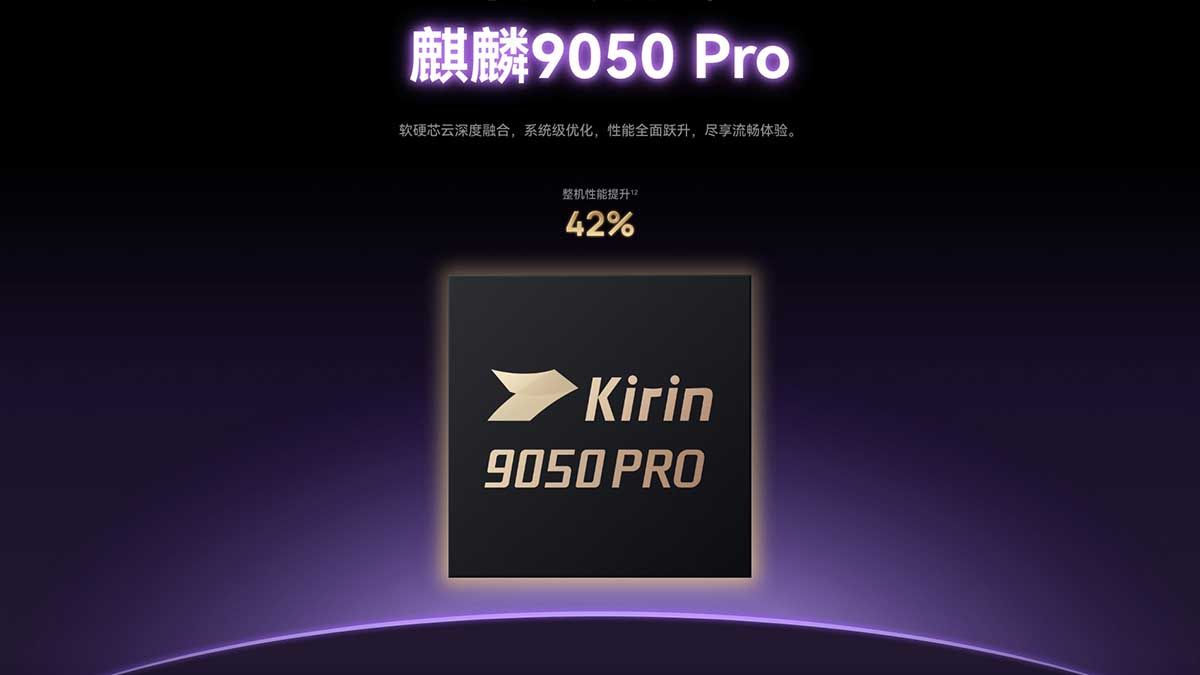
Huawei has introduced its latest mobile processor, the Kirin 9050 Pro, asserting that the component is manufactured completely free of U.S.-developed technology. As first reported by TechRadar Pro, the new silicon powers the Chinese technology giant's Mate XT 2, the third iteration in its tri-fold smartphone line. The device launched in China on Sept. 12, 2026, starting at 19,999 yuan (approximately $2,980).
The launch highlights Huawei's broader push to eliminate dependence on Western hardware amidst ongoing trade restrictions. Speaking at the product unveiling, Richard Yu, chairman of Huawei's consumer business group, described the Kirin 9050 Pro as the company's "most powerful Kirin chip ever," citing a 42 percent overall performance surge over the Kirin 9020 found in previous-generation Mate XT hardware.
Huawei claims the Kirin 9050 Pro delivers a 24 percent increase in peak single-core throughput and a 52 percent improvement in multi-core performance compared to the Kirin 9030 Pro, alongside a 142 percent gain in graphics rendering speed. The chip features a nine-core LinxiCore CPU running up to 3.1 GHz, a Maleoon GPU supporting hardware ray tracing, and an integrated Da Vinci NPU designed to run a 30-billion-parameter mixture-of-experts artificial intelligence model on-device.
Beyond performance metrics, the Kirin 9050 Pro marks the first commercial deployment of LogicFolding, a fabrication design presented in May by Huawei semiconductor chief He Tingbo at the IEEE ISCAS conference in Shanghai. Rather than relying on traditional transistor miniaturization, LogicFolding splits logic circuits across two active silicon layers bonded face-to-face. The layers connect via roughly 50 million vertical interconnects at a 1.5-micrometer pitch, shortening signal travel distance to lower operating voltage while boosting density.
Huawei refrained from specifying the exact manufacturing process node used for the Kirin 9050 Pro. Insights into the firm's fabrication pipeline stem from earlier hardware teardowns, including a June 2026 report by research firm SemiAnalysis that analyzed the chip's predecessor. That study identified Semiconductor Manufacturing International Corporation's (SMIC) third-generation 7nm process, known as N+3, which achieved roughly 113 million transistors per square millimeter without using extreme ultraviolet (EUV) lithography systems.
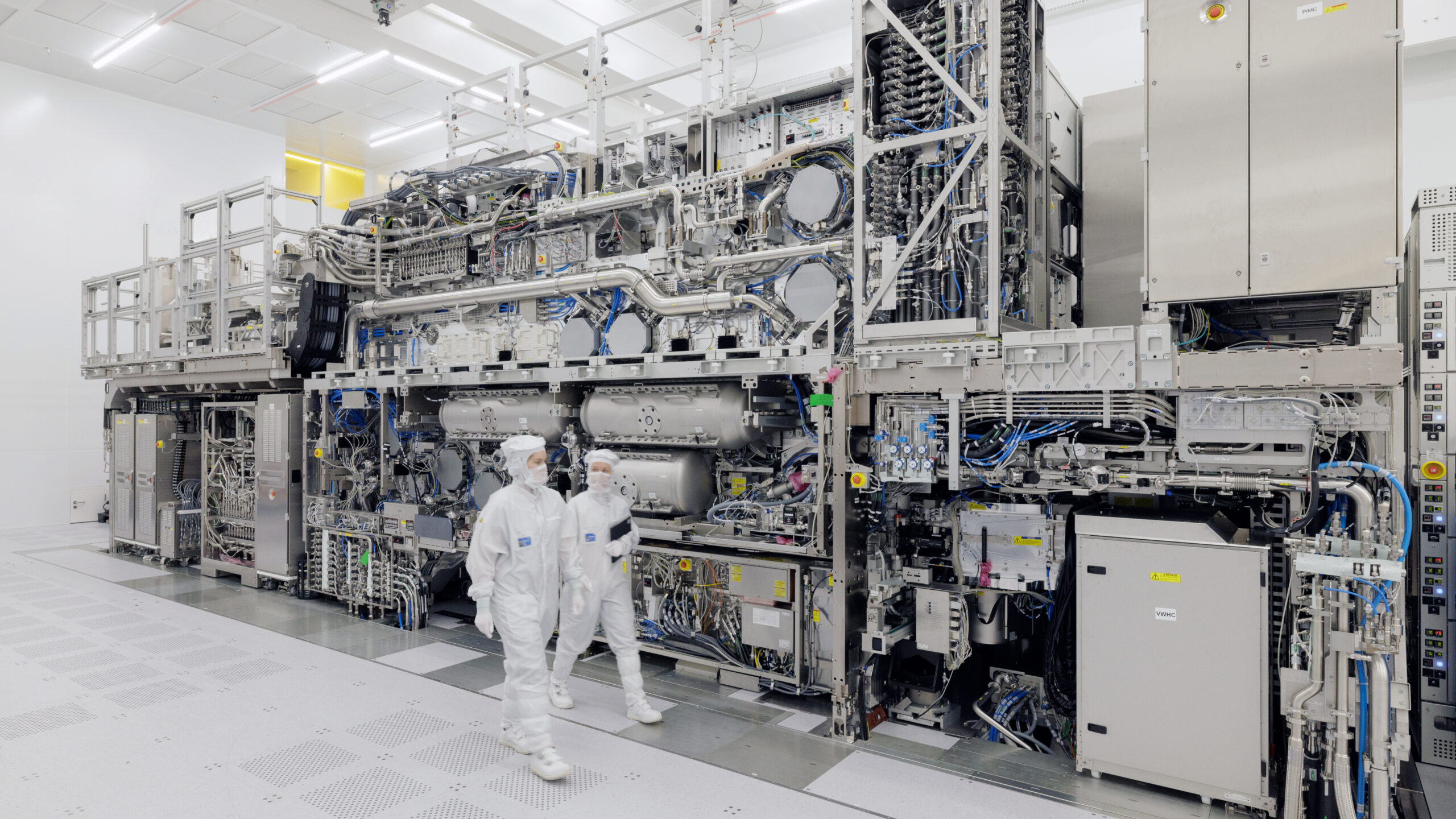
Industry analysts point out that while Huawei has reduced direct reliance on foreign suppliers, removing non-Chinese technology from the entire supply chain remains difficult. SMIC's advanced production lines continue to utilize deep ultraviolet immersion lithography equipment from Dutch manufacturer ASML. Additionally, reporting from Bloomberg in 2024 revealed that SMIC manufactured earlier Kirin 9000 processors using American equipment acquired from Applied Materials and Lam Research prior to the enforcement of U.S. export controls in October 2022.
The announcement marks another chapter in Huawei's long-standing effort to build an independent supply chain. In late 2019, an analysis by UBS and Fomalhaut Techno Solutions published by The Wall Street Journal revealed that the Mate 30 Pro contained no American-made components, leading Huawei cybersecurity officer John Suffolk to claim that the company's 5G systems were fully "America-free." However, the Kirin 990 chip inside that handset was built by Taiwan Semiconductor Manufacturing Company (TSMC) on an advanced EUV process before sanctions blocked access.
Supported by state backing, Huawei continues to narrow the technology gap with Western chipmakers faster than initial industry projections suggested. While all performance metrics for the Kirin 9050 Pro currently originate from internal company benchmarks rather than independent third-party testing, the chip represents a critical milestone in China's drive for domestic semiconductor self-reliance.
Sources
Written by
The Company Wire
Inside the companies building what’s next. Reporting on startups, technology, funding and the people shaping them.