Meta Releases Camera-Free Ray-Ban Audio Glasses for $349
The audio-only frames drop optical sensors in favor of redesigned speakers, traditional nose pads, and extended battery life.
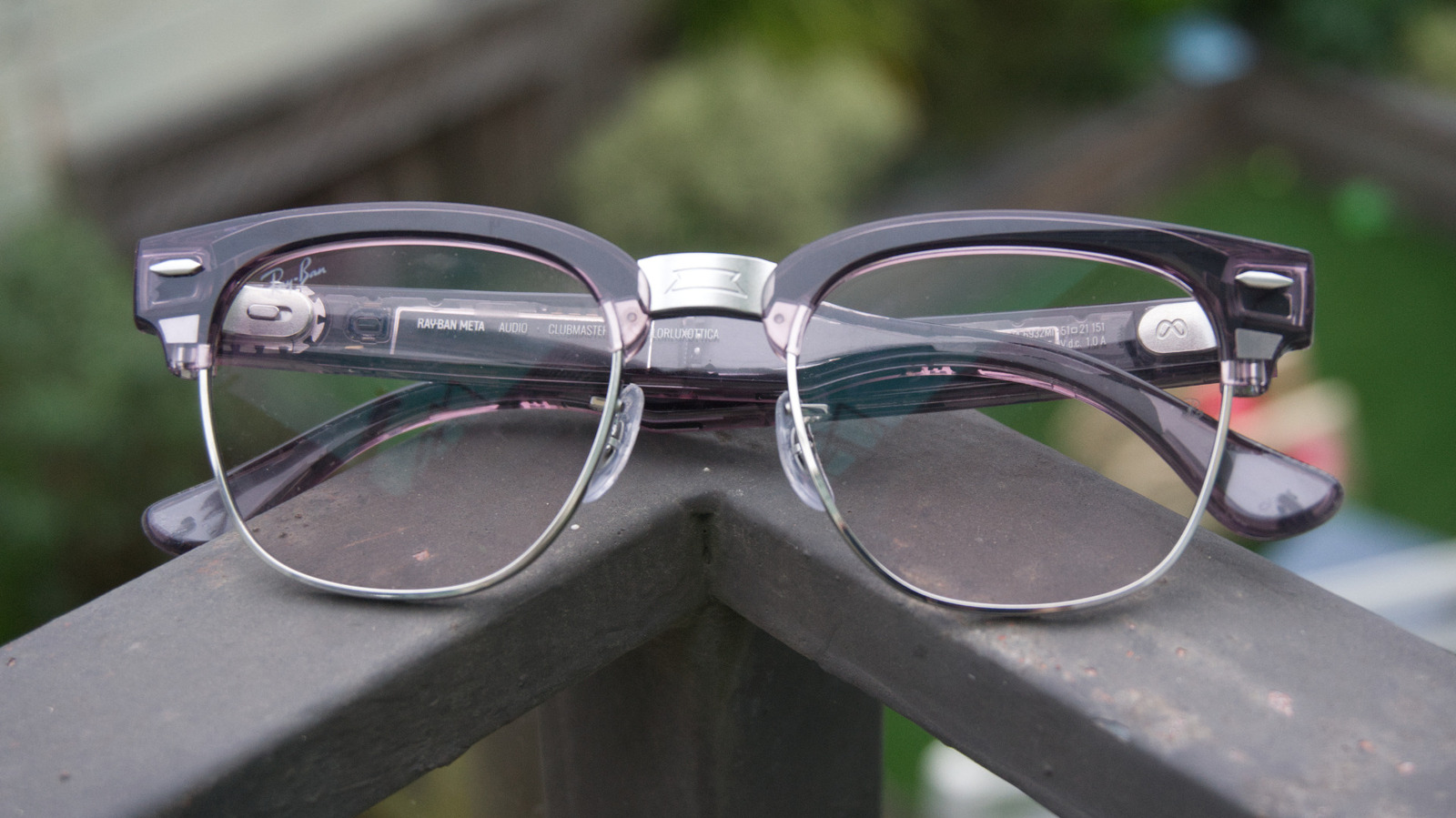
Meta's latest smart glasses eliminate onboard cameras entirely, shifting the hardware's focus to open-ear listening and voice assistance, according to a review by Engadget (https://www.engadget.com/2285337/ray-ban-meta-audio-glasses-review/). Priced at $349, the Ray-Ban Meta Audio frames aim to counter public backlash against camera-equipped eyewear while delivering improved physical comfort and battery longevity.
The camera-free frames are offered in two Ray-Ban styles: the Burbank and the Clubmaster. The Clubmaster weighs 47 grams, making it two grams lighter than the camera-equipped Ray-Ban Meta Optics. While select models retain transparent temple arms displaying internal circuitry, the front of the frames removes both camera lenses and external recording indicator lights. The right arm includes a capacitive touchpad for media controls and phone calls, an inward-facing notification light, and a physical action button.
To accommodate the slimmer design, Meta redesigned its acoustic architecture. Ming Hua, Meta's vice president of wearables, told Engadget that engineers rebuilt the speaker and microphone array specifically to fit the reduced frame profile. The audio hardware features open-ear directional speakers and six microphones, moving two microphones to the front of the frame—replacing the nose pad placement used on earlier models—while positioning four microphones along the temple arms.
Battery performance sees a notable improvement without the power demands of optical sensors. Meta rates the device for up to 12 hours of mixed use and up to six hours of continuous audio playback. In Engadget's testing, the glasses retained nearly 50 percent battery capacity after five hours of streaming audio and a one-hour phone call.
The glasses retain voice-based Meta AI capabilities, including real-time translation and walking navigation, and are slated to support Meta's upcoming AI agent, named Muse, when it rolls out in the coming months. However, the physical action button is currently limited to two shortcut options: triggering recommended music playlists or invoking Meta AI. Unlike other Meta eyewear models, the button cannot be configured to mute calls or trigger specific custom prompts.
While removing cameras eliminates covert video capture and prevents Meta from collecting surrounding visual data, broader privacy considerations remain. Meta stores voice recordings captured by the frames and does not permit users in the United States to opt out of audio data retention. Those recordings may be reviewed by trained personnel, though users can manually delete audio files through the Meta AI application.
Sources
Written by
The Company Wire
Inside the companies building what’s next. Reporting on startups, technology, funding and the people shaping them.