New Research Challenges Historical Perceptions of Dodo Intelligence
A recent study re-evaluates the dodo's cognitive abilities and behavior, suggesting it may have been unfairly characterized as unintelligent.
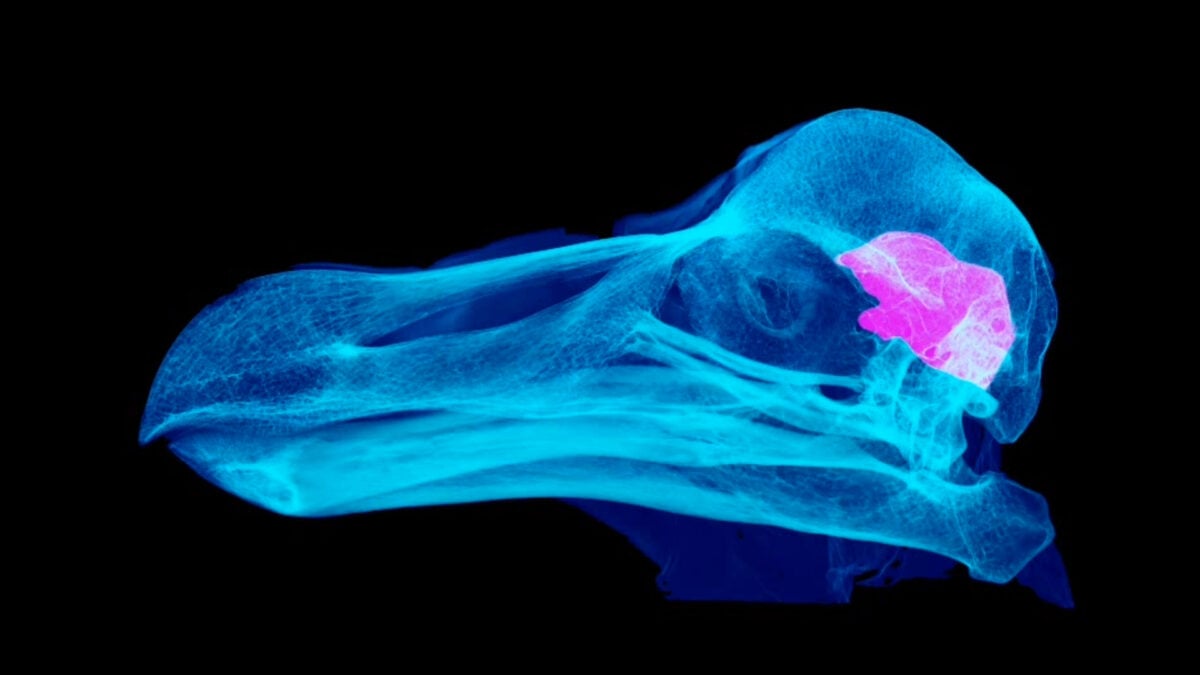
A recent scientific investigation into the brains of dodo birds suggests that the long-held perception of the species as unintelligent may be inaccurate. For centuries, the dodo, last seen by humans in 1662, has been widely regarded as a foolish creature, a reputation solidified by its scientific name, *Dodus ineptus*, which translates to 'inept and absurd.' However, new research indicates this characterization was likely unfair.
The study, published in the *Zoological Journal of the Linnean Society*, utilized advanced computed tomography (CT) scans on the only three entirely preserved dodo skulls known to exist. Researchers compared these scans with the brain structures of other bird species, particularly those within the pigeon family, to which the dodo belongs.
The findings revealed that the dodo's brain size, relative to its body, was comparable to other birds. This suggests there is no biological evidence to support the notion that dodos were inherently less intelligent than their avian relatives. Sara Citron, the study's lead author and a Ph.D. student at the University of Lethbridge in Canada, noted in a statement that the dodo's reputation for being 'silly or confused' likely stemmed from its trusting nature, which made it vulnerable to human hunters. Citron emphasized the injustice of labeling them 'stupid' for their naivety, implying they deserved their extinction.
Historical accounts from the late 17th century often depicted dodos as 'fat, slow' birds lumbering around Mauritius, with some suggesting they 'almost will[ed] their own extinction,' according to an explainer by the U.K. Natural History Museum. It was not until 1848 that the dodo received an official scientific description. However, subsequent research has indicated that much of the early dodo literature misrepresented the bird's true physiology and behavior. Modern scanning techniques have also suggested dodos were likely taller, leaner, and faster than previously believed.
Evolutionary biologist Beth Shapiro of the University of California-Santa Cruz, in a 2025 interview with the BBC, explained that dodos likely evolved in an environment devoid of predators. She suggested that the animals introduced by early sailors were the primary factor that exposed dodos to new dangers, ultimately leading to their demise.
For the current study, the research team reconstructed the dodo brain using high-resolution CT scans of the preserved skeletal remains. From this data, they measured physical structures associated with vision, smell, and cognitive functions. Comparing these with pigeon brains, Citron and co-authors Vera Weisbecker and Andrew Iwaniuk, an evolutionary biologist at Flinders University in Australia and a neuroscientist at Lethbridge, respectively, noted in a column for The Conversation that the dodo's forebrain, linked to cognition and memory, was proportionally similar to other pigeons.
While the dodo may not have been an avian genius, the research provides no evidence to suggest it was less intelligent than other pigeons, known for their own cognitive abilities. Regarding the dodo's trusting behavior, Citron explained in her statement that these 'gentle animals were possibly quite social' and 'used to a life without predators.'
The analysis also identified smaller optic lobes, a characteristic observed in nocturnal birds such as owls and kiwis. Although studying the dodo's retina is not currently possible, this finding suggests dodos might have been active during dawn, dusk, or even at night, distinguishing them from most modern pigeons and doves. Citron posited that this adaptation could have offered them a competitive advantage. However, the researchers acknowledged in their column that these conclusions remain 'speculative,' as the absence of preserved dodo brains necessitates inferring sensory structures from skull and cavity measurements. Despite this, the team's paper noted that biologists may 'never be able to determine the dodo’s sensory abilities with certainty' but asserted the importance of continued investigation.
Ultimately, the research indicates that the dodo's 'sensory world was not what we once assumed,' as stated by the team in their column. These findings challenge centuries of misconceptions, prompting a re-evaluation of how this iconic extinct species is understood.
Sources
Written by
The Company Wire
Inside the companies building what’s next. Reporting on startups, technology, funding and the people shaping them.