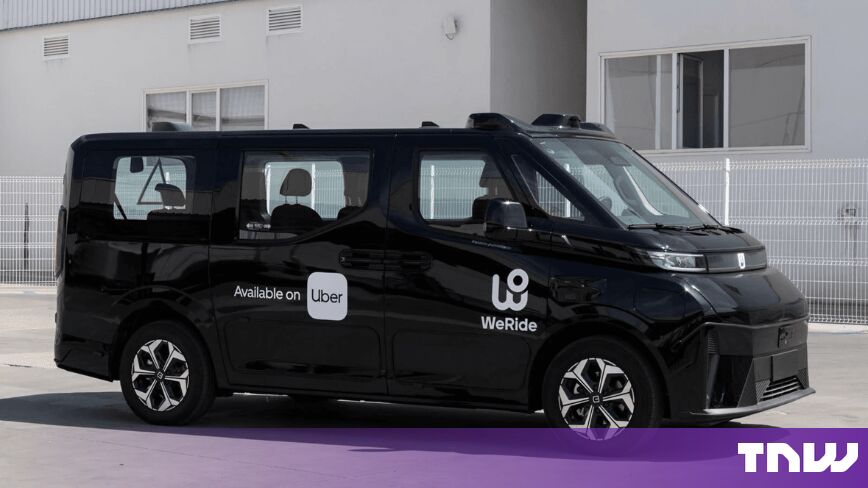
Pony.ai and Verne Launch Europe's First Fully Driverless Robotaxi Rides in Croatia
The service connects Zagreb's business district and airport via Uber, but European regulatory caps pose hurdles for wider scaling.

Pony.ai and Croatian mobility company Verne have initiated fully driverless passenger rides in Zagreb, marking the first completely driver-free robotaxi service operating on public roads in Europe. Booked through the Uber application, the service operates along a 22-kilometer route connecting Verne's corporate headquarters, a central business district, and Zagreb’s international airport.
The deployment follows a phased rollout in the Croatian capital earlier this year, as reported by The Next Web. In April, the partnership launched commercial robotaxis with trained safety operators on board, followed by Uber integration featuring safety drivers in August. The latest phase removes the human driver entirely, relying on Pony.ai’s seventh-generation autonomous driving software to handle steering, braking, and acceleration, while Verne supervises operations remotely.
The underlying hardware consists of an Arcfox Alpha T5 crossover equipped with a 360-degree redundant sensor suite. According to details reported by InsideEVs, Verne modified the interior layout by removing the front passenger seat to accommodate luggage and mounting a large display screen in its place.
The launch represents a key step in a broader European expansion strategy. In August, Pony.ai and Uber announced plans to deploy more than 2,000 driverless vehicles across five European cities, including Zagreb. Verne Chief Executive Marko Pejkovic characterized the driverless passenger rides as "a major milestone on the path to scaling autonomous mobility in Europe." Pony.ai already runs fully autonomous driverless services across four cities in China.
Despite expansion ambitions, regulatory frameworks present a major obstacle to scaling automated fleets across the European Union. Under Article 41 of the EU’s type-approval framework, fully automated vehicles can only secure continent-wide clearance through a small-series exemption, which Germany's Federal Motor Transport Authority (KBA) caps at 1,500 units annually across the entire union. Although the European Commission adjusted limits in March, the change applied exclusively to automated parking features rather than full robotaxi operations.
As a result, autonomous vehicle operators must secure individual approvals from national authorities, restricting legal operations within specific borders. The current deployment in Zagreb operates strictly under Croatian national authorization, meaning regulatory clearance does not extend into neighboring EU member states.
The regulatory patchwork has led to fragmented deployments across the continent. In the United Kingdom, Uber partnered with autonomous driving developer Wayve to launch a robotaxi service on Sept. 3, though Transport for London approved the vehicles strictly as private hire cars, requiring a licensed safety driver behind the wheel at all times. Meanwhile, Chinese autonomous driving firm WeRide announced plans to expand into Denmark alongside GreenMobility in 2027, which will mark its sixth European market.
Sources
Written by
The Company Wire
Inside the companies building what’s next. Reporting on startups, technology, funding and the people shaping them.