Satellite Imagery Reveals China Constructing Specialized Mothership for Autonomous Submarines
Open-source intelligence indicates the 670-foot surface vessel is being assembled in Shanghai to deploy and service extra-large uncrewed submersibles.
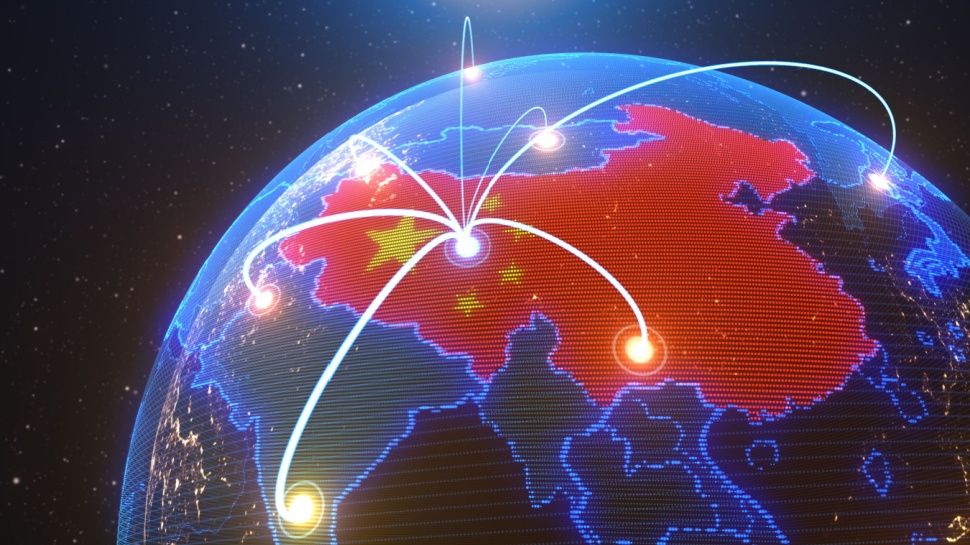
Satellite imagery analysis indicates that China is constructing a massive surface mothership specialized for launching, recovering, and maintaining autonomous submersibles at sea, as reported by TechRadar Pro (https://www.techradar.com/pro/china-is-readying-the-worlds-first-giant-submarine-uav-carrier-built-with-a-1115ft-dock-the-unnamed-mothership-could-be-longer-and-bigger-than-ww2-light-aircraft-carriers-and-carry-148ft-underwater-drones). The vessel, currently under assembly in Shanghai, appears to represent a new class of naval ship built specifically around extra-large uncrewed underwater vehicles.
The ship's construction was initially highlighted on September 13, 2026, by Japanese open-source intelligence researcher KAROTASU. Maritime analyst H I Sutton subsequently reviewed the imagery on September 15 for defense outlet Naval News, confirming the presence of the unnamed hull at the Hudong-Zhonghua shipyard in Shanghai.
Beijing has not officially acknowledged the existence of the vessel or disclosed details regarding its development. As a result, the vessel currently lacks an official designation, published performance specifications, or confirmation of which branch of the Chinese military will ultimately operate it.
The hull sits within a dry dock measuring approximately 340 meters (1,115 feet) in length. Estimates from KAROTASU indicate that the vessel itself measures roughly 200 meters (656 feet) long by 30 meters (98 feet) wide. Intelligence imagery also shows a second, unidentified structure being constructed alongside the main hull within the same dock facility.
A separate evaluation by Defence Security Asia, based on satellite data captured on September 15, estimates the vessel's dimensions at approximately 205 meters by 27 meters (roughly 672 feet long). These dimensions make the mothership larger than World War II-era U.S. Navy Independence-class light aircraft carriers, though about 200 to 230 feet shorter than Essex-class fleet carriers, which measured 872 to 888 feet and displaced 36,380 long tons at full operational load.
Defense analysts indicate the vessel's primary role is to act as a mobile base for extra-extra-large uncrewed underwater vehicles (XXLUUVs). These autonomous submersibles range between 35 and 45 meters (115 to 148 feet) in length—comparable in scale to conventional small crewed submarines—and are projected to possess an operational range of up to 10,000 nautical miles, based on designs previously displayed by Chinese naval defense contractors.
Prior to the construction of this dedicated surface ship, Chinese military researchers tested autonomous underwater drones primarily using specialized floating docks. While those floating structures concealed submersibles in harbor and towed them to sea for testing, they relied heavily on favorable weather conditions, predictable shoreline infrastructure, and external towing support, which constrained the range and field servicing of the drones.
The newly identified surface vessel addresses those logistical limitations by incorporating an enclosed internal hangar for servicing, repairing, and housing autonomous submersibles directly at sea. By providing sustained offshore maintenance and rapid deployment capabilities, the specialized mothership marks a significant expansion in China's autonomous naval hardware capabilities.
Sources
Written by
The Company Wire
Inside the companies building what’s next. Reporting on startups, technology, funding and the people shaping them.