Software-Defined Vehicles Face Longevity Concerns as Automakers Omit Update Commitments
While smartphones face strict update regulations, automakers offer no guaranteed lifespan for processing hardware and driver-assist software.
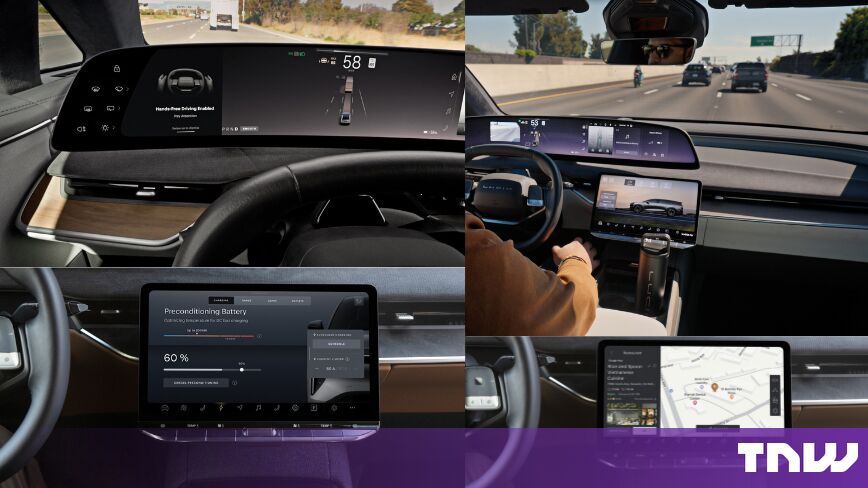
As automakers transition toward software-defined architectures, questions are emerging about how long connected vehicles will remain functional, according to analysis first reported by The Next Web. While figures from Mobility Global show that the average American automobile stays on the road for 12.8 years and carries a purchase price approaching $50,000, vehicle manufacturers have refrained from committing to long-term software support schedules.
The friction between legacy vehicle processing hardware and modern software updates is already creating operational challenges across the industry. Sam Fiorani, an analyst at AutoForecastSolutions, noted that forecasters cannot yet determine the operational lifespan of software-dependent cars, as older hardware platforms struggle to process newer software builds. Tesla, which stated in 2016 that all its production models possessed the hardware required for autonomous operation, faces these exact limits. Chief Executive Elon Musk reiterated in 2019 that the company's Hardware 3 computer would achieve unsupervised Full Self-Driving (FSD). However, Musk acknowledged in April that those vehicles require newer computing units and updated cameras for unsupervised FSD, offering eligible owners hardware swaps or trade-in discounts. Tesla did not respond to CNBC's inquiry regarding the matter.
Rivian is similarly dealing with customer litigation linked to hardware capabilities. A class action lawsuit brought in June by owners of first-generation R1T and R1S models asserts that software patches cannot deliver the advertised hands-free, eyes-off driving features without physical hardware upgrades, which were subsequently included on second-generation vehicles. Speaking to CNBC, Rivian Chief Software Officer Wassym Bensaid emphasized that software-defined vehicles maintain ongoing freshness by design. He explained that Rivian equips its cars with extra computing capacity to accommodate seven to 10 years of software enhancements, while committing to security and safety updates indefinitely.
The risk of technological obsolescence has previously impacted vehicle owners without any modification to automobile software. When telecommunications provider AT&T turned off its 3G network in 2022, millions of connected cars lost access to automatic emergency notification tools, navigation features, and streaming services. Although the affected vehicles remained mechanically drivable, consumers lost connected functions they had paid for due to third-party infrastructure changes.
The lack of defined support windows for automobiles stands in contrast to regulatory requirements for smaller consumer electronics. Under European Union ecodesign regulations effective June 20, 2025, smartphones and mobile tablets must receive at least five years of operating system and security patches, along with seven years of replacement parts availability and repairability labeling. Germany had pushed for a seven-year software support mandate. While international rules exist for automotive software—specifically United Nations regulations R155 for cybersecurity and R156 for software update management, which became mandatory for all new vehicles sold in the EU in July 2024—they regulate software management processes without specifying a minimum number of years automakers must issue feature updates.
Automotive regulations already carry significant commercial weight. Porsche withdrew its 718 Boxster and Cayman models from sale in the EU in 2024 rather than redesigning their electrical architectures to satisfy R155 rules. J.D. Power analyst Alex Yurchenko expects the absence of support benchmarks to create a secondary market divergence between supported and unsupported vehicles, with continuously updated cars retaining higher resale values. Further, research from Geotab and Recurrent indicates that electric vehicle batteries are proving more durable than expected, leaving onboard processing hardware as the main bottleneck in vehicle longevity.
The software platforms in question carry varying feature sets and pricing models. Road tests conducted for CNBC by reporter Michael Wayland showed Tesla's vision-based Full Self-Driving system managing nearly 200 miles across Michigan—including interchanges, roundabouts, and parallel parking—while Rivian's driver-assist platform identifies traffic signals without acting on them. Rivian charges $49.99 monthly or a $2,500 one-time fee for life, compared to $39.99 monthly for General Motors' Super Cruise and $99 monthly for Tesla FSD. Rivian relies on more than 10 cameras, five radar sensors, and map data—with plans to add lidar to its R2 model early next year—whereas Tesla relies exclusively on cameras. Federal safety regulators at NHTSA escalated an investigation into Tesla's FSD system following multiple accidents, including a fatal crash during low-visibility conditions.
With average new electric vehicle prices reaching $56,126 in July—the first price increase recorded in 2026—the long-term viability of software subscriptions remains central to vehicle ownership costs. Industry experts note that no vehicle manufacturer currently publishes binding timelines for feature updates. Telemetry analyst Sam Abuelsamid suggested that if automakers decide to discontinue software maintenance for older platforms, regulators should mandate that they release the underlying software code to independent developers to ensure continued vehicle maintenance.
Sources
Written by
The Company Wire
Inside the companies building what’s next. Reporting on startups, technology, funding and the people shaping them.