Solar Roofs Offer Marginal Driving Range as Automakers Confront Physics Limits
Rooftop panels generate only a few miles of charge on standard electric cars, pushing designers toward deployable hardware and ultra-light chassis.
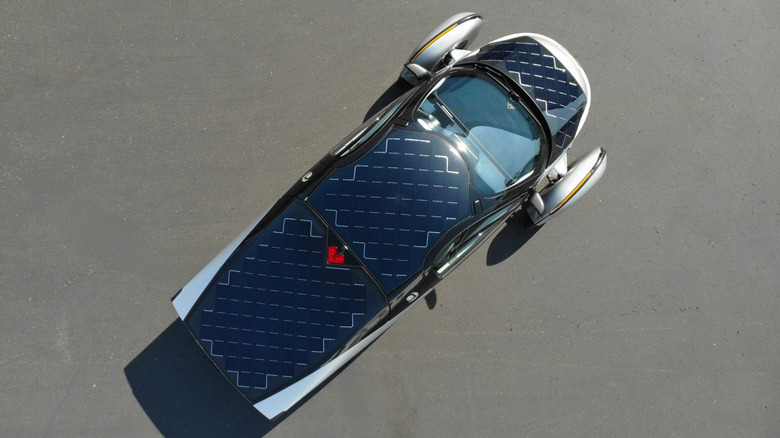
Integrating solar panels directly into passenger electric vehicles yields only marginal driving range, creating an engineering bottleneck that is pushing automakers toward deployable panels and hyper-efficient vehicle designs, according to an analysis published by Engadget (https://www.engadget.com/2300413/biggest-problem-directly-powering-evs-with-solar-roofs/).
While rooftop solar arrays are often envisioned as a route to plug-free driving, the central hurdle is the imbalance between usable vehicle surface area and the electrical consumption of standard automobiles. According to Environmental Protection Agency estimates, the median model-year 2025 electric vehicle consumes roughly 39 kilowatt-hours per 100 miles, which translates to 390 watt-hours per mile.
At that baseline consumption rate, rooftop generation yields minor returns. A 400-watt solar array covering roughly 22 square feet of vehicle roof would produce approximately 1.6 kilowatt-hours of electricity across four hours of operating at peak rated output. Before factoring in charging and power conversion losses, that output provides roughly four miles of driving range under optimal conditions. Everyday variables such as cloud cover, ambient heat, shadowing, and suboptimal parking angles further degrade output.
Automakers face severe diminishing returns when attempting to expand panel area on passenger cars. Additional solar hardware adds curb weight, requiring traction motors to draw more energy, while external mounting hardware compromises vehicle aerodynamics and increases aerodynamic drag. Flush-mounted roof panels avoid aerodynamic penalties but remain constrained by standard vehicle roof dimensions. By contrast, recreational vehicles like the Winnebago Revel Sport make effective use of 210-watt solar arrays because the generated energy powers auxiliary components such as lights, fans, and refrigerators rather than propulsion.
To increase solar harvesting area without compromising highway aerodynamics, some manufacturers are testing deployable mechanisms. Nissan developed a prototype called the Ao-Solar Extender for its Sakura electric minicar. The system generates up to 300 watts while driving with the secondary hardware retracted, but slides an extra panel over the windshield while parked to raise peak output to 500 watts.
Other vehicle developers are trying to make solar propulsion viable by drastically cutting consumption. City car builder Squad Mobility pairs a 250-watt roof panel with a lightweight vehicle weighing 794 pounds. Meanwhile, Aptera has designed a two-seat, three-wheeled vehicle featuring a teardrop profile and lightweight composite construction. Aptera is targeting energy consumption of 100 watt-hours per mile, roughly one-fourth the consumption rate of the median 2025 electric car.
Aptera's efficiency concept has demonstrated measurable energy collection in preliminary testing. During Southern California tests conducted in July, testing agency TÜV Rheinland recorded 4.23 kilowatt-hours delivered into an Aptera prototype battery while the vehicle remained parked and stationary with its rear hatch closed. Assuming Aptera hits its 100 watt-hour-per-mile efficiency target, that charge represents approximately 42 miles of solar range, though the evaluation documented stored electricity rather than actual on-road driving.
Bringing dedicated solar electric vehicles to production has proven financially hazardous. Solar car developer Lightyear halted production of its initial vehicle in January 2023, just weeks after starting customer deliveries, and its operating entity Atlas Technologies filed for bankruptcy days later.
Aptera has set a $40,000 target price for its Launch Edition model. In an October 1 filing with the Securities and Exchange Commission, the company stated that it plans to begin building its first 40 production vehicles by the end of 2026, with customer deliveries anticipated in early 2027, subject to obtaining necessary financing, supplier performance, and regulatory approvals.
Sources
Written by
The Company Wire
Inside the companies building what’s next. Reporting on startups, technology, funding and the people shaping them.