Surging Component Costs Drive Price Hikes Across Apple's Mac Studio Lineup
Escalating memory prices, component shortages, and margin hedging push Apple's flagship desktop configurations as much as $3,800 higher.
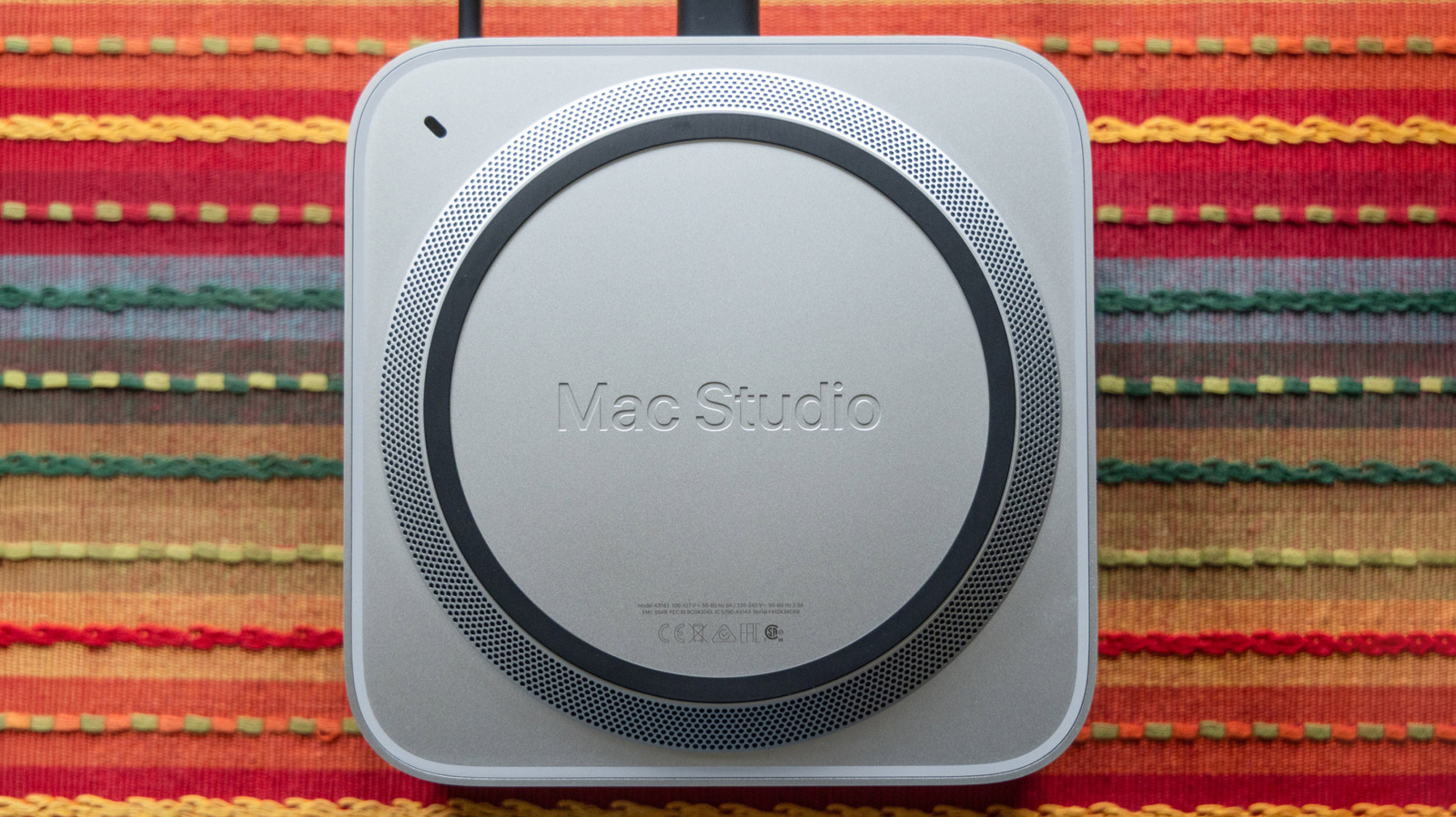
Apple's latest Mac Studio desktop family has seen significant price hikes across its configuration tiers, driven primarily by surging component costs and strategic margin adjustments. The base M5 Max configuration now starts at $2,500—a $500 increase over the previous generation—while the top-tier M5 Ultra edition has surged to a $5,500 starting price, reflecting a $1,500 jump over the M3 Ultra predecessor over an 18-month product cycle.
The price increases are even more pronounced on maxed-out configurations aimed at enterprise artificial intelligence developers and digital media professionals, according to an analysis reported by Engadget (https://www.engadget.com/2264291/why-apple-mac-studio-so-expensive/). A fully configured Mac Studio equipped with an M5 Ultra chip featuring a 36-core CPU, 80-core GPU, 256GB of unified memory, and 2TB of solid-state storage now commands $11,299. That represents a $3,800 increase compared to an equivalent M3 Ultra build, which debuted at $7,499 with a 32-core CPU, 80-core GPU, 256GB of RAM, and a 2TB SSD.
Apple attributed previous device price adjustments in June to historic inflation in component sourcing, stating, "We've never seen component prices increase this much, this quickly. We've worked hard to absorb these costs and delay price increases for as long as possible, but the current environment has made that unsustainable."
A significant portion of the cost increase stems from LPDDR5X unified memory directly integrated onto the M5 Ultra processor package across a 1,024-bit memory bus to deliver throughput reaching 1.2TB/s. Industry estimates cited by Engadget indicate Apple's cost for LPDDR5X RAM has escalated from approximately $6 per gigabyte earlier this year to between $10 and $11 per gigabyte. For a 256GB unified memory layout, Apple's memory procurement expense alone reaches an estimated $2,500 to $2,800, while high-speed PCIe 5.0 NAND storage costs for a 2TB capacity add another $300 to $500—roughly double to quadruple component pricing from the prior Mac Studio release cycle.
Combined hardware component price increases account for an estimated $2,400 to $2,600 of the total price rise, leaving an unexplained gap relative to the $3,800 retail markup on the 256GB M5 Ultra configuration. Analysts suggest Apple may be expanding gross margins beyond its typical 40 percent hardware target, or actively hedging against projected memory supply shortages expected to persist through 2028. Reports indicate Apple has already agreed to pay 30 to 40 percent higher rates for RAM and flash storage in the upcoming year.
The elevated pricing structure reinforces the Mac Studio's positioning as a specialized workstation for resource-intensive enterprise workloads rather than general consumer computing. The M5 Ultra architecture, which fuses two M5 Max chips together, supports up to 512GB of unified RAM, enabling developers to store massive datasets locally and run large language models with hundreds of billions of parameters entirely on-device, or cluster up to four systems together via Thunderbolt 5 ports. Media production capabilities allow video editors to color-grade uncompressed 8K video in real time and play back up to 33 simultaneous 8K ProRes 422 video streams at 30 frames per second.
Sources
Written by
The Company Wire
Inside the companies building what’s next. Reporting on startups, technology, funding and the people shaping them.