Trump Signs Executive Order Directing NASA to Establish First National Space Academy
The proposed four-year institution would offer free tuition in exchange for public service, targeting technical workforce gaps as commercial aerospace expands.
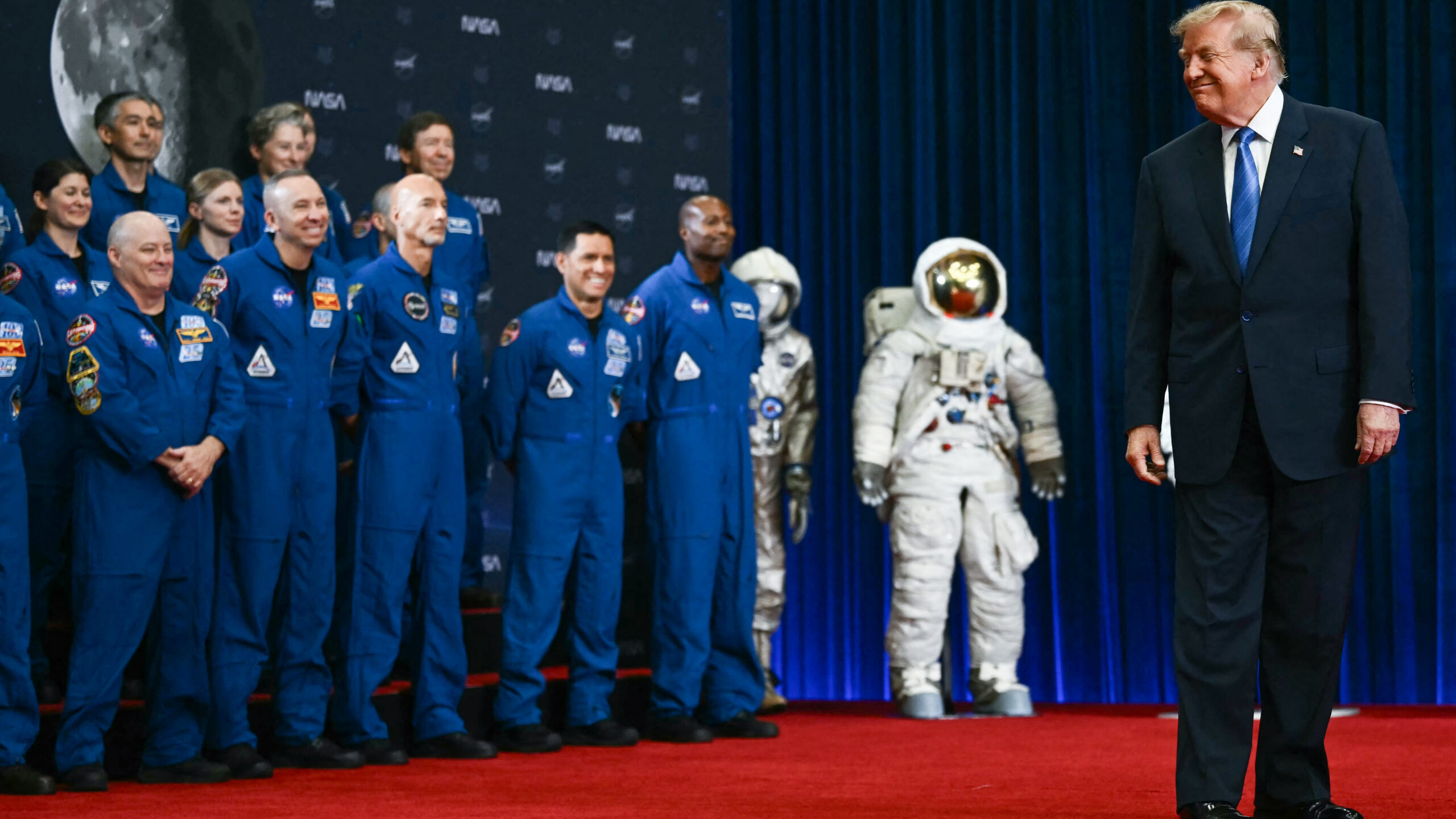
President Donald Trump has signed an executive order establishing a presidential commission tasked with creating the nation's first U.S. Space Academy under NASA jurisdiction. Announced during a ceremony at Johnson Space Center in Houston, where Trump also awarded the Congressional Space Medal of Honor to four Artemis II astronauts, the initiative aims to build a dedicated technical pipeline for the civil and commercial space sectors. First reported by Ars Technica, the academy would function as a tuition-free, four-year degree institution.
High school graduates admitted to the academy will undergo instruction delivered by leaders across both commercial aerospace and government space operations. In exchange for tuition-free education, enrolled students will fulfill a multi-year public service commitment upon graduation. While alumni will have the option to join the U.S. Space Force, officials familiar with the proposal indicate that the majority of graduate placements will be designated for NASA and civilian engineering positions.
The initiative is spearheaded by NASA Administrator Jared Isaacman as a central component of his Project Athena strategy to modernize civil space infrastructure. As commercial technology providers take on expanded responsibilities in orbital launches, astronaut transportation, commercial space station operations, and lunar missions, Isaacman's plan aims to shift core NASA resources toward high-complexity pursuits, such as building a permanent surface base on the Moon.
Although the school remains in early development, its proposed curriculum is expected to encompass human and robotic spaceflight operations, mission ground control, spacecraft engineering, and orbital debris mitigation. The administration has not yet selected a campus location, though Trump indicated a site near existing NASA facilities or specialized workforce centers would be selected in the near future.
The proposed framework mirrors the U.S. Merchant Marine Academy in Kings Point, New York, rather than traditional military institutions like West Point, Annapolis, or the Air Force Academy. During his address in Houston, Trump referenced existing armed services academies alongside the newly formed U.S. Space Force, signaling a public policy push to expand specialized federal technical education.
Former NASA Deputy Administrator Lori Garver noted that while a specialized academy could assist workforce development, adopting a military academy model poses structural risks. Garver cautioned against overlapping NASA's peaceful, civilian mandate with defense operations, pointing out that NASA's statutory framework explicitly mandates a civilian agency distinct from military branches.
Garver also noted that NASA has historically maintained strong recruitment channels through established research institutions such as the Massachusetts Institute of Technology and Purdue University. While commercial aerospace companies frequently offer higher private-sector compensation, public space programs have traditionally maintained strong talent acquisition without requiring a dedicated service academy feeder system.
Sources
Written by
The Company Wire
Inside the companies building what’s next. Reporting on startups, technology, funding and the people shaping them.