NASA Telescope-Boosting Robot Tumbles After Reaction-Wheel Failures
Katalyst Space is using backup thrusters to stabilize LINK before NASA decides whether the Swift Observatory mission can continue.
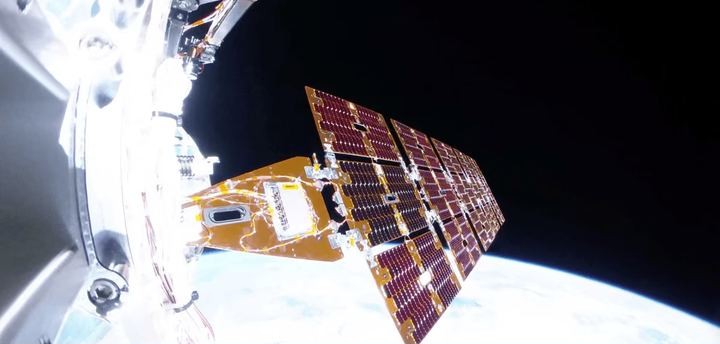
A Katalyst Space spacecraft designed to raise NASA's Neil Gehrels Swift Observatory into a higher orbit began tumbling after failures in its attitude-control system. Engineers are attempting to slow the rotation and restore stable communication before the agency decides whether the servicing mission can proceed.
NASA says two of LINK's three reaction wheels are not operating and one thruster system has also experienced problems. The spin has made communication intermittent because the spacecraft's antenna repeatedly points away from Earth. Katalyst believes an electrical-power issue contributed to the reaction-wheel failures.
Controllers have started burns using a backup set of thrusters and report that the response is moving in the intended direction. The company says the mission remains active and continues planning for a rendezvous with Swift if control can be restored.
Swift launched in 2004 to observe brief events such as gamma-ray bursts. Atmospheric drag has gradually lowered its orbit, and the observatory needs a boost to extend operations. LINK launched on July 3 aboard a Northrop Grumman Pegasus rocket and was still completing commissioning when the failures occurred.
If LINK cannot recover, NASA will need to assess both the observatory's remaining orbital life and alternative servicing options. The mission's value is not limited to one spacecraft. A successful rescue would build confidence in rapid commercial missions, while a failure could lead NASA to require longer development and more extensive redundancy for future contracts.
The failure demonstrates the challenge of rapid on-orbit servicing. Ground testing cannot reproduce every interaction among control software, flexible structures and orbital dynamics, while a tumbling spacecraft gives engineers little time to recover. NASA should publish the failure sequence and which safeguards worked before deciding whether the mission can continue. Commercial servicing remains strategically valuable because observatories and other satellites are too expensive to abandon for small faults. A transparent investigation can improve the next vehicle even if LINK never completes the planned lift.
The mission is NASA's first attempt to hire a private company to raise the orbit of a space telescope, making the outcome important for future satellite servicing. The schedule was compressed because Swift needs assistance soon. That urgency created risk, but the current recovery effort will also test whether commercial servicing spacecraft can use redundancy to survive exactly this kind of failure.
Sources
Written by
The Company Wire
Inside the companies building what’s next. Reporting on startups, technology, funding and the people shaping them.