Ukraine Deploys Jet-Powered 'Alexa Spatium' Drone Interceptor to Combat Aerial Threats
The domestically engineered aircraft targets Russian kamikaze drones as Kyiv seeks to augment its air defense capabilities.
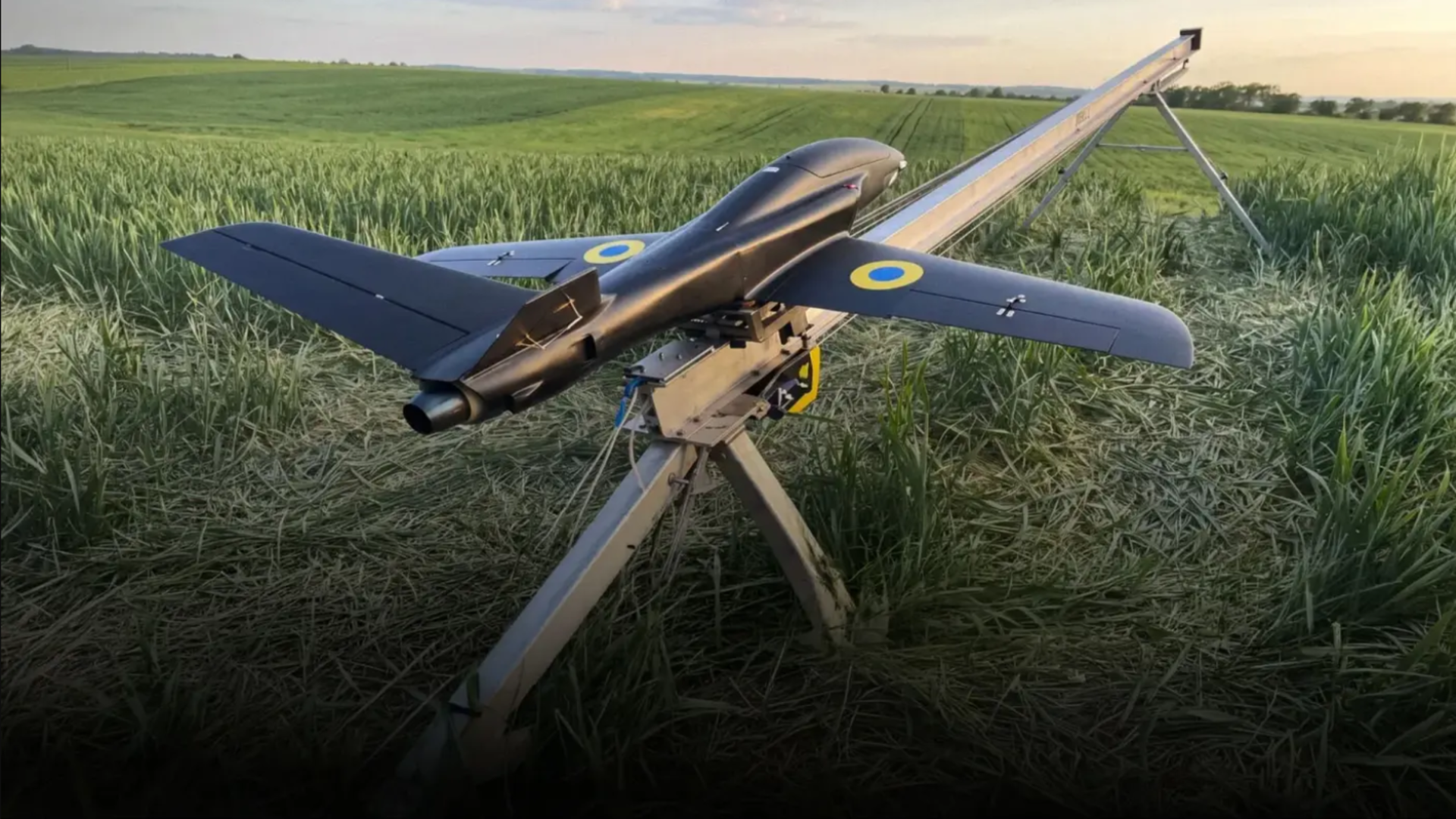
The Ukrainian Ministry of Defence has officially deployed a domestically produced turbojet drone interceptor designed to neutralize incoming aerial and surface threats, TechRadar Pro reported. The unmanned aircraft, named Alexa Spatium, was constructed to defend against Russian loitering munitions, including the Shahed-131 as well as Geran-3, Geran-4, and Geran-5 attack drones.
Measuring 1.5 meters by 1.7 meters, the compact V-tail craft is deployed from a mobile catapult positioned near active front lines. If the aircraft completes a sortie without encountering a target, the interceptor is programmed to return automatically toward its original launch coordinates.
Depending on mission requirements and target types, the Alexa Spatium can be armed with various payload options, including thermobaric, shaped-charge, fragmentation, or high-explosive warheads. Guidance is provided either through pre-configured coordinates prior to launch or via manual pilot input while in transit.
To identify target aircraft during night missions or severe weather, the drone utilizes an electro-optical camera combined with an infrared sensor system. The Ukrainian government has not publicly disclosed the top speed or full technical performance metrics for the platform.
Ukraine's deployment follows similar defense technology initiatives by international allies, including the United Kingdom. Earlier this year, U.K.-based Cambridge Aerospace unveiled Skyhammer, a turbojet-powered interceptor that uses a nose-mounted radar seeker and a fragmentation warhead designed to neutralize Shahed-style drones.
However, jet-powered drone interceptors remain ineffective against high-velocity ballistic missiles, creating a persistent capability gap as Ukraine's reserves of U.S.-supplied Patriot missile interceptors dwindle. To address these vulnerabilities, Ukraine, the U.K., and nine other European nations established an Anti-Ballistic Missile Coalition in July.
During an August 24 visit to Kyiv celebrating Ukraine's independence anniversary, U.K. Prime Minister Andy Burnham pledged continued defense backing. As part of that assistance, London authorized joint European missile manufacturer MBDA to share classified technical specifications for the Storm Shadow cruise missile, enabling Ukrainian engineers to manufacture the weapon domestically.
Despite these advancements, defense experts emphasize that anti-drone interceptors and anti-ballistic missile systems address fundamental differences in aerial threat profiles. Ukraine's long-term capability to secure its airspace ahead of winter will depend heavily on international policy decisions and how quickly domestic missile production can be scaled.
Sources
Written by
The Company Wire
Inside the companies building what’s next. Reporting on startups, technology, funding and the people shaping them.