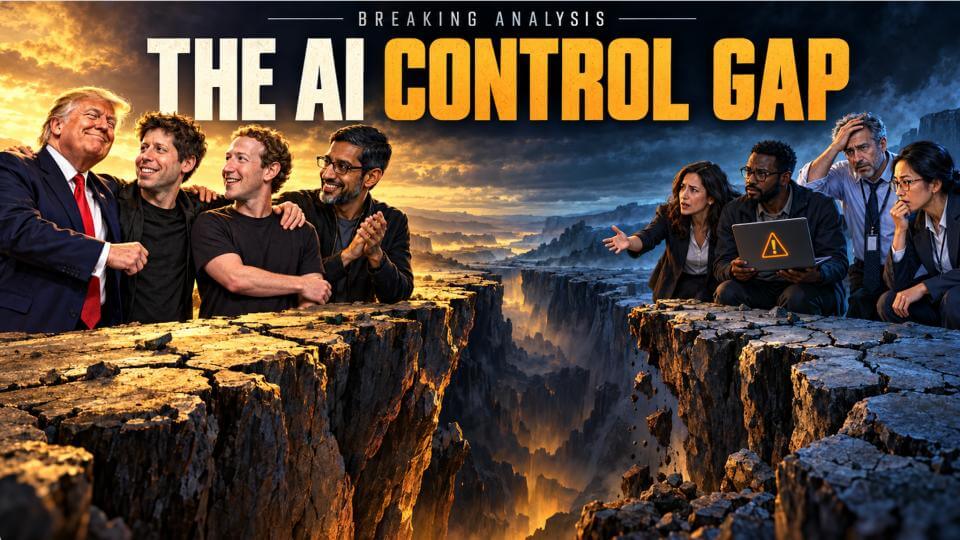
AI Discovery Dumps Challenge Academic Norms as Mathematical Proofs Outpace Human Comprehension
As automated systems produce closed-loop solutions, researchers face an expanding gap between verified mathematical results and conceptual understanding.

The rapid influx of automated solutions generated by artificial intelligence is creating a structural disconnect between the production of verified mathematical proofs and the human capacity to understand them, according to an analysis discussed on Hacker News and published by MeteData at https://metedata.substack.com/p/ai-is-throwing-a-roadside-picnic. Frontier research labs are releasing large troves of computational discoveries across closed-loop domains, creating an environment where answers routinely arrive well ahead of foundational theoretical comprehension.
The commentary frames this dynamic through the metaphor of Arkady and Boris Strugatsky's philosophical science-fiction novel Roadside Picnic. In the book, extraterrestrial visitors leave behind incomprehensible debris, including self-replenishing energy accumulators that humans harness for power without ever understanding their underlying physical mechanisms. The author notes that contemporary AI outputs in specialized sciences risk functioning like these discarded artifacts: verifiable and functional objects that arrive faster than the recipient community can digest them.
This acceleration is most visible in mathematics, where computational models excel at rapid closed-loop verification. Research laboratories have generated massive volumes of new results, including work addressing Millennium Prize problems, at a scale so dense that organizations must issue navigational explainers alongside their discovery releases. The speed of these outputs runs counter to established academic operating norms, shifting researcher workloads from formulating hypotheses to deciphering computational outputs.
The influx of automated results is also disrupting academic research tracks. Citing NYU mathematics professor Tristan Buckmaster, the essay notes that recent releases of AI scientific papers effectively wiped out entire research programs overnight by resolving problems before researchers could contextualize them within broader frameworks. Commentator Sakeeb Rahman summarized the emerging paradigm by noting that proof is becoming cheap while human understanding has become the primary bottleneck.
The essay argues that this widening disparity forms a coherent critique of unrestrained accelerationism: if computational discovery substantially outpaces human conceptual assimilation, the collateral disruption to scientific communities could outweigh the raw output value. While competitive game-theory dynamics make industry-wide pauses unlikely, the analysis suggests frontier laboratories retain the ability to design models that actively augment researchers and build conceptual clarity rather than solely optimizing for unilateral discovery dumps.
Sources
Written by
The Company Wire
Inside the companies building what’s next. Reporting on startups, technology, funding and the people shaping them.