AWS Focuses on Edge Infrastructure and Simulation to Accelerate Physical AI Deployments
Amazon's cloud unit is rolling out tools and partner integrations to help enterprises train, simulate, and deploy physical AI models on industrial hardware.
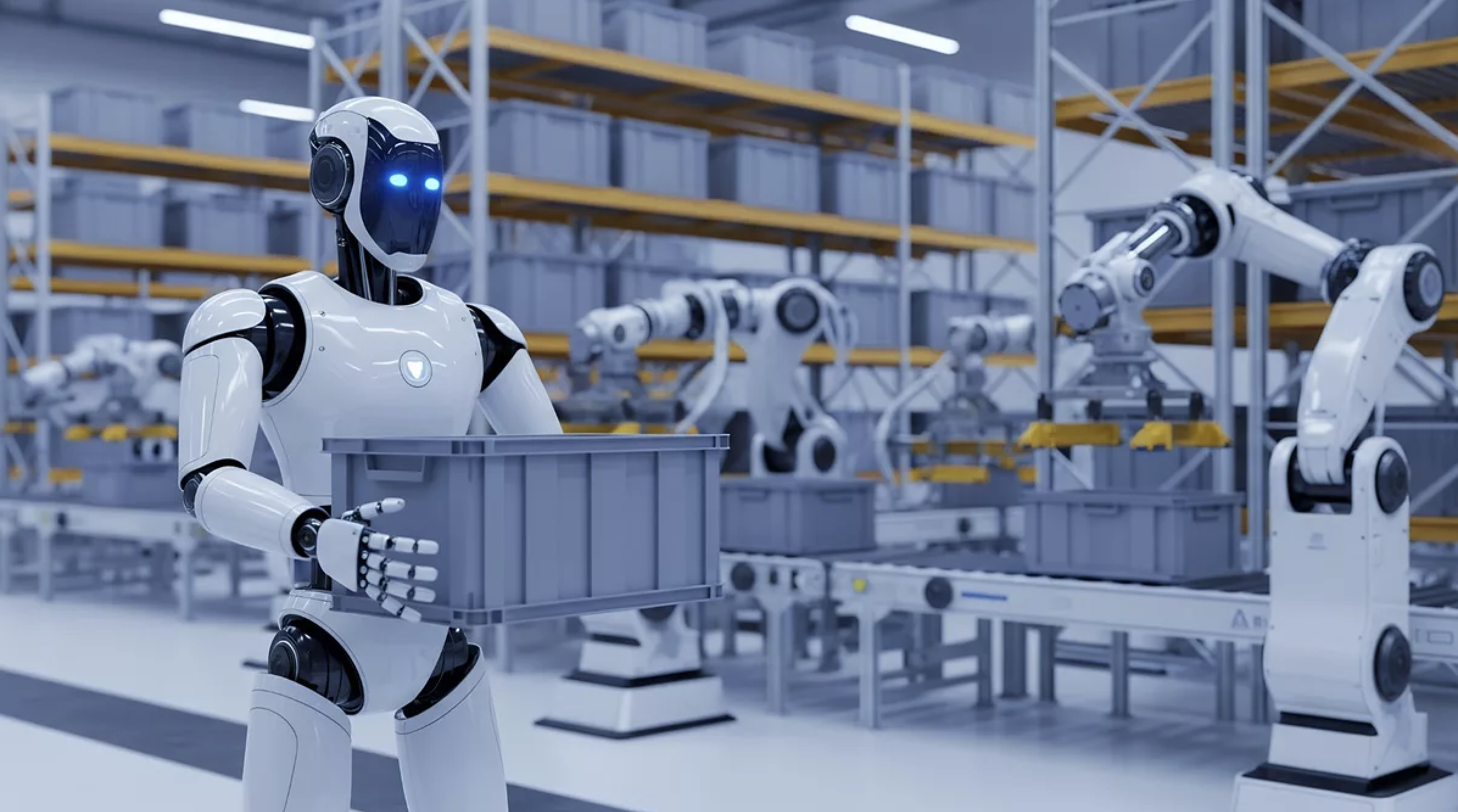
Physical artificial intelligence is emerging as the next major evolution in machine learning, moving beyond digital text and software code into systems that perceive, reason, and act in the physical environment. However, transitioning physical AI from controlled laboratory demonstrations into production settings across factories, warehouses, and hospitals presents severe technical challenges around data, latency, and operational management. To help enterprises overcome these barriers, Amazon Web Services Inc. recently introduced cloud-to-edge solutions designed to manage physical AI workloads across their lifecycle, as first reported by SiliconANGLE.
Unlike traditional industrial automation, which relies on rigid code designed for predictable, highly structured environments, physical AI systems leverage foundation models, world models, and vision-language-action (VLA) architectures. This allows machinery to adapt when encountering unexpected obstacles or unscripted conditions. Sri Elaprolu, director of the AWS Generative AI Innovation Center, explained that the sector is shifting from static instructions to continuous learning. "The variety of things you can now do has expanded drastically," Elaprolu noted during a briefing. "I don’t need to pre-program 50 tasks a humanoid will have to perform. I start with enough of a foundation and let the robot or device learn from real-world experience and adapt."
Despite recent advances, deploying physical AI remains constrained by physical manipulation challenges and data scarcity. Training physical models requires diverse datasets grounded in real-world physics, geometry, tactile feedback, and lighting. AWS customer RLWRLD has addressed fine motor control by developing RLDX-1, an 8.1-billion-parameter robotics foundation model designed for five-fingered dexterity across humanoid and robotic arm platforms. To train such architectures, robotics startup Config assembled a dataset of more than 200,000 hours of physical action data. To solve environmental data gaps without requiring extensive manual recording, Config and AWS utilized a post-trained version of Nvidia Corp.’s Cosmos-Transfer2.5 model to generate synthetic camera feeds under altered lighting and surface conditions, boosting out-of-distribution task success rates from 8.3% to 75%.
Virtual simulation has also become essential to avoid the cost, downtime, and safety risks of training robots directly on physical production floors. However, developers must manage the "sim-to-real" gap, ensuring that models trained in pristine digital environments do not fail when confronted with real-world clutter, reflective surfaces, or hardware wear. AWS is addressing this phase by providing cloud infrastructure, data pipelines, and orchestration templates that enable developers to run third-party simulation tools, including Nvidia’s Isaac Sim platform, at elastic cloud scale.
A central architectural challenge in physical AI is balancing cloud intelligence with low-latency edge processing. Because autonomous machinery cannot tolerate round-trip latency to remote servers during real-time operations, systems use a tiered model architecture. Large foundation models are trained in the cloud, while quantized or distilled versions operate directly on local devices. "The model in the cloud acts as the big brain," Elaprolu said. "As the model gets smaller and smaller, you can place it directly on the device. But the local learnings must flow back to cloud for overall improvement. That’s the critical step."
To demonstrate this hybrid approach, AWS collaborated with Edge Impulse on a warehouse tracking architecture. The system runs lightweight object detection models on local edge cameras and calls upon a quantized vision-language model only when deeper contextual analysis is needed, allowing workers to query asset locations in natural language while conserving power and bandwidth. To integrate these workloads with existing industrial infrastructure, AWS partners with companies like Galeo Tech, which connects operational technology protocols like Modbus, PLCs, and SCADA to cloud MLOps pipelines. Model compression startup Multiverse Computing provides additional tooling to shrink edge footprints.
To streamline development loops that can take weeks of engineering effort, AWS also introduced Kiro, an agentic development environment designed to automate simulation configuration, environment provisioning, and training workflows. While general-purpose humanoid workers remain a longer-term outcome, the immediate practical applications of physical AI focus on defect detection, localized asset tracking, and material transportation. AWS is betting that its combination of cloud training compute, IoT device management, and partner ecosystem will lower the barrier for enterprise adoption.
Sources
Written by
The Company Wire
Inside the companies building what’s next. Reporting on startups, technology, funding and the people shaping them.