Masayoshi Son Warns Superintelligence Is 'Super Dangerous' Without Global Trust
Speaking in Kyoto alongside White House science officials, the SoftBank chief highlighted AI risks while backing a 17-nation research declaration.
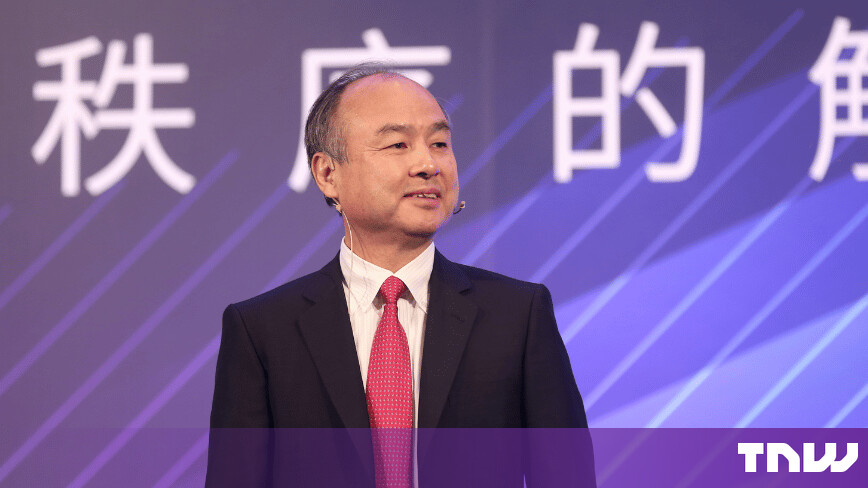
SoftBank Group founder and chief executive Masayoshi Son warned that advanced artificial intelligence could present severe global risks if mismanaged, calling superintelligence "super dangerous" in the wrong hands during an appearance in Kyoto, as reported by The Next Web (https://thenextweb.com/news/son-ai-safety-kyoto-vision-europe). Speaking alongside U.S. government officials, the Japanese investor argued that nation-states can no longer afford human-against-human conflict and must establish mutual trust to govern the technology.
Son's remarks mark an uncharacteristic shift for the prominent technology investor, who has spent the past year dismissing concerns over an artificial intelligence valuation bubble while accelerating SoftBank's capital deployment into the sector. SoftBank recently finalized a $30 billion funding tranche into OpenAI, raising its aggregate investment in the ChatGPT creator to $64.6 billion. The capital backing gives SoftBank approximately a 13% stake in OpenAI, with the final $10 billion portion funded through the largest high-yield corporate bond issuance on record earlier this month.
Son delivered the comments alongside Michael Kratsios, head of the White House Office of Science and Technology Policy, who traveled to Kyoto to unveil an international framework focused on applying artificial intelligence to scientific discovery. The resulting declaration, titled the "Kyoto Vision for a Golden Age of Science," outlines plans to integrate superintelligence into research facilities, including automated robotics laboratories designed to run hundreds of simultaneous experiments.
The document adopts the term "super intelligence" throughout its text, following an American executive order issued five days prior that formalized the phrasing within official U.S. government vocabulary. A total of 17 nations endorsed the statement, including the United Kingdom, Argentina, Chile, Indonesia, Kazakhstan, and New Zealand. Six participating nations—Germany, Italy, Poland, Greece, Bulgaria, and Cyprus—are European Union members bound by the EU Artificial Intelligence Act, which initiated regulatory labeling requirements in August. China was not among the signatories.
The language within the declaration states four separate times that endorsing countries "endeavour to act," refraining from binding commitments or explicit pledges. However, an official release from the White House characterized the initiative more firmly, asserting that participating ministers had formally pledged and committed to the objectives. None of the signatory nations have publicly contested the White House's stronger framing of the agreement.
Despite his warnings regarding superintelligence safety, Son reiterated his massive economic projections for the artificial intelligence industry. He stood by his earlier forecast that AI technologies will account for 20% of total global economic output by 2040, a share he currently estimates to be worth $46 trillion.
Son also predicted that the industry's next phase—involving autonomous physical machines operating directly in real-world environments—will begin next year. SoftBank has already begun laying the groundwork for physical AI investments, having led a $200 million funding round for Zurich-based Gravis Robotics in August and entering talks regarding potential backing for Munich-based Agile Robots.
Sources
Written by
The Company Wire
Inside the companies building what’s next. Reporting on startups, technology, funding and the people shaping them.