Tesla Quadruples Authorized Cybercabs in Texas as Expansion Faces Scrutiny and Competition
A month after launching driverless rides in Austin, Tesla is scaling its fleet while navigating federal queries, competitor growth from Waymo, and safety questions.

One month after the commercial rollout of its Cybercab in Austin, Texas, Tesla has expanded its authorized driverless fleet in the state from 45 to 169 vehicles. The expansion reflects Tesla's push to build momentum for its autonomous ride-hailing operations amid persistent headwinds in its core automotive business, according to a report from CNBC Business (https://www.cnbc.com/2026/10/03/tesla-cybercab-pressure-to-expand-after-rocky-first-month-in-austin.html). Operating solely in Austin, the custom bronze two-seaters represent the company's dedicated driverless passenger vehicle, supported by a broader Texas Robotaxi fleet that includes 420 Model Y vehicles running proprietary automated software not sold to retail customers.
The Cybercab is designed without conventional mechanical controls, omitting the steering wheel, pedals, rear and sideview mirrors, and exterior door handles. Paying riders have posted mixed appraisals online since the Sept. 3 launch, highlighting long wait times, inaccurate pickup and drop-off points, and mechanical glitches with the vehicle's butterfly doors and trunk latching. No major collisions or serious safety incidents have been reported involving the Cybercab service in Austin.
Scaling autonomous operations has become central to Tesla's commercial narrative as car sales remain sluggish. Tesla shares are down 18% in 2026, making it the only megacap technology stock to record negative returns this year. Although third-quarter delivery numbers beat Wall Street estimates and spurred a nearly 5% equity gain on Friday, total deliveries fell 2% year over year. The company has logged consecutive annual declines in automotive revenue as it contends with competitive pricing and rapid product cycles from Chinese electric vehicle makers such as BYD and Xiaomi.
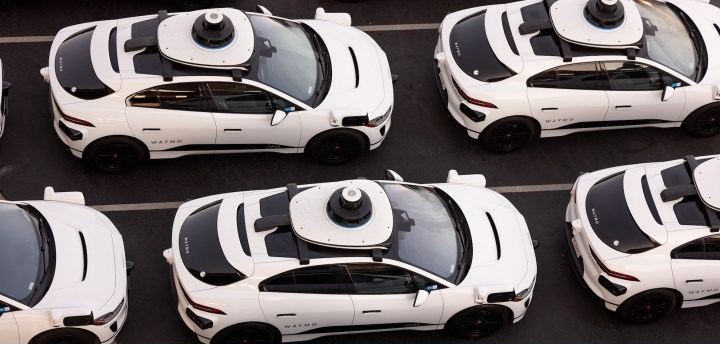
In the autonomous sector, Tesla faces an established rival in Alphabet's Waymo. Waymo operates commercial services across 15 U.S. markets, with 15 more planned, alongside international rollouts slated for London, Tokyo, and Munich. Texas Department of Motor Vehicles records show Waymo had 1,154 autonomous vehicles authorized for commercial use in Texas as of Friday, including 359 of its newer Ojai models featuring sliding doors and low-step boarding. Nationally, Waymo operates more than 4,000 driverless vehicles, conducting over 500,000 paid rides weekly with 270 million fully autonomous commercial miles logged. Amazon's Zoox is also testing in Austin.
Tesla's growth ambitions outside Austin face regulatory oversight. The National Highway Traffic Safety Administration opened an audit query after the Cybercab launch to evaluate compliance with federal motor vehicle safety standards. An agency spokesperson told CNBC that Tesla received an extension beyond an initial Sept. 30 deadline to answer safety questions. First responders have also raised operational considerations. Austin Fire Captain Matt McElearney told CNBC that while Tesla provided emergency protocols, standards should require vehicles lacking manual controls to offer mechanisms for public safety personnel to move, steer, or shut down units during incidents, alongside dynamic lifetime certification to account for software updates.
Public sentiment remains an obstacle. A September 2026 survey by Slingshot Strategies in its Electric Vehicle Intelligence Report found that 50% of U.S. respondents felt uncomfortable riding in a vehicle without a steering wheel or pedals, and 70% supported pausing operations during the NHTSA inquiry. Elon Musk has outlined plans to expand into San Antonio, Dallas, Nevada, and Florida, targeting favorable state rules and warm weather. While Musk projected in January at the World Economic Forum in Davos that robotaxis would be widespread in the U.S. by late 2026, Tesla has not yet secured driverless commercial permits in California. Analysts at Cantor noted following Friday's delivery report that Tesla management expects Cybercab to eventually become the highest-volume model in its lineup once manufacturing reaches full scale.
Sources
Written by
The Company Wire
Inside the companies building what’s next. Reporting on startups, technology, funding and the people shaping them.