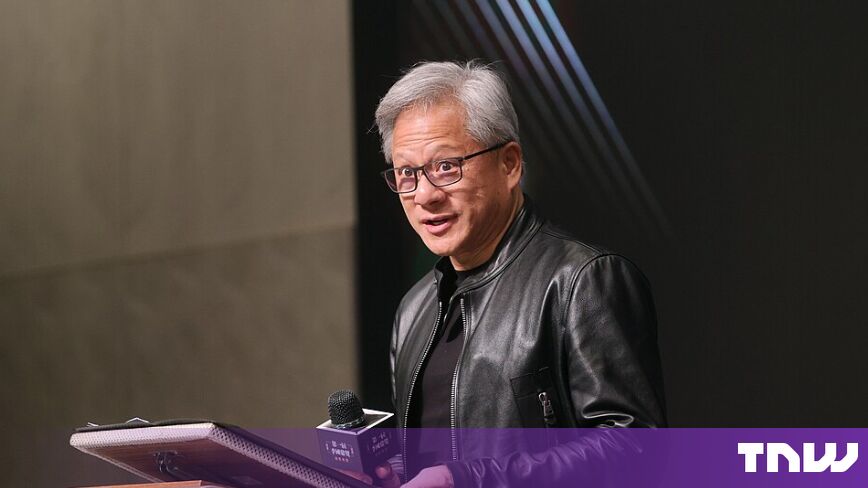
Nvidia CEO Jensen Huang Dismisses AGI Milestones as 'Senseless' Focus Should Be on Utility
Addressing recent claims from OpenAI, Jensen Huang argues that AI has already reached functional thresholds and that enterprises should prioritize generating profitable tokens over chasing theoretical benchmarks.

As executive leadership across Silicon Valley continues to debate the exact timeline for reaching artificial general intelligence, Nvidia Chief Executive Officer Jensen Huang has largely dismissed the importance of the milestone, asserting that the technology has effectively materialized across numerous functional domains. Addressing investors and analysts during an Aug. 26 quarterly earnings call, Huang countered recent high-profile claims from competing artificial intelligence developers by arguing that industry stakeholders should move past arbitrary conceptual targets, as original coverage by Mashable Tech noted.
The pursuit of artificial general intelligence, or AGI, has long served as a defining North Star for frontier research organizations. While the technology industry lacks a single universally accepted definition for the term, AGI typically describes automated software systems capable of matching or exceeding human cognitive performance across a broad spectrum of complex, multi-domain tasks. OpenAI Chief Executive Officer Sam Altman recently reiterated his organization's commitment to this destination, revealing in an interview that OpenAI expects to achieve AGI before the end of the current calendar year.
Huang's alternative view carries considerable weight across the technology sector given Nvidia's dominant market position. Over recent years, the semiconductor designer has transformed into one of the world's most valuable public entities by producing the specialized, high-performance microchips that power advanced machine learning workloads. Because virtually every major cloud provider and frontier model builder relies heavily on Nvidia hardware to train and deploy artificial intelligence applications, Huang's assessment of industry progression serves as a major benchmark for enterprise strategy.
When asked on the Aug. 26 earnings call about OpenAI's recent statements and the broader push toward general intelligence, Huang suggested that the industry has already crossed the functional threshold in practical terms. "For many tasks, we could say that we’ve already achieved AGI," Huang stated during the call. He went on to express skepticism regarding the ongoing obsession with defining explicit thresholds, adding, "I think of all of those milestones…they’re kind of senseless at this point."
Instead of fixating on theoretical benchmarks, Huang advocated for evaluating artificial intelligence through the lens of concrete economic utility and operational value. According to the chief executive, enterprise leaders should concentrate primarily on whether current automated systems are "doing productive and useful work." From a corporate and deployment perspective, Huang stressed that organizations should focus on unit economics and operational viability, explicitly asserting that executive attention belongs on "generating profitable tokens."
Huang elaborated on his reasoning by pointing out how rapidly underlying software architectures have matured beyond simple conversational tools. Modern artificial intelligence has progressed well beyond basic prompt-and-response interactions, evolving into sophisticated agentic workflows. These modern agent systems possess the capacity to reflect on their own performance, autonomously learn new technical capabilities, and systematically iterate on their actions to deliver continuously improved outcomes over time.
The comments made on the financial call align with previous statements Huang has made regarding automated systems performing high-level business functions. During a March 2026 interview on a podcast hosted by Lex Fridman, the conversation turned to long-term projections for software capabilities. Fridman specifically asked whether an artificial intelligence system could successfully launch, construct, and independently operate a corporate enterprise valued at one billion dollars within a 20-year timeframe.
In response to Fridman's question, Huang offered a surprisingly short timeline, declaring, "I think it’s now. I think we’ve achieved AGI." The chief executive subsequently added important nuances to his statement, noting that while autonomous agent networks might successfully build a viral software application capable of reaching a billion-dollar valuation, running a complex global technology corporation requires vastly different physical and operational capabilities. "The odds of 100,000 of those agents building Nvidia," Huang observed, "is zero percent."
The philosophical split between Nvidia and frontier model developers highlights contrasting priorities across the technology ecosystem. While laboratory executives like Altman continue to highlight theoretical milestones as proof of technical momentum, infrastructure vendors focused on enterprise compute are concentrating on immediate utility. For Nvidia, the primary metric of progress remains the scalable deployment of functional workloads that deliver tangible financial returns to enterprise customers today.
Sources
Written by
The Company Wire
Inside the companies building what’s next. Reporting on startups, technology, funding and the people shaping them.