Vertical AI and Specialized Hardware Take Center Stage at Bank of America Tech Summit
Tech executives and investors highlight how domain-specific data, custom silicon, and robotics are overtaking foundational models as primary drivers of enterprise growth.
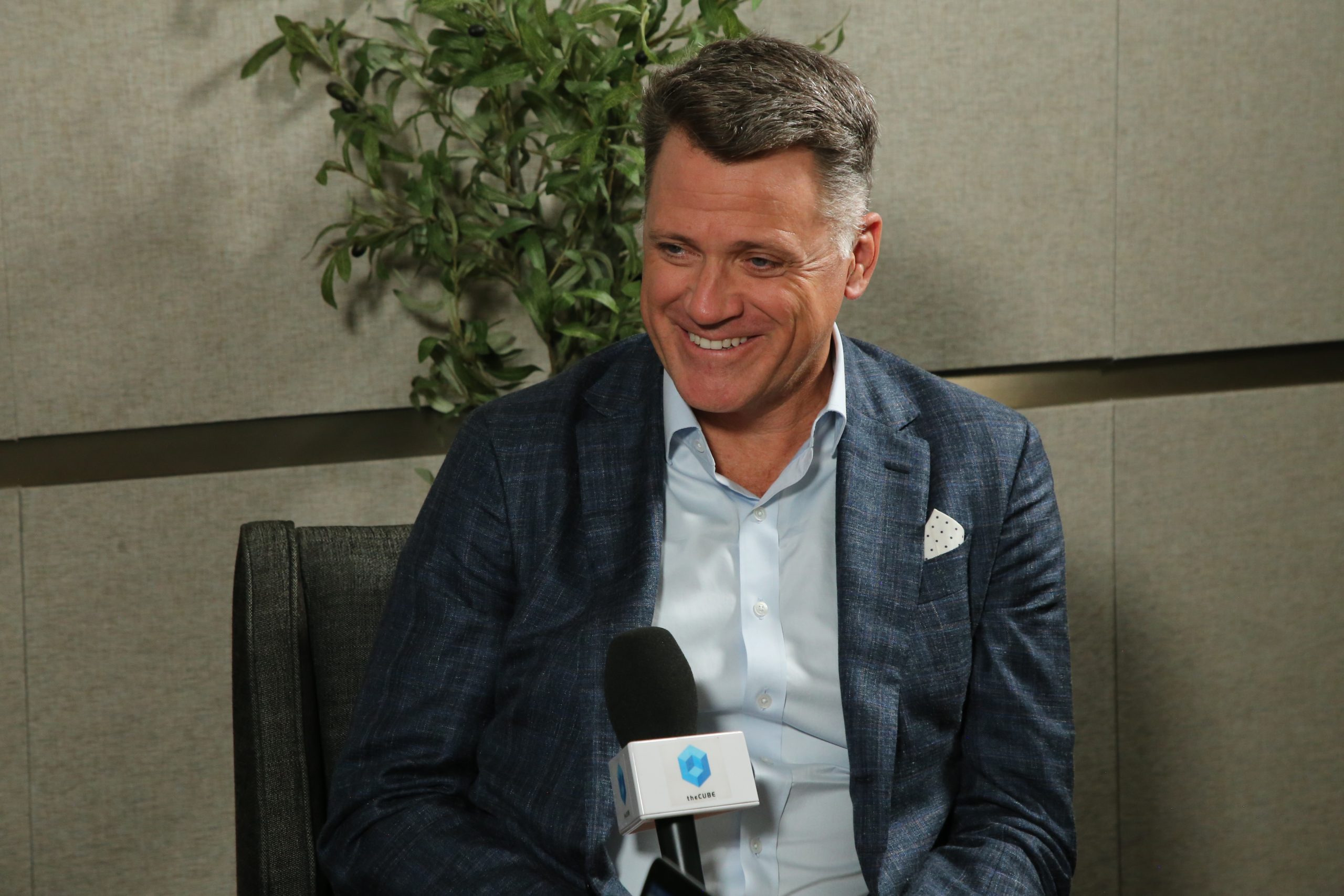
Private technology companies are refocusing their development strategies away from interchangeable foundation models and toward domain-specific software, proprietary datasets, and purpose-built hardware, according to executive insights from the Bank of America Private Tech Trailblazers Conference in Palo Alto, California, reported by SiliconANGLE (https://siliconangle.com/2026/10/03/private-tech-trailblazers-vertical-ai-becomes-growth-engine-privatetechtrailblazersconference/). The event showcased how founders and operators across healthcare, logistics, construction, defense, and global finance are deploying vertical intelligence to deliver quantifiable economic returns.
In the robotics sector, commercial traction is increasingly driven by unified software platforms and tightly controlled manufacturing workflows. Bren Pierce, co-founder of Bear Robotics Inc., noted that the company operates roughly 16,000 autonomous mobile robots in the field alongside a 4,000-unit backlog, with revenue doubling annually. While its core footprint spans restaurants and care homes across Japan and South Korea, a partnership with LG is expanding deployments into industrial warehouses. Similarly, Address Robotics Ltd., operating as All3, is addressing high construction costs—where labor accounts for 55% to 60% of total expenses—by pairing automated architectural design software with industrial assembly hardware. All3 Chief Executive Officer Rodion Shishkov stated the startup secured a seed round between $25 million and $30 million to deploy its Mantis mobile robot on an initial six-story co-living project on an 11-sided plot.
Enterprise software providers are seeing similar adoption by targeting models to specific operational tasks. Bloomreach Inc. co-founder and CEO Raj De Datta explained that value creation is migrating toward vertical workflows as baseline models commoditize. Bloomreach's Loomi AI platform uses approximately 100 distinct models trained on 7 billion consumer profiles. In healthcare, Hippocratic AI Inc. Chief Business Officer Shubhra Jain described an architecture of 31 concurrent models—one managing dialogue and 30 supervising safety—to run voice workflows such as discharge follow-up and chronic disease management without diagnosing or prescribing. Fine-tuned on 6 million real patient calls from six health system investors, Hippocratic AI has signed over 60 enterprise clients within three years.
The energy demands of modern compute are accelerating investment in alternative semiconductor designs and electric industrial platforms. Unconventional Inc., operating as Unconventional AI, has raised about $540 million and grown from 14 to roughly 60 employees in a year. Chief Financial Officer Ali Esfahani reported that the Naveen Rao-founded startup taped out a physics-based chip at Taiwan Semiconductor Manufacturing Co. on June 1 designed to reduce system power consumption by roughly 1,000 times. In commercial transportation, Harbinger Motors Inc. co-founder and CEO John Harris stated that his company offers medium-duty electric platforms at diesel price parity, saving California delivery fleets roughly $30,000 annually per vehicle in fuel costs while supplying customers such as FedEx Corp. and Thor Industries Inc.
Fintech platforms are also embedding autonomous agents directly into transactional infrastructure. Airwallex Pty Ltd. Head of Corporate Development Irvin Sha outlined how the company spent years securing more than 90 financial licenses and banking connections across up to 100 economies. Having raised $960 million across its Series F, G, and H rounds at valuations reaching $11 billion, Airwallex generates an annual revenue run rate of $1.4 billion while enabling autonomous agents to execute cross-border commerce. In consumer and merchant finance, CloudWalk Inc. founder and CEO Luis Silva reported that his firm has surpassed $2 billion in revenue and generated hundreds of millions in profit, running autonomous agents on an internal cluster of Nvidia Blackwell GPUs to process transactions and resolve 99% of customer support requests.
This shift toward capital-intensive hardware and deep infrastructure is altering how private companies prepare for liquidity events. JD Moriarty, vice chairman and global head of TMT equity capital markets at Bank of America Corp., observed that modern AI and robotics firms require substantially larger capital infusions before entering public markets, leading companies to reach much larger revenue scales prior to initial public offerings. John Furrier, executive analyst at theCUBE Research, emphasized that proprietary domain datasets and integrated vertical execution have become the primary determinants of durable enterprise advantage.
Sources
Written by
The Company Wire
Inside the companies building what’s next. Reporting on startups, technology, funding and the people shaping them.