Coval Raises $28 Million to Stress-Test Voice and Chat Agents
The former Waymo engineer behind the startup is applying simulation and observability techniques to customer-facing AI systems.
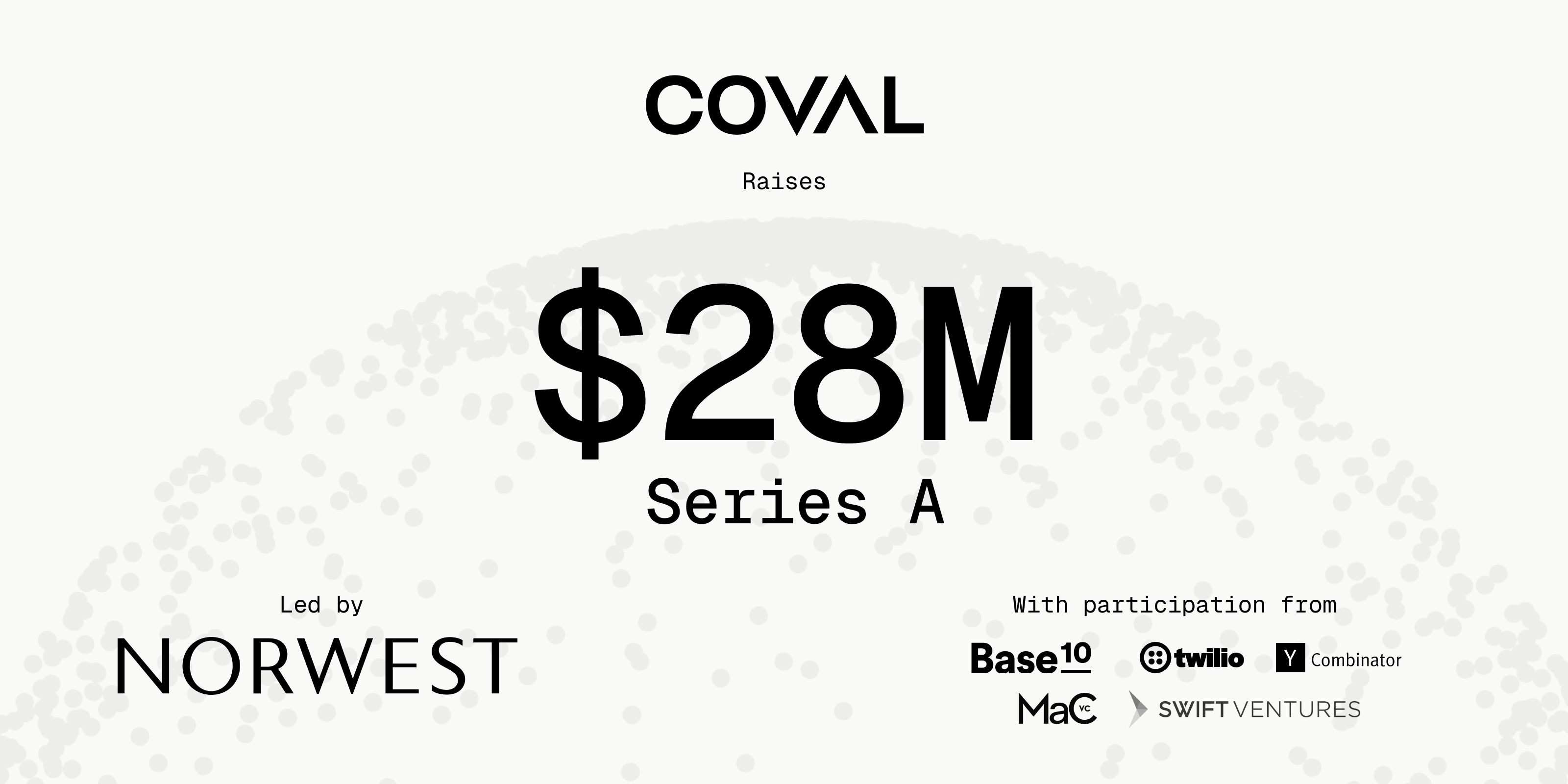
SAN FRANCISCO, Calif. - Coval, a startup developing simulation and observability software for conversational artificial intelligence, has secured $28 million in Series A financing to expand its evaluation platform for voice and chat agents. The investment round was led by Norwest Venture Partners, with participation from Base10 Partners, Twilio Ventures, Y Combinator, MaC Venture Capital, and Swift Ventures. This latest influx of capital brings the San Francisco-based company’s reported total funding to $31 million, marking a significant escalation in resources as the enterprise market shifts from experimental generative AI pilots to production-scale deployments.
The company was founded and is led by Chief Executive Officer Brooke Hopkins, who previously served as an engineer at the autonomous vehicle pioneer Waymo. That background in the mobility sector informs the startup’s core technical philosophy: applying the rigorous simulation and validation mindsets used in self-driving car development to the unpredictable world of human-to-machine conversation. Just as a vehicle must be tested against millions of simulated edge cases before reaching public roads, Coval posits that AI agents require similar stress-testing before they are entrusted with a brand's customer relationships.
Coval’s primary value proposition rests on creating large numbers of synthetic interactions that replicate the complexities of real-world communication. The platform is designed to test how an AI agent handles nuanced variables such as heavy accents, conversational interruptions, significant background noise, and highly unusual requests. These conditions are frequently rare within the curated datasets used during initial model development but become common, and often catastrophic, once a product reaches a diverse global user base in a production environment.
Beyond pre-deployment simulation, the company provides a suite of observability and labeling tools designed to monitor live customer conversations. These tools allow technical teams to identify specific failure patterns—such as a chatbot repeatedly providing incorrect technical specs or a voice agent failing to recognize a specific dialect—and transform those failures into repeatable automated tests. By establishing this cycle, developers can measure whether a prompt adjustment or a switch in the underlying foundation model actually resolves a specific issue without inadvertently degrading other critical behaviors.
This feedback loop is becoming increasingly vital as enterprises move past simple frequently-asked-question bots and into more consequential roles in sales, scheduling, and high-stakes customer support. In these contexts, the cost of a failure is not merely a frustrated user, but lost revenue or logistical errors. Analysts have noted that the challenge for these companies is that a conversation can be technically accurate according to the data it provides, yet still feel unhelpful, robotic, or unsafe to the human recipient.
To address the qualitative nature of interaction, Coval’s evaluation metrics are designed to account for more than just raw accuracy. The platform tracks task completion rates, conversational tone, latency, escalation triggers, and strict policy compliance. By quantifying these multi-dimensional factors, the company aims to provide a more holistic view of performance than traditional software testing methods, which often struggle to account for the non-deterministic nature of large language models and speech synthesis.
However, the reliance on synthetic testing carries its own inherent limitations, a challenge Coval acknowledges through its emphasis on human-in-the-loop review. Synthetic tests may not capture every possible nuance of human behavior or cultural context, meaning customers must still engage in careful sampling and review of live interactions. To facilitate this, Coval integrates privacy protections for the individuals involved in the conversations, ensuring that the drive for better data does not compromise user confidentiality or regulatory standing.
The fresh capital from the Series A round will be directed toward aggressive hiring and the expansion of the platform’s technical capabilities to serve larger, more complex enterprise deployments. As the AI stack matures, the market for picks-and-shovels providers—those offering the infrastructure to monitor and manage models—has become increasingly crowded. Coval enters a competitive landscape that includes foundation model providers themselves, established observability vendors, and the internal evaluation systems built by large engineering teams.
Despite this competition, Coval remains focused on an urgent operational need within the Silicon Valley ecosystem and beyond. As automated agents handle an ever-growing percentage of total customer contact, businesses are desperate for a systematic, scalable way to identify and fix failures before those errors reach thousands of callers. The transition from 'move fast and break things' to 'move fast and verify' represents a broadening trend in the deployment of generative AI across the corporate sector.
The participation of Twilio Ventures in the round is particularly noteworthy, given Twilio's position as a dominant provider of communication infrastructure. Their involvement suggests a strategic recognition that the next generation of voice and chat applications will require a layer of sophisticated testing that goes beyond the basic connectivity level. For Coval, the backing of such specialized investors provides a potential path toward deeper integration with the communication platforms where these AI agents are currently living.
Looking forward, the success of Coval will likely depend on its ability to keep pace with the rapid evolution of multimodal models. As AI moves toward seamless, real-time audio and video interaction, the potential for new types of failures increases exponentially. The startup’s ability to simulate increasingly complex human-machine dynamics will be the true test of whether its mobility-inspired methodology can maintain a competitive edge in the enterprise software market.
As the funding environment for AI startups remains robust yet discerning, this $28 million round signals a shift in investor focus toward reliability and governance. The era of proving that AI can talk is largely over; the new focus is on proving that AI can be trusted to represent a multi-billion-dollar enterprise. By focusing on the rarified edge cases that cause traditional systems to break, Coval is betting that the path to widespread AI adoption lies not in the common conversation, but in the preparedness for the unexpected.
Sources
Written by
The Company Wire
Inside the companies building what’s next. Reporting on startups, technology, funding and the people shaping them.