Data Center Hardware Maker Rune Raises $40M, Launches Solar-Adjacent AI Compute Modules
Led by Spark Capital, the funding will fuel the expansion of Rune's RELIC units, which run AI workloads directly at renewable energy facilities.
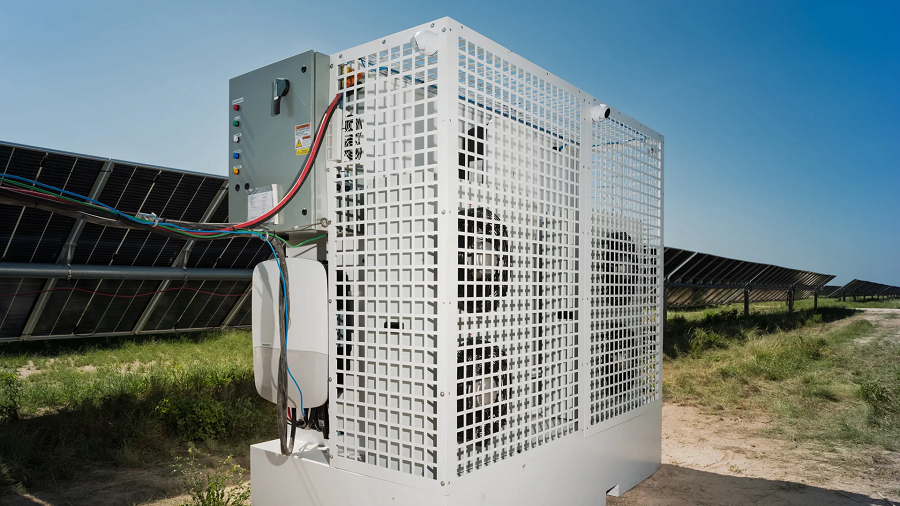
Rune, a data center hardware startup incorporated as Liitto Technology Inc., announced it has secured $40 million in a new funding round led by Spark Capital. Alongside the capital injection, the company unveiled its inaugural hardware offering designed to run artificial intelligence workloads directly at solar power facilities.
The product, called RELIC—short for Renewable Energy Linked Intelligent Compute—is a self-contained computing module deployed on-site at solar farms. According to Rune, placing compute infrastructure adjacent to clean power sources reduces auxiliary equipment costs by 85% compared to constructing traditional large-scale AI facilities.
A primary driver of these cost savings is the elimination of long-distance energy transmission lines, which often require massive capital expenditure. For instance, OpenAI Group PBC projects spending $4.2 billion on power transmission equipment for a planned facility in Ohio. Because RELIC units sit directly beside photovoltaic arrays, they bypass the need for extensive long-haul grid infrastructure, as first reported by SiliconANGLE.
The modular design also removes the necessity for heavy-duty power transformers. Solar arrays natively produce direct current (DC) electricity, which traditional utility systems convert into alternating current (AC) for long-range transport before data centers convert it back to DC for server consumption. RELIC units accept DC power directly from solar panels, eliminating double conversion loss and bypassing the need for expensive transformer hardware.
Beyond hardware efficiency, Rune's architecture aims to solve energy curtailment issues. Utility operators frequently throttle down solar farm output when power generation outpaces local grid demand, leaving significant generation potential unused. RELIC modules utilize this excess capacity specifically to process AI tasks.
“Every solar plant is a latent data center,” said William Layden, co-founder and chief executive officer of Rune. “The power is already there, sitting idle while AI labs wait years for grid connections that may never come.”
Each RELIC deployment packages up to 1,024 graphics processing units alongside specialized cooling mechanisms and custom power management systems. The company claims physical installation takes roughly an hour, allowing operators to execute AI workloads within weeks—a stark contrast to the multi-year timelines standard data center developments require.
Rune has already operationalized its first RELIC unit at a 200-megawatt solar farm located in Texas. The startup plans to deploy its newly acquired capital to broaden its market reach, with reported plans to extend its modular computing technology to wind energy generation facilities in the future.
Sources
Written by
The Company Wire
Inside the companies building what’s next. Reporting on startups, technology, funding and the people shaping them.