Generalist AI Raises $400 Million for Robot Foundation Models
The physical AI company reached a $2 billion valuation as it trains software intended to work across different robots and real-world tasks.
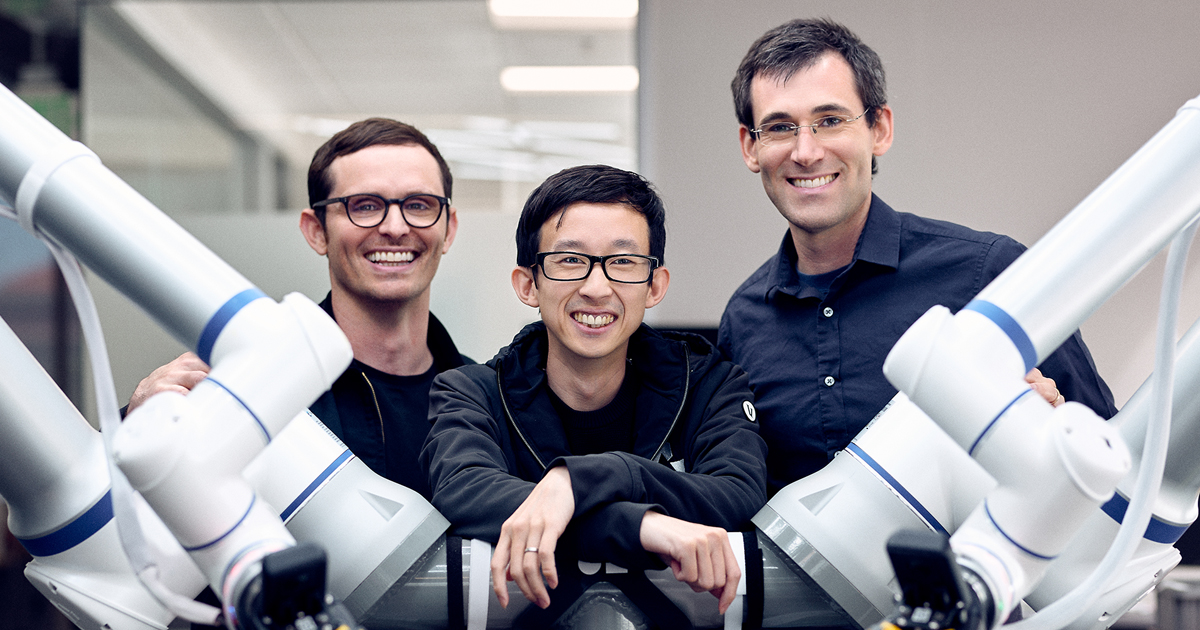
SAN MATEO, Calif. - Generalist AI has raised $400 million in new financing at a $2 billion valuation, marking a significant escalation in the race to develop foundation models for physical machines. Radical Ventures led the funding round, which takes the San Mateo-based company's total capital raised to more than $500 million. The substantial capital injection provides the necessary resources for the firm to expand its specialized work on general-purpose robot intelligence, a field often referred to as physical AI, which seeks to bring the reasoning capabilities of large language models into the tangible world.
The startup is currently developing GEN-1, a proprietary model designed to control robots across a diverse range of mechanical bodies, environments, and tasks. By moving away from the rigid, case-by-case programming that has defined the robotics industry for decades, Generalist AI aims to create a centralized intelligence layer that can be deployed across various hardware configurations. The software serves as a universal interface between high-level instructions and the granular motor controls required for a machine to interact with its surroundings.
Instead of programming every specific action and joint movement separately, Generalist AI intends for robots to learn from massive datasets and adapt their behavior dynamically, mirroring the way modern large language models process and generate text. This approach represents a shift toward emergent behavior, where a robot does not rely on a fixed script to perform a task but instead uses its training to navigate novel situations. By training on vast amounts of sensory and motor data, the GEN-1 model seeks to internalize the physics of the real world, allowing it to predict the outcomes of its movements before they occur.
The potential for a reusable control model addresses one of the most persistent bottlenecks in the robotics sector: the massive expense associated with collecting and engineering specialized behavior for every individual machine. Historically, industrial robots have required highly specific code to perform a single, repetitive motion on an assembly line. When the task or the hardware changes, the software often requires a complete overhaul. Generalist AI’s model proposes a more scalable architecture where the intelligence remains constant even as the physical form factor varies.
Current demand for such flexible automation is high, with interest coming from manufacturers, warehouses, and service-oriented businesses. These sectors are grappling with persistent labor shortages and the need for greater operational efficiency. While traditional automation has mastered predictable environments, real-world workplaces are far more complex. They contain irregular objects, varying lighting conditions, and the presence of human workers, all of which create a level of unpredictability that remains difficult to script using conventional methods.
The rise of Generative AI has provided a new technological blueprint for robotics. Just as transformers revolutionized natural language processing by identifying patterns in sequences of words, researchers are now applying similar architectures to sequences of physical actions. Generalist AI’s work fits into this broader industry trend where the 'brain' of the robot is increasingly decoupled from the 'body,' allowing for faster iteration on the software side without needing to redesign the mechanical components for every new application.
Despite the significant financial backing, Generalist AI still must bridge the significant gap between impressive laboratory demonstrations and dependable, day-to-day commercial operations. The stakes for physical AI are inherently higher than those for digital assistants. While a hallucination in a chatbot might result in a factual error, physical mistakes by a robot can lead to catastrophic hardware damage or cause serious injury to people in the vicinity. Achieving the 'five nines' of reliability required for industrial settings remains a steep technical challenge.
Furthermore, the cost of gathering high-quality, diverse robot data is prohibitively expensive compared to scraping text from the internet. Training GEN-1 requires millions of hours of successful and unsuccessful physical interactions, which must either be recorded in the real world or simulated with high fidelity. This data scarcity is a primary reason why the company requires such a significant capital cushion, as the computational power and human oversight needed to curate these datasets represent a heavy operational burden.
Generalist AI is not alone in its pursuit of this market. The company competes with a growing fleet of well-funded laboratories, established robot manufacturers, and major AI model providers that are all pursuing similar foundation-model strategies. Several Silicon Valley titans and specialized startups are vying to become the standard operating system for the next generation of humanoid and industrial robots. The competitive landscape is defined by a race for both top-tier engineering talent and strategic partnerships with hardware providers that can offer access to real-world operational data.
The $400 million in new funding will be strategically deployed to support further model training, expanded data collection efforts, and the hiring of specialized engineers. A critical portion of the budget will also be directed toward deployment initiatives with strategic partners, allowing Generalist AI to test GEN-1 in live production environments. These partnerships are essential for refining the model’s ability to handle the edge cases that are frequently encountered in warehouses and factory floors but are rarely captured in controlled settings.
Investors and industry analysts will be closely watching whether GEN-1 can successfully transfer its capabilities across different types of machines, such as moving from a robotic arm to a mobile pallet jack, without losing efficiency. The ability of the software to improve through continuous real-world use—often referred to as a data flywheel—will be a key metric of success. If the model can learn from its mistakes in the field and sync those improvements back to the central architecture, Generalist AI could establish a significant lead over less integrated competitors.
Ultimately, the company’s promise of general capability is an ambitious technical goal that reflects the current optimism in the AI sector. However, the true commercial value of Generalist AI will be determined by its ability to perform specific, mundane jobs more safely and economically than the existing automation solutions currently in place. As the company scales its operations, the transition from a research-heavy startup to a reliable industrial partner will be the definitive test of its $2 billion valuation.
Sources
Written by
The Company Wire
Inside the companies building what’s next. Reporting on startups, technology, funding and the people shaping them.