Ulysses Raises $38 Million to Scale Autonomous Ocean Fleets
The marine robotics company is pairing underwater vehicles with surface vessels and launch systems for commercial and defense missions.
SAN FRANCISCO, Calif. - Ulysses has raised $38 million in Series A financing led by Andreessen Horowitz's American Dynamism fund, signaling a high-conviction bet on the future of autonomous maritime infrastructure. The San Francisco-based ocean robotics company also disclosed an earlier $8 million seed round led by Pebblebed, bringing its total announced funding to date to $46 million. The Series A round saw participation from a syndicate of institutional investors including Booz Allen Ventures and Harpoon Ventures, reflecting a growing intersection between commercial venture capital and the defense technology ecosystem.
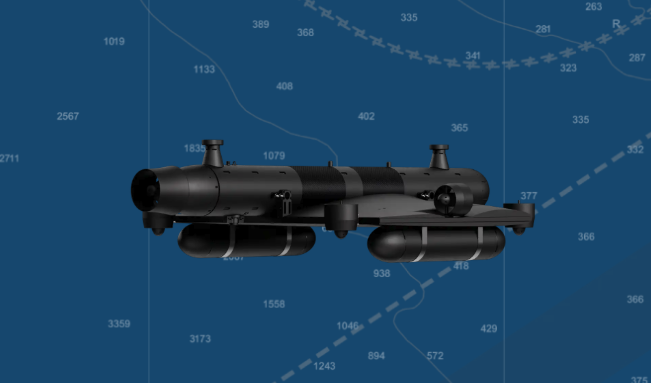
The startup is distinguishing itself by developing a comprehensive family of autonomous maritime systems rather than a single, specialized vehicle. The Ulysses product suite includes the Mako underwater vehicle, the Leviathan surface vessel, and the Kraken launch-and-recovery system. This tiered architecture is designed to function as a modular fleet, addressing a bottleneck in maritime operations where disparate systems often struggle with interoperability. By providing a proprietary stack that covers the subsurface, surface, and deployment layers, Ulysses aims to offer a unified solution for missions that require long-range endurance and complex coordination.
This modular approach reflects a broader trend in the robotics sector toward integrated hardware ecosystems. Rather than forcing customers to act as systems integrators, Ulysses is building the tools necessary to configure equipment for a wide variety of tasks. These applications range from high-fidelity ocean data collection and undersea infrastructure inspection to specialized defense missions. As maritime domains become increasingly contested and economically vital, the ability to deploy flexible, autonomous assets without the heavy footprint of traditional crewed vessels is becoming a strategic priority for both government and commercial entities.
The investment from Andreessen Horowitz's American Dynamism fund underscores the importance of domestic manufacturing and engineering in categories deemed critical to national resilience. Startups in this category are often evaluated not just on their software intelligence, but on their ability to solve the extreme physical challenges of the marine environment. Operating at sea presents a fundamentally different reliability problem compared to deploying robots in controlled environments like warehouses or paved roads. In the open ocean, the lack of traditional GPS signals underwater and the corrosive nature of saltwater create a high bar for engineering excellence.
A core component of the Ulysses value proposition is its focus on the physical logistics of maritime robotics. Vehicles must navigate without constant communications, tolerate extreme pressure and rough surface conditions, and return useful data after long, unsupervised missions. The company recognizes that launch and recovery can be as important to operational success as the autonomy software itself. A highly capable underwater vehicle possesses limited value if field crews cannot deploy it safely or retrieve it repeatedly under heavy sea states. The Kraken system is specifically designed to mitigate these operational risks, providing a bridge between the vessel and the water.
Ulysses is entering a market shaped by surging demand for maritime awareness and lower-cost defense systems. Historically, subsea exploration and monitoring have been the province of massive government agencies or multi-billion dollar energy conglomerates using tethered remotely operated vehicles. The shift toward untethered, autonomous fleets represents a paradigm shift in how organizations manage undersea assets. By lowering the cost of entry and the cost of operation, Ulysses is positioning itself to capture a market that requires persistent surveillance of undersea cables, pipelines, and environmental transitions.
Industry analysts have noted that the competitive landscape for marine robotics is tightening as established defense contractors and a new wave of autonomy startups vie for dominance. Ulysses will compete not only with the legacy providers of maritime hardware but also with software-first companies attempting to retrofit existing hulls with autonomous brains. To succeed, the company will be judged on its systems' endurance, payload flexibility, and the total cost of ownership for a fleet. In an industry where hardware failure is common, the ability to demonstrate high uptime and predictable maintenance schedules will be the primary differentiator.
The new injection of capital will support a significant expansion in manufacturing capacity, strategic hiring, and further Research and Development across the entire product line. As the company scales its headcount, it will likely focus on recruiting specialists in naval architecture, marine engineering, and distributed autonomy. The transition from building prototypes to scaling a manufacturing line for marine-grade hardware is a capital-intensive journey, and this Series A provides the runway necessary to establish a repeatable production process.
By controlling the underwater, surface, and support layers simultaneously, Ulysses hopes to significantly reduce the integration burden for its end users. In many current maritime operations, a customer might purchase an autonomous underwater vehicle from one vendor and a launch system from another, leading to software conflicts and physical incompatibility. The Ulysses modular fleet is built to improve coordination between assets, allowing the Leviathan surface vessel to act as a communication relay or transport hub for the Mako underwater units, thereby extending the effective range of the entire mission.
The next existential challenge for Ulysses lies in moving from controlled demonstrations into repeat, real-world deployments where hardware durability can be measured over thousands of hours. The maritime environment is notoriously unforgiving, and hardware that performs well in a harbor test may struggle when subjected to the prolonged vibration and biofouling of a multi-week mission. Investors will be watching for evidence that the company can achieve mission completion rates that rival or exceed traditional crewed methods while maintaining the cost advantages of an autonomous fleet.
Furthermore, the inclusion of Booz Allen Ventures and Harpoon Ventures in this round points toward a clear trajectory in the defense and dual-use sectors. As the U.S. Department of Defense emphasizes the need for 'attritable' systems—hardware that is inexpensive enough to be lost in combat without significant strategic deficit—startups like Ulysses provide a vital technological path forward. The ability to churn out robotic fleets that can perform reconnaissance or protect harbor infrastructure without risking human divers is a capabilities gap that the Pentagon is eager to close.
As Ulysses begins the next phase of its growth, its success will serve as a bellwether for the broader marine robotics industry. The company must prove that its integrated approach is not just a theoretical advantage but a practical one that solves the day-to-day headaches of maritime operators. With $46 million in total funding and the backing of some of Silicon Valley’s most influential institutional investors, Ulysses now has the resources to attempt to modernize a sector that has long been defined by its resistance to rapid technological change.
Watchers of the mobility and defense sectors will be looking for the first major commercial contracts or government programs of record that validate the Ulysses architecture. The transition from venture-backed R&D to sustained revenue is the most difficult leap for hardware startups in the maritime space. However, if the company can deliver on its promise of a modular, reliable, and easily deployable fleet, it may well define the new standard for how data is gathered and security is maintained beneath the surface of the world's oceans.
Sources
Written by
The Company Wire
Inside the companies building what’s next. Reporting on startups, technology, funding and the people shaping them.