World Foundation Raises $52.5 Million Through a Locked Token Sale
The financing will support World ID infrastructure, but the transaction is a crypto-token sale rather than a conventional venture equity round.
SAN FRANCISCO, Calif. - World Foundation has raised $52.5 million through a sale of locked WLD tokens to institutional investors, marking a significant injection of capital into a project aimed at redefining digital identity in the age of artificial intelligence. Pantera Capital led the transaction, which also saw participation from Bain Capital Crypto and other unnamed institutional players. The foundation, which oversees the development and governance of the World network, indicated that the capital will be used to expand World ID infrastructure as AI changes how identity is verified online, emphasizing the increasing difficulty of distinguishing between human actors and sophisticated automated agents in digital environments.
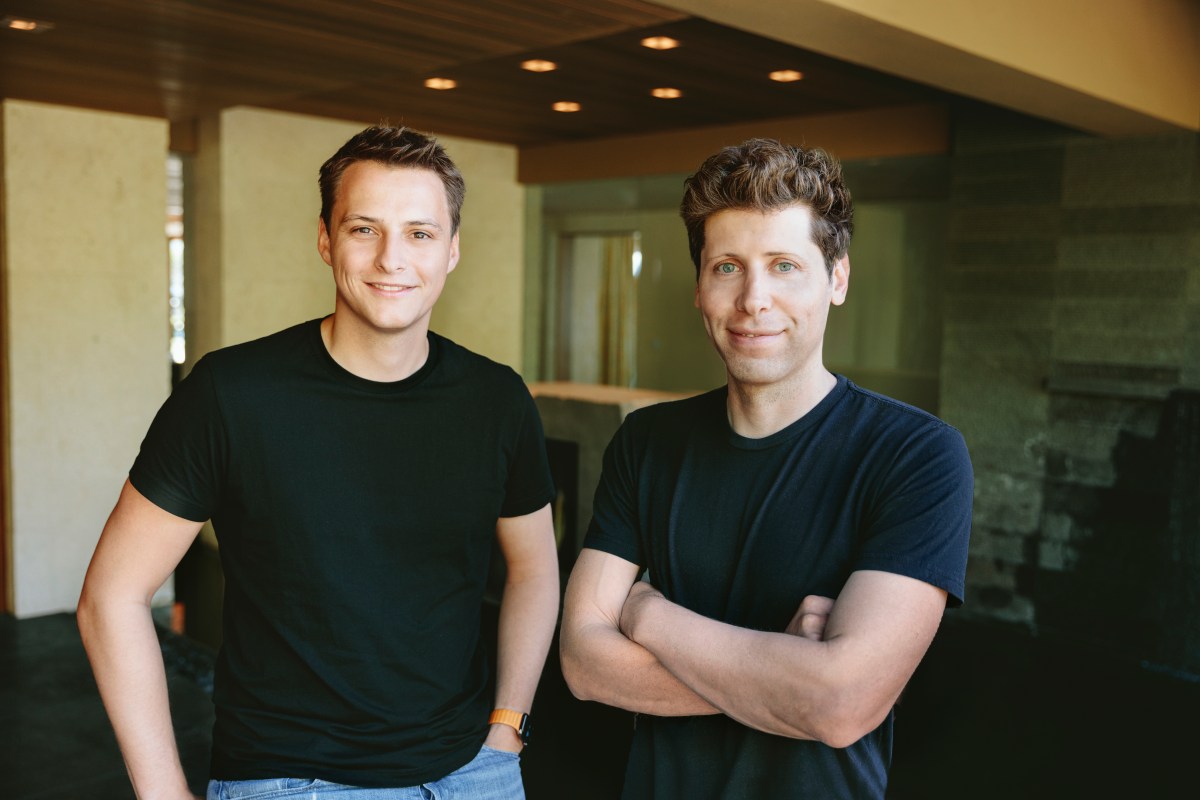
The project is being developed in close collaboration with Tools for Humanity, a San Francisco-based technology provider co-founded by OpenAI CEO Sam Altman and Alex Blania. By positioning itself at the intersection of cryptography and biometrics, the organization seeks to establish a global proof-of-personhood standard. The network utilizes specialized iris-scanning hardware known as Orb devices, which generate a unique credential for each user. This proof-of-human credential is intended to serve as a digital passport that confirms an individual is a real person without requiring the disclosure of sensitive personal details like legal names or physical addresses.
The structure of this financing round deviates from the traditional Silicon Valley model of venture equity. Rather than selling shares in Tools for Humanity, the World Foundation sold native WLD tokens that are subject to specific lockup periods. This distinction carries significant weight for market analysts and investors comparing World with traditional venture-backed identity or security companies. Because investors purchased tokens rather than equity, their economic exposure and potential governance rights differ fundamentally from a conventional startup round, tied more directly to the performance and utility of the token ecosystem than the corporate valuation of the software developer itself.
Central to the foundation's mission is the argument that the rapid proliferation of generative artificial intelligence will necessitate a privacy-preserving way for people to distinguish themselves from automated accounts. As large language models and synthetic media become more lifelike, the risk of 'sybil attacks'—where a single actor creates thousands of fake accounts to manipulate social media or exhaust public resources—becomes a critical threat to internet architecture. The project suggests that existing methods of verification, which often involve repeatedly sharing government identification with disparate private companies, are neither scalable nor sufficiently private for a modern digital economy.
The technology behind the World network relies on zero-knowledge proofs, a cryptographic method that allows one party to prove to another that a statement is true without revealing any information beyond the validity of the statement itself. In this context, a user can prove they are a unique human previously verified by an Orb without the verifying application learning the user’s specific identity. This architectural choice is designed to mitigate the inherent risks of maintaining a global biometric database, though the project continues to face skepticism from privacy advocates regarding the long-term security of the collected metadata.
The strategic timing of the $52.5 million round arrives as a broader debate unfolds across the technology sector regarding the future of online trust. Major platforms like LinkedIn and X have explored varied methods of user verification, ranging from government ID uploads to paid subscriptions. Simultaneously, various governments are developing their own digital identity standards and sovereign digital currencies. World is positioning its decentralized protocol as a neutral alternative to these government-led or platform-specific silos, aiming for a cross-border interoperability that current systems lack.
Despite the successful capital raise, World faces substantial regulatory, privacy, and adoption challenges across multiple jurisdictions. The collection of biometric data has historically been a lightning rod for regulatory scrutiny, particularly in regions with robust data protection laws like the European Union. Regulators in several countries have raised questions about how the data is stored, who has access to it, and whether the consent obtained from users—many of whom are incentivized by token distributions—is truly informed and voluntary under international standards.
The network’s viability depends heavily on a liquid token economy and a large, active base of participating individuals. While the initial token distribution serves as an incentive for users to undergo biometric scanning, the long-term value of the ecosystem is tied to the utility of the World ID itself. The foundation must convince developers to integrate the protocol into their third-party applications, ranging from social media platforms to financial services, to create a reason for users to maintain their credentials beyond the initial sign-up period.
Investment analysts have noted that the locked nature of the token sale suggests a longer-term commitment from firms like Pantera and Bain Capital Crypto. By accepting lockups, these institutional investors are betting on the gradual maturation of the World infrastructure rather than a quick exit. This patient capital approach is often seen as a necessity in the infrastructure layer of the crypto industry, where building the requisite physical hardware and global user base can take several years of sustained operation.
The new funds are expected to support an increase in verification hardware production, enabling the foundation to deploy more Orbs in a wider variety of geographic locations. Each Orb is a sophisticated piece of optical hardware that must be manufactured to high tolerances to ensure the integrity of the biometric scans. Furthermore, the capital will likely fund increased network capacity and new partnerships with software developers who can build services on top of the World ID protocol, expanding the ecosystem's footprint in the decentralized finance and digital governance sectors.
However, the project remains in a race against time and competing standards. As governments move closer to deploying their own national digital IDs, the window for a private, decentralized protocol to become the global default may be narrowing. Furthermore, the reliance on physical hardware creates a bottleneck for scaling that pure software solutions do not face. World must demonstrate that its hardware-based approach to proof-of-personhood is significantly more secure and reliable than software-based alternatives to justify the friction of the physical enrollment process.
In the coming months, the organization must prove that World ID is useful beyond simple token distribution and that its stringent privacy claims can withstand rigorous, independent examination. While the foundation has moved toward open-sourcing parts of its software and hardware designs, skepticism remains a primary hurdle for mainstream adoption. Broad, repeated use of the World ID by outside applications would provide much stronger evidence of the project's success than the raw number of people who complete an initial verification to receive a token reward.
The project's close ties to Sam Altman continue to bring high levels of visibility and scrutiny. As the leader of OpenAI, Altman has a unique vantage point on the capabilities of AI, lending weight to his assertions that a human-verification layer is essential for the future of the internet. Yet, this high profile also attracts the attention of competition regulators and digital rights groups who are wary of a single entity holding such a foundational role in the verification of human activity online.
As the World Foundation deploys this new capital, the technology industry will be watching for metrics that indicate genuine utility. The success of the $52.5 million round will ultimately be judged by whether the organization can transition from an experimental crypto-biometric project into a staple of digital identity infrastructure. Whether the WLD token can sustain its role as the economic engine for this ambitious global network remains an open question as the project navigates the complex landscape of international law and technical scaling.
Sources
Written by
The Company Wire
Inside the companies building what’s next. Reporting on startups, technology, funding and the people shaping them.