IonQ Shares Drop 32% in Monthlong Slump Preceding Third-Quarter Results
A sector-wide retreat across pure-play quantum hardware stocks tests market patience as IonQ integrates foundry acquisitions and manages wide operating losses.
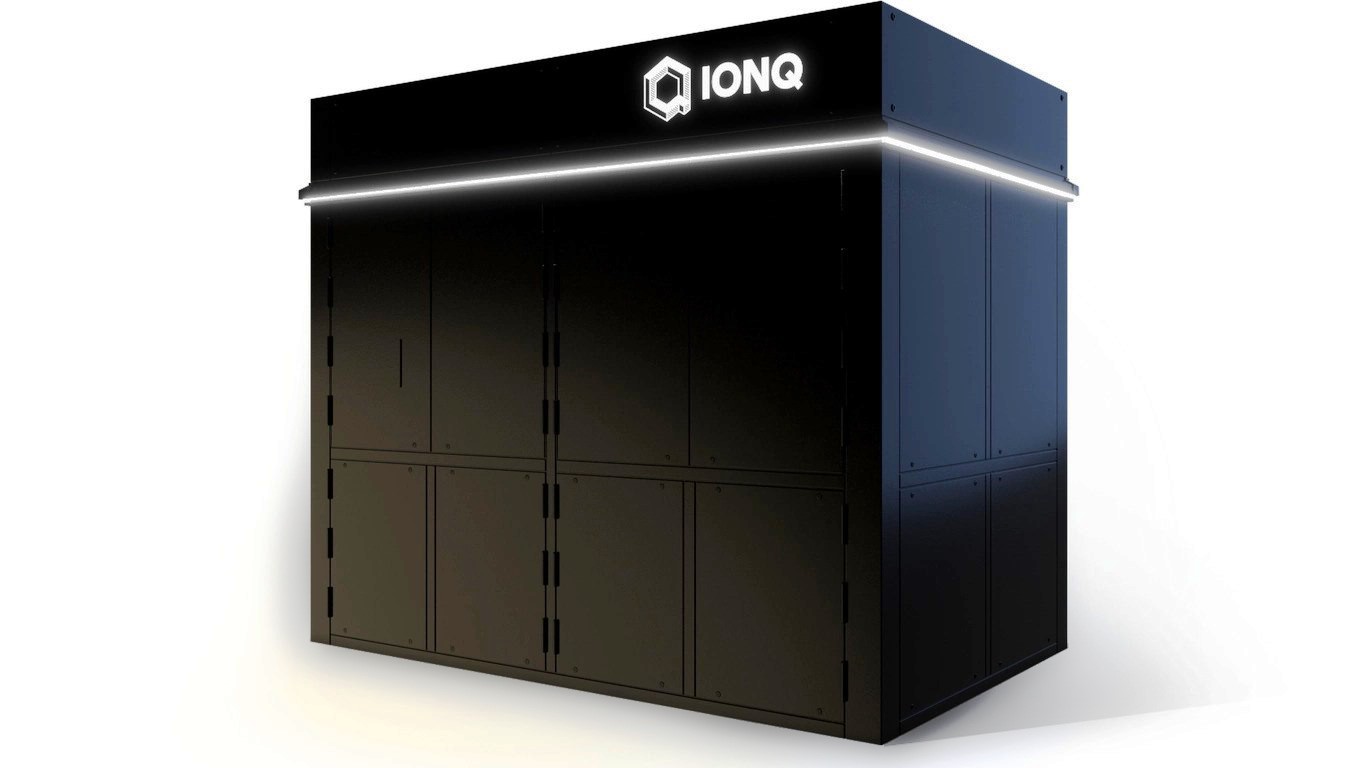
Shares of quantum computer manufacturer IonQ have dropped 32% over the past month to trade near $29.70, caught in an industrywide valuation pullback ahead of the company's third-quarter earnings report on November 5.
The selloff comes as public markets recalibrate risk appetite for speculative, long-horizon computing platforms. While commercial quantum advantage remains years away, IonQ has stood apart from competitors by using major acquisitions and foundry ownership to post rapid top-line growth. The stock's sharp retreat illustrates the tension between expanding hardware operations and widening GAAP losses as revenue expectations escalate.
The contraction spans the pure-play sector. According to market data reported by Yahoo Finance (https://247wallst.com/investing/2026/11/03/ionq-just-dropped-32-in-a-month-is-ionq-stock-hopeless-or-ready-for-a-rebound/?.tsrc=rss), rival hardware developers have suffered comparable drawdowns over the same 30-day window. Superconducting system maker Rigetti Computing slid 28% to $10.94, while quantum annealing developer D-Wave Quantum tumbled 35% to $10.23.
The drawdown follows what was on paper a blowout second quarter. On August 5, the College Park, Maryland-based company reported second-quarter revenue of $80.1 million, up 287% year over year. Excluding acquired businesses, organic revenue grew 132%, which chief executive Niccolo de Masi described on an earnings call as the company's fifth consecutive quarter of record revenue.
IonQ subsequently lifted its full-year 2026 revenue guidance to between $450 million and $460 million. That forecast reflects the consolidation of SkyWater Technology, a Minnesota semiconductor foundry IonQ acquired in a $1.8 billion transaction completed on July 31. The acquisition brought domestic microfabrication directly in-house, shifting IonQ away from pure fabless development toward a vertically integrated model spanning chip manufacturing, trapped-ion computing, and integrated photonics.
However, that scale has created substantial margin friction. IonQ recorded an adjusted EBITDA loss of $120.3 million for the second quarter alongside operating expenses of $417.3 million. Its GAAP net loss ballooned to $1.9 billion, primarily driven by a $1.6 billion non-cash fair-market warrant revaluation. On the August earnings call, chief financial officer Inder Singh warned analysts against extrapolating quarterly spikes into uninterrupted growth trajectories.
Operationally, IonQ is preparing for its next major computing generation, targeting initial commissioning of its 256-qubit Superion systems in 2027. The company announced a quantum computing partnership with Nvidia in September and reached an agreement in October to acquire enterprise zero-trust cybersecurity firm Elisity in an all-stock transaction valued at up to $1.3 billion.
Wall Street is focusing on whether the company can sustain underlying organic momentum while digesting SkyWater's capital-intensive manufacturing overhead. When third-quarter results cross the tape after the bell on November 5, consensus estimates compiled by analysts anticipate a net loss of $0.34 per share, compared to a loss of $3.58 per share during the same quarter last year.
Sources
Written by
The Company Wire
Inside the companies building what’s next. Reporting on startups, technology, funding and the people shaping them.
