Memory Manufacturers Shift Capacity to Multi-Year Cloud Contracts, Squeezing Consumer Hardware
DRAM and NAND flash makers are allocating up to 70% of output to cloud hyperscalers under long-term deals, driving steep component price surges.
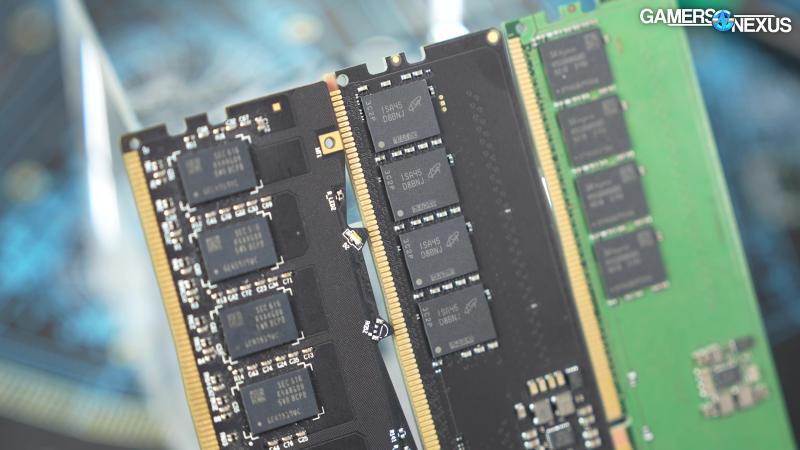
Semiconductor manufacturers producing DRAM and NAND flash are overhauling their distribution models by locking substantial portions of output into multi-year contracts with major cloud and artificial intelligence infrastructure operators. According to reporting published on Hacker News (https://gamersnexus.net/news-features/memory-companies-have-destroyed-consumer-market), memory suppliers are structuring three-to-five-year long-term agreements (LTAs) with five to 16 major enterprise customers, allocating between 50% and 70% of total production capacity directly to these accounts. The contractual shift aims to stabilize revenue and reduce the semiconductor sector's historical boom-and-bust cycle, but it has sharply reduced the volume of memory available for retail PC builders, independent hardware assemblers, and standard enterprise IT buyers.
The reallocation is underpinned by massive capital expenditures from top cloud service providers (CSPs). Data from market research firm TrendForce projects aggregate capital expenditures across the nine largest global CSPs to expand from $922 billion in 2026 to $1.383 trillion in 2027. Procurement of DRAM and NAND flash is estimated to account for 47% of total CSP capital spending in 2026—representing roughly $433 billion—before climbing to 68%, or approximately $940 billion, in 2027.
Financial disclosures across memory fabricators outline the scale of long-term commitments. Micron reported that its 16 active LTAs represent 20% of its DRAM and one-third of its NAND supply, with targets to secure half or more of company revenue under structured agreements. SanDisk disclosed that its datacenter and edge business revenues jumped 1,298% and 392% year-over-year, respectively, while consumer segment revenue fell 5%; the company is allocating 50% of its bit output in 2027 and 67% in 2028 to LTAs. Samsung confirmed completed agreements with its top five global data center customers alongside active discussions with five more, intending to allocate 60% to 70% of total capacity to multi-year contracts while Western Digital noted customer discussions extending agreements out to 2031.
The diversion of fabrication capacity toward hyperscalers has triggered severe price inflation throughout downstream consumer hardware. Average retail prices since September 2025 have climbed 137% for 2 TB NVMe SSDs, 183% for 2 TB SATA SSDs, 363% for 32GB DDR5 memory kits, and 294% for 32GB DDR4 kits. High-end DDR5-6000 64GB kits have increased roughly 483%, trading between $1,300 and $1,400, while a 4 TB Samsung 990 Pro SSD increased 254% from its 2024 price of $390 to $1,100. Broad market forecasts indicate global smartphone shipments will drop 16.7% in 2026 as average selling prices rise 27.6% to $581, compounded by hardware price adjustments across Apple lineups, Microsoft Xbox consoles, Sony PlayStation 5 units, and Nintendo systems.
As hardware price hikes render on-premises server upgrades unaffordable for smaller businesses, enterprise computing demand is actively shifting toward hosted infrastructure. In Amazon's first-quarter 2026 earnings report, executive leadership noted that memory cost increases and supply scarcity are accelerating enterprise migrations from local infrastructure to cloud environments. Correspondingly, cloud infrastructure providers have seen sharp quarterly revenue increases, with Amazon Web Services growing 36.7% year-over-year, Microsoft's Azure and cloud services unit up 43%, and Google Cloud expanding 82%.
Meanwhile, regional production shifts continue as Chinese memory manufacturers expand market presence. Industry figures from Counterpoint Research indicate YMTC has entered the top three global NAND manufacturers by shipment volume, surpassing Kioxia, Micron, and SanDisk, while CXMT's share of global DRAM revenue reached 10%, an increase of 6 percentage points year-over-year. However, as established chipmakers tie up the majority of production output in multi-year enterprise contracts through the end of the decade, retail hardware buyers and non-hyperscale enterprises face prolonged component constraints.
Sources
Written by
The Company Wire
Inside the companies building what’s next. Reporting on startups, technology, funding and the people shaping them.


