Tesla Ends Swedish Labor Union Strike by Buying Out All Remaining Striking Workers
The electric vehicle maker resolved Sweden's longest modern labor dispute by offering individual buyout packages to technicians rather than signing a collective agreement.
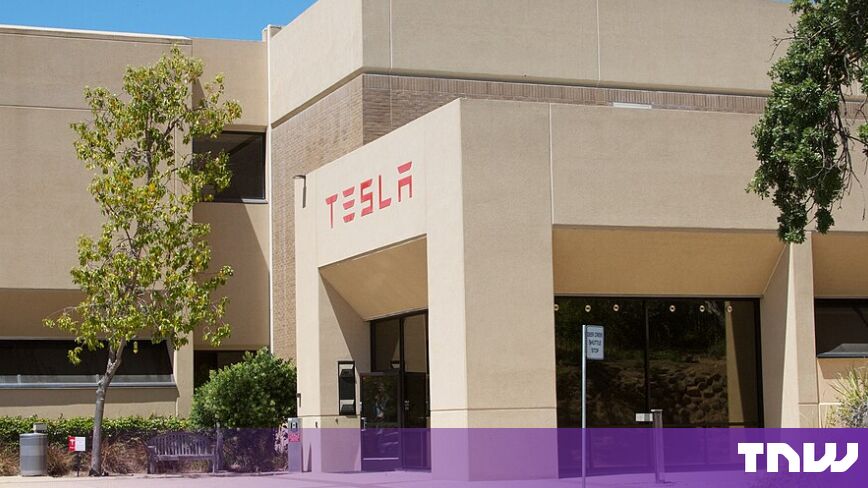
Tesla has brought an end to Sweden's longest modern labor conflict not by entering a collective bargaining agreement, but by systematically buying out every remaining striking mechanic, as first reported by The Next Web. The Swedish trade union IF Metall formally announced the conclusion of the dispute, with the official end set for 12:01 a.m. on Wednesday, Aug. 19, following an initial union statement on Aug. 13.
The industrial action originally commenced on Oct. 27, 2023, involving roughly 120 technicians across seven Swedish service locations. In Sweden, where no national statutory minimum wage exists, pay rates, working hours, and retirement benefits are typically determined through collective agreements negotiated between labor unions and employer federations. Because collective agreements serve as the primary framework for worker protections in the country, Tesla's refusal to sign one quickly triggered widespread sympathy blockades from dockworkers at major ports including Malmö and Gothenburg, as well as transport workers, electricians, postal employees, and showroom cleaners across the Nordic region.
The widespread sympathy actions included postal workers refusing to deliver vehicle registration plates, prompting Tesla to file lawsuits against PostNord and the Swedish Transport Agency. Although Tesla secured an interim court order in November 2023, it subsequently lost on appeal in December, keeping the license plate delivery blockade in place. Throughout the prolonged conflict, Tesla remained firm in its opposition to formal union representation. A communications manager for the automaker told Sweden Herald that Tesla's employment packages already encompass "all regular terms and conditions specified in Swedish laws and regulations," citing provisions for working hours, occupational pensions, and safety standards. Tesla Chief Executive Officer Elon Musk previously described the union's industrial action as "insane."
Rather than capitulating to union demands, Tesla systematically offered buyout packages to striking technicians until no participating employees remained. Roughly 80 workers accepted financial settlements, completely eliminating striking personnel in Malmö and reducing union participation in Stockholm and Uppsala to just a handful of workers prior to the final agreement. IF Metall chairperson Marie Nilsson openly acknowledged the union's defeat, telling the trade publication Dagens Arbete, "of course we have failed," while praising the participating mechanics as "union heroes."
Union leaders emphasized the historical novelty of Tesla's tactic within the Swedish market. Simon Petersson, agreement secretary for IF Metall, remarked that systematic strikebreaking through individual worker buyouts had been absent from the Swedish labor market since the 1930s. Veli-Pekka Säikkälä of the Swedish trade union confederation LO stated that Tesla deployed its "gigantic financial resources" to neutralize the strike. Similarly, Atle Høie, general secretary of the global union federation IndustriALL, noted that "there seems to be no limits to the length Tesla would go to keep unions out," observing that the automaker succeeded in paying its way out of the dispute.
Wall Street responded positively to the resolution, sending Tesla shares up approximately 4% during regular trading on Thursday, followed by an additional 1% gain in after-hours trading. The financial expenditure required to buy out approximately 80 mechanics represented a negligible sum for the EV manufacturer, which generated $28.24 billion in revenue during the second quarter alone. Even as Tesla's quarterly operating income fell 57% to $398 million due to heavy investments in artificial intelligence and robotics, the financial capital required to hold out against the union was never a constraining factor.
The dispute concludes as Tesla continues to expand its broader footprint across Europe, where electric vehicles captured more than a quarter of total auto sales for the first time in June. In April, the Netherlands became the first European jurisdiction to approve Tesla's Full Self-Driving (FSD) Supervised software. Meanwhile, technology-driven labor friction continues in other global markets, including South Korea, where Hyundai union members voted in June to authorize strike action over the implementation of humanoid robots on manufacturing floors. While IF Metall maintains that its long-term goal of securing collective agreements remains unchanged, the union currently has no internal employees remaining at Tesla to conduct further industrial action, bringing a close to a conflict that spanned 1,021 days.
Sources
Written by
The Company Wire
Inside the companies building what’s next. Reporting on startups, technology, funding and the people shaping them.