Apple Brings M5 Pro and M5 Max to MacBook Pro
The 14- and 16-inch laptops add faster AI processing, higher storage floors and improved solid-state drive performance.
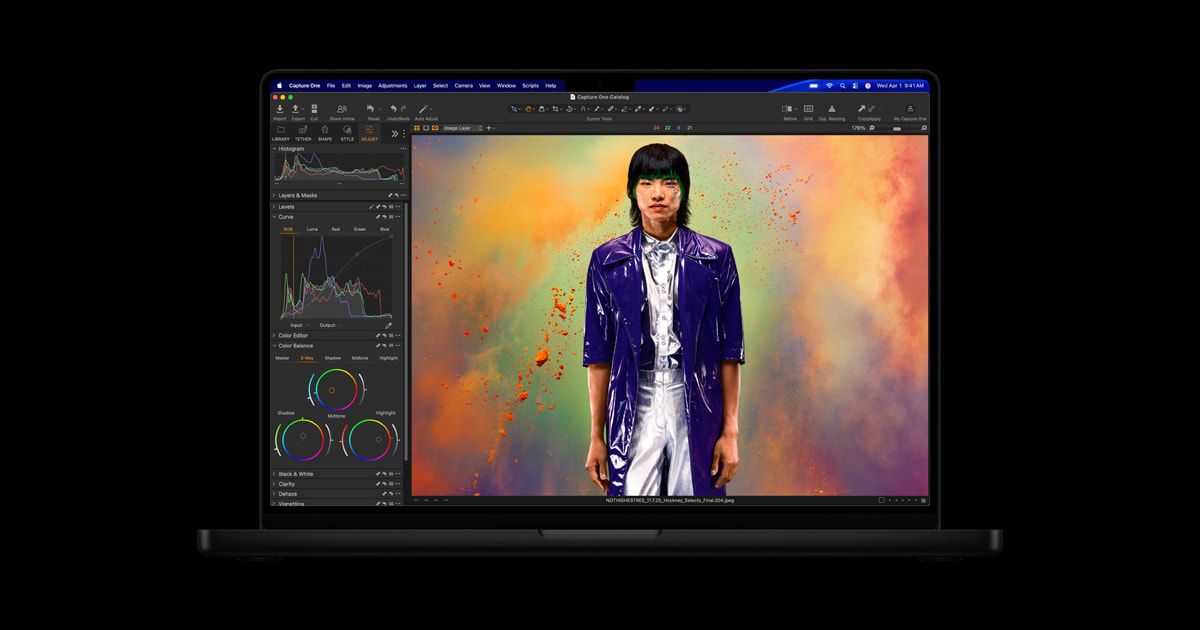
CUPERTINO, Calif. - Apple has introduced new 14- and 16-inch MacBook Pro models powered by the M5 Pro and M5 Max chips, marking a significant iteration in the company's transition to its own silicon architecture. The machines retain the familiar professional laptop design that has defined the lineup in recent years while focusing the specific internal upgrades on local artificial intelligence, graphics performance, memory bandwidth, and significantly faster storage. The announcement comes at a time when the broader personal computing industry is pivoting toward specialized hardware capable of handling generative workloads without relying exclusively on cloud-based infrastructure.
The core of the upgrade lies in a new central processing unit and graphics cores equipped with dedicated Neural Accelerators, reflecting Apple's commitment to internal chip design as its primary competitive advantage. By controlling the stack from the transistor level to the operating system, the company aims to optimize how software interacts with specialized hardware. Industry analysts note that this vertical integration has allowed the company to consistently push performance ceilings in the laptop category, even as physical constraints like thermal management and battery life remain constant challenges for mobile workstations.
Apple says the new M5-equipped computers deliver as much as four times the AI performance of the previous generation and up to eight times the AI performance of M1-based systems. These peak figures highlight the rapid evolution of the company's Neural Engine and general-purpose compute cores since the initial transition away from Intel-based components. This trajectory suggests a strategic focus on making the MacBook Pro a viable alternative to dedicated desktop setups for high-intensity computational tasks, particularly in fields where latency and data privacy are paramount concerns.
The company is specifically targeting developers, researchers, video professionals, designers, and other power users who run demanding work locally. This demographic represents a high-margin segment of the market that demands reliable sustained performance for tasks such as large-language model fine-tuning, complex 3D rendering, and high-resolution video production. For these users, the efficiency of the M-series architecture is often more valuable than raw clock speed alone, as it enables high-performance work in environments where power outlets may not be readily available.
Base storage across the professional lineup has increased, addressing a long-standing request from the creative community for more generous entry-level specifications. Furthermore, Apple says solid-state drive performance can be up to twice as fast as the previous generation. This improvement in storage throughput is critical for workflows involving the manipulation of massive data sets or high-bitrate video files, where the drive's read and write speeds often become the primary bottleneck in an otherwise fast system.
Higher-end configurations of the M5 Max support large amounts of unified memory, allowing for the execution of models and media projects that would not fit comfortably on ordinary laptops. The unified memory architecture, which allows both the CPU and GPU to access the same pool of high-speed data, remains a cornerstone of Apple's design philosophy. By expanding these limits, the company is positioning the MacBook Pro as a portable workstation for data scientists and visual effects artists who previously required expensive rack-mounted hardware or desktop towers.
In addition to the internal processing improvements, the new systems include updated wireless and external-display connectivity options to keep pace with evolving industry standards. This ensures that the professional ecosystem—which includes high-speed networking, specialized peripherals, and multi-monitor setups—remains fully supported. As professional workflows become increasingly distributed, the ability to maintain fast data transfers to external arrays and displays is essential for maintaining the device's utility in a studio environment.
Despite the performance gains, price points have shifted. Prices increased across parts of the lineup, with the 14-inch M5 Pro model starting at $2,199, while M5 Max configurations cost substantially more depending on the chosen memory and storage upgrades. This pricing strategy reflects the increased cost of advanced semiconductor manufacturing and the underlying inflation in the global supply chain. Apple is betting that its core professional audience will find the productivity gains sufficient to justify the higher cost of entry.
Apple began taking orders immediately after the announcement, with retail availability scheduled for March 11. This timeline positions the launch at a critical juncture in the annual tech cycle, as enterprise budgets are often finalized and professional users look to refresh their gear for the spring season. The logistical rollout will be a test of Apple's supply chain resiliency, particularly as the complexity of its custom silicon designs continues to increase with every generation.
Potential buyers must now weigh the performance gains of the M5 series against the existing value of recent M4-based machines, which remain highly capable for the vast majority of professional tasks. This internal competition creates a complex decision-making process for IT departments and individual freelancers. While the M5 Pro and Max offer clear advantages in specific AI and graphics domains, the incremental nature of annual hardware refreshes means that the value proposition varies significantly depending on a user's current hardware cycle.
The launch reinforces Apple's broader argument that some AI work should happen on the device rather than the cloud for reasons of speed, privacy, and predictable cost. In an era where cloud computing costs can scale rapidly with usage, the ability to run inference and basic training locally provides a strategic hedge for companies. Furthermore, keeping sensitive developer code or proprietary research on the physical device aligns with the growing emphasis on data sovereignty and security in the enterprise sector.
However, the practical test for the M5 series remains application support. Faster silicon matters only when professional software can use the new accelerators efficiently. While Apple's own software suite is optimized for the new chips, the success of the platform depends on third-party developers updating their tools to leverage the specific architectural changes in the M5 series. The gap between theoretical peak performance and real-world utility is often determined by these software optimizations.
As reviewers and early adopters receive their units, independent benchmarks will be more useful than peak company figures for deciding whether an upgrade truly changes real workflows. While marketing materials highlight the best-case scenarios for performance, professional users will be looking for sustained thermal performance and battery endurance under heavy loads. These real-world metrics often tell a different story than synthetic tests, especially in mobile form factors that must balance heat dissipation with portability.
Looking ahead, the arrival of the M5 Pro and M5 Max sets a new baseline for the high-end laptop market, pressuring competitors in the Windows ecosystem to accelerate their own AI-focused hardware initiatives. The ongoing rivalry between chip manufacturers is driving a rapid pace of innovation that benefits the end user, even as it shortens the lifecycle of current-generation hardware. Apple's ability to maintain its lead in performance-per-watt will be the primary metric to watch as the industry matures.
Sources
Written by
The Company Wire
Inside the companies building what’s next. Reporting on startups, technology, funding and the people shaping them.