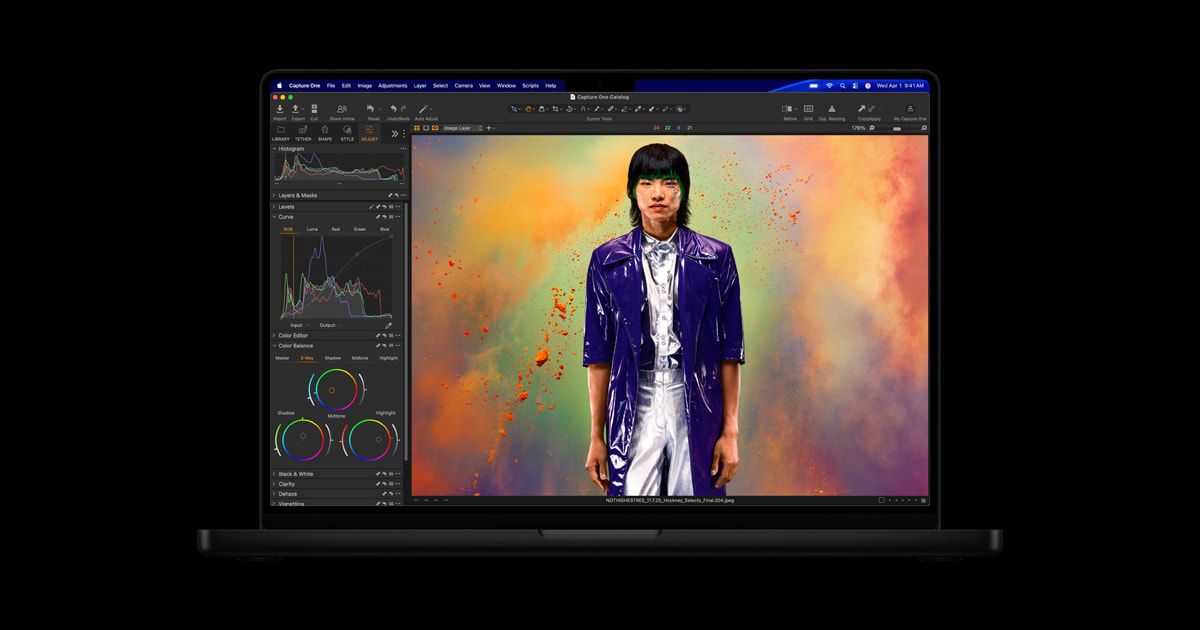
Apple Updates MacBook Air With M5 Chip and More Base Storage
The new laptop doubles entry-level storage while increasing AI and graphics performance.

CUPERTINO, Calif. - Apple has introduced a MacBook Air powered by its M5 chip, updating the company's best-selling laptop with faster computing, graphics and on-device AI performance. The launch represents a significant technical milestone for the consumer electronics giant as it continues to integrate its proprietary silicon architecture deeper into its hardware lineup. The entry configuration now includes 512 gigabytes of storage, twice the capacity of the previous base model, addressing a primary pain point for consumers and educational buyers who have long criticized the limitations of the prior entry-level specifications.
The new MacBook Air is available in 13-inch and 15-inch versions and can be configured with as much as 4 terabytes of storage, offering a range of options for users who require significant local data access without relying on external drives or cloud services. Apple said the solid-state drive is up to twice as fast as the prior generation, while the M5's neural and graphics systems accelerate generative and creative workloads. This performance increase is centered on the unified memory architecture and the high-bandwidth pathways defined by Apple's custom chip designs, which have consistently outperformed traditional commodity processors in power-per-watt efficiency.
Apple claims some AI tasks can run up to four times faster than on an M4-based MacBook Air, depending on the software and model. This substantial leap in machine learning tasks underscores the company's commitment to localized processing. The laptop also adds Wi-Fi 7 support while retaining the thin, fanless design and battery-focused positioning that define the Air line. By maintaining the fanless chassis, Apple is signaling its confidence in the thermal management capabilities of the M5 silicon, even as it pushes higher clock speeds and more intensive computational overhead during peak usage periods.
The update is evolutionary rather than a redesign, focusing on internal specifications rather than a pivot in physical form factor. More base storage addresses a longstanding complaint and may reduce the need for an immediate upgrade at purchase, a shift that could slightly impact Apple's average selling price but likely increases the long-term value proposition for the mass market. The M5 also gives developers a larger installed base for software that performs inference locally instead of sending every request to a cloud service, which aligns with growing industry concerns regarding data privacy and latency in generative AI applications.
Buyers should compare Apple's performance claims with the applications they actually use, as synthetic benchmarks rarely translate directly to every professional workflow. On-device AI speed depends on model size, memory and software optimization, while storage upgrades can raise the final price quickly. The launch strengthens the Air's specifications, but it does not change the product's limited port selection or non-upgradable design. These constraints remain a point of contention for power users who might otherwise consider the Air over the more expensive MacBook Pro despite the Air's lack of active cooling or additional connectivity options.
The introduction of the M5 series silicon occurs at a critical moment for the PC industry, which is currently undergoing a structural transformation toward AI-enabled hardware. As competitors in the Windows ecosystem release increasingly capable chips with dedicated neural processing units, Apple's move to double its base storage and upgrade the internal architecture serves to protect its market share in the premium thin-and-light laptop segment. The MacBook Air has historically been the volume driver for Apple’s Mac division, making its performance competitiveness essential for the company's overall hardware revenue.
Industry analysts have noted that the emphasis on local AI inference is a strategic pivot for Apple, moving away from purely cloud-based large language model interactions. By providing a hardware platform that can handle complex mathematical operations and matrix multiplication at the chip level, Apple is encouraging its developer ecosystem to build more sophisticated machine learning tools directly into macOS. This allows for features like real-time video editing, advanced image generation, and predictive text systems to operate without the latency or privacy risks associated with data centers.
Furthermore, the decision to double the base storage to 512 gigabytes is viewed by market observers as a necessary response to the increasing size of modern operating systems and professional applications. With high-definition video assets and complex developer environments requiring more space than ever, the previous 256-gigabyte threshold was increasingly perceived as insufficient for even casual users. This change brings the MacBook Air in line with modern storage expectations and may lengthen the replacement cycle for many consumers, as the device is less likely to become obsolete due to capacity constraints.
The transition to Wi-Fi 7 is another key technical refinement, offering higher peak data rates and lower latency in congested wireless environments. As the world moves toward more high-bandwidth networking standards, the inclusion of this technology ensures that the new MacBook Air remains compatible with the next generation of home and enterprise routers. This focus on future-proofing is a hallmark of Apple's late-cycle platform updates, ensuring that users who purchase these machines today will not find them technically lagging behind in connectivity for several years.
Despite these advancements, the execution risks for Apple lie in the continued adoption of its on-device AI features. While the hardware is now capable of significantly higher performance, the utility of these chips depends entirely on the availability of software that can leverage the Neural Engine effectively. If developers do not pivot their applications to utilize the M5’s specific architecture, the performance gains may remain theoretical for many users. Apple must therefore continue to provide robust developer tools and frameworks to ensure the ecosystem matures alongside the hardware.
The competitive landscape is also intensifying. Other major chip designers have recently announced mobile processors that rival Apple’s efficiency and AI performance marks. While Apple possesses the advantage of vertical integration—controlling everything from the silicon design to the operating system and the physical laptop—the gap that once existed between the MacBook Air and its competitors has narrowed in recent years. This release is an attempt to re-establish a clear performance lead in the portable computing category through raw specs and optimized software integration.
From a sustainability perspective, the M5 MacBook Air continues Apple's trend of utilizing recycled materials in its enclosures and internal components. However, the non-upgradable design of the laptop remains a hurdle for right-to-repair advocates. Since the memory and storage are soldered directly to the motherboard, users are unable to add capacity after the initial purchase. This business model forces consumers to make higher-cost decisions at the point of sale, a strategy that contributes to Apple’s high margins but remains a point of criticism in an era focused on hardware longevity.
What to watch next will be the real-world bench-marking of the M5 chip against the previous M-series generations. Independent testing will reveal if the four-fold increase in AI speed is replicable across a variety of weights and model types or if it is limited to specific Apple-optimized tasks. Additionally, the market will be looking to see how other products in the Mac portfolio, such as the Mac mini or the MacBook Pro, will integrate these M5 improvements as Apple refreshes its entire hardware cycle over the coming months.
As the global PC market shows signs of stabilization after several volatile years, Apple’s latest update reinforces its position as a dominant force in the high-end consumer market. The M5 MacBook Air is more than just a seasonal refresh; it is a declaration of the company’s intent to lead the personal computer industry into the AI era. By combining increased utility through storage with increased power through silicon, Apple is betting that the MacBook Air will remain the preferred tool for a wide range of users, from students to coding professionals.
Sources
Written by
The Company Wire
Inside the companies building what’s next. Reporting on startups, technology, funding and the people shaping them.