Asus Details RTX Spark-Powered ProArt GR1X Mini PC Ahead of Late 2026 Release
The compact desktop features Nvidia's 20-core N1X processor and up to 128GB of unified memory, entering a high-end AI workstation market squeezed by rising memory costs.
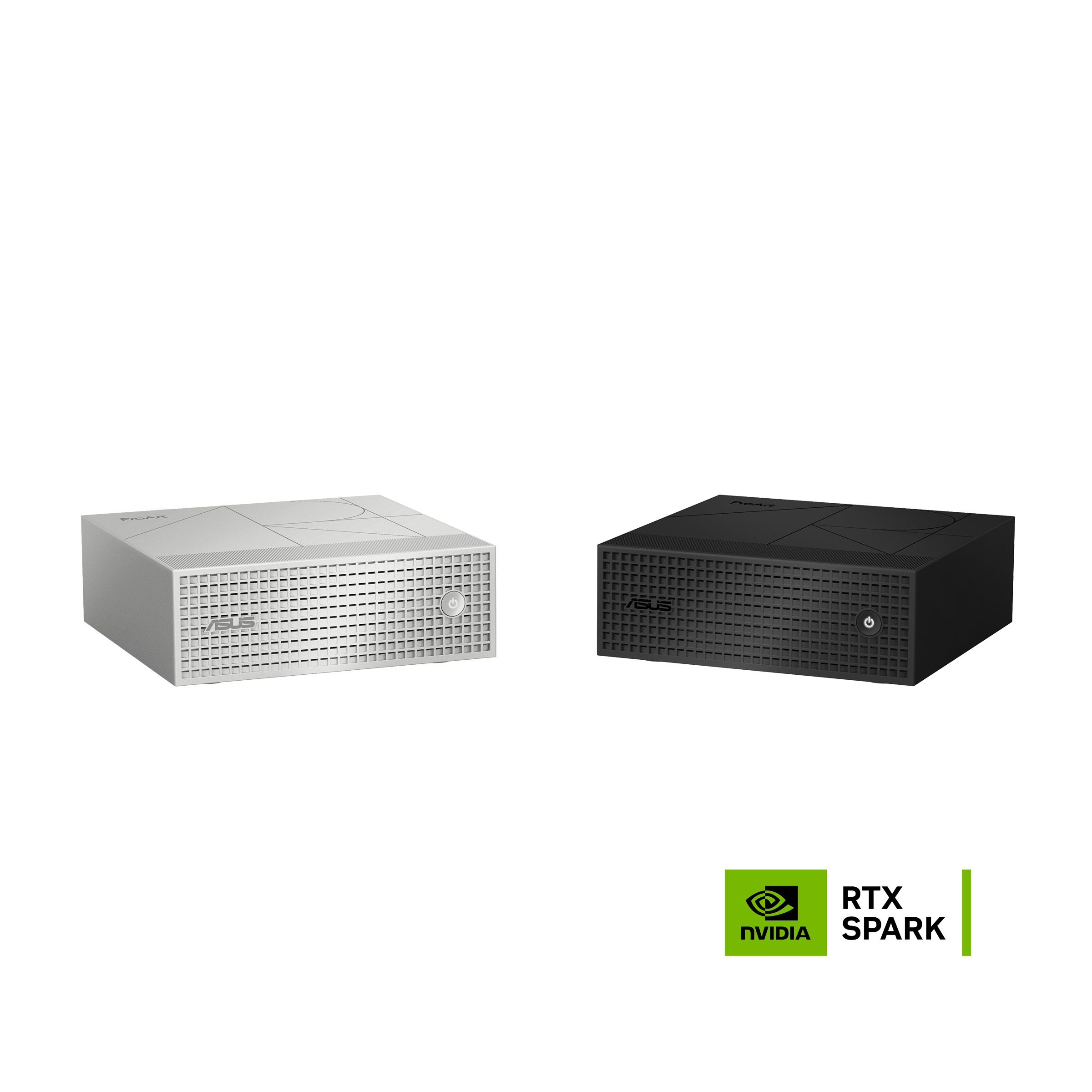
Asus has updated the hardware specifications and launch plans for its upcoming ProArt GR1X mini PC, a compact desktop built for local artificial intelligence development workloads. According to reporting by TechRadar Pro (https://www.techradar.com/pro/asus-proart-gr1x-joins-a-crowded-rtx-spark-field-sans-a-price-tag-while-amds-gorgon-halo-boxes-already-offer-192gb), Asus plans to sell the system in 64GB and 128GB unified LPDDR5X memory tiers through select premium retailers before the end of 2026, though official pricing remains unannounced.
First previewed at Computex 2026 as the ProArt Mini PC, the desktop centers on Nvidia's 20-core RTX Spark N1X processor equipped with a 6,144-core Blackwell graphics engine. Configured with a 140-watt thermal design power limit, the chassis measures 150 by 150 by 51 millimeters—a volume of roughly 1.1 liters—and weighs 1.48 kilograms. It draws power through a 240-watt USB-C adapter compliant with the USB Power Delivery 3.1 Extended Power Range standard.
The machine's physical layout and cooling closely mirror Asus's Linux-oriented Ascent GX10 workstation. Both systems share identical dimensions, weight, 240-watt power delivery, and dual 140 by 80 millimeter cooling fans. Both platforms are built around Nvidia's GB10 silicon, which Nvidia Chief Executive Officer Jensen Huang stated in September 2025 would power the DGX Spark desktop family.
Asus advertises 1 petaflop of FP4 compute throughput for the GR1X, positioning it to run local machine learning models with up to 120 billion parameters and context windows reaching 1 million tokens. However, company disclosures acknowledge that real-world model support depends on architecture, quantization, and context length. The headline FP4 figure also relies on structural sparsity, meaning dense computational workloads will see lower throughput.
The GR1X enters a competitive market for small-form-factor generative AI workstations, where AMD has built an early footprint. AMD's Ryzen AI Max+ 395 processor (Strix Halo) powers existing 128GB compact workstations, including AMD's own developer platform sold through Micro Center for $3,999.99 with a 16-core CPU, 40-compute-unit Radeon 8060S GPU, and 256GB/s of memory bandwidth.
AMD is expanding the segment with its Gorgon Halo architecture, branded as the Ryzen AI Max+ 495. Featuring clock speeds roughly 100MHz higher than its predecessor, Gorgon Halo supports up to 192GB of LPDDR5X-8533 memory delivering 273GB/s of bandwidth. System makers Framework and GMKtec state that up to 160GB can be assigned directly to graphics processing, surpassing the total memory capacity of current RTX Spark desktop designs.
Several Gorgon Halo systems have already reached the market with established pricing. GMKtec sells its 192GB EVO-X5 Pro for $6,599 with 2TB of storage, Peladn offers its YO2 495 in China for 49,999 yuan (approximately $7,454), and Lenovo plans to launch the ThinkCentre X Ultra in November starting at $3,699 with multi-unit clustering support. Framework's 192GB desktop configuration remains listed as coming soon.
System pricing across the AI mini PC category has trended sharply upward amid climbing memory expenses. Nvidia raised the price of its 128GB DGX Spark to $6,950—nearly 75 percent above its introductory price—while partner 64GB GB10 systems are expected to retail around $4,999. Alongside Microsoft's $5,999 Surface RTX Spark Dev Box, those figures highlight the premium market Asus must navigate once it finalizes retail pricing for the GR1X.
Sources
Written by
The Company Wire
Inside the companies building what’s next. Reporting on startups, technology, funding and the people shaping them.