Nvidia Introduces Space-Ready Vera Rubin Computing Module
The chipmaker is adapting its AI platform for satellites and orbital data processing.
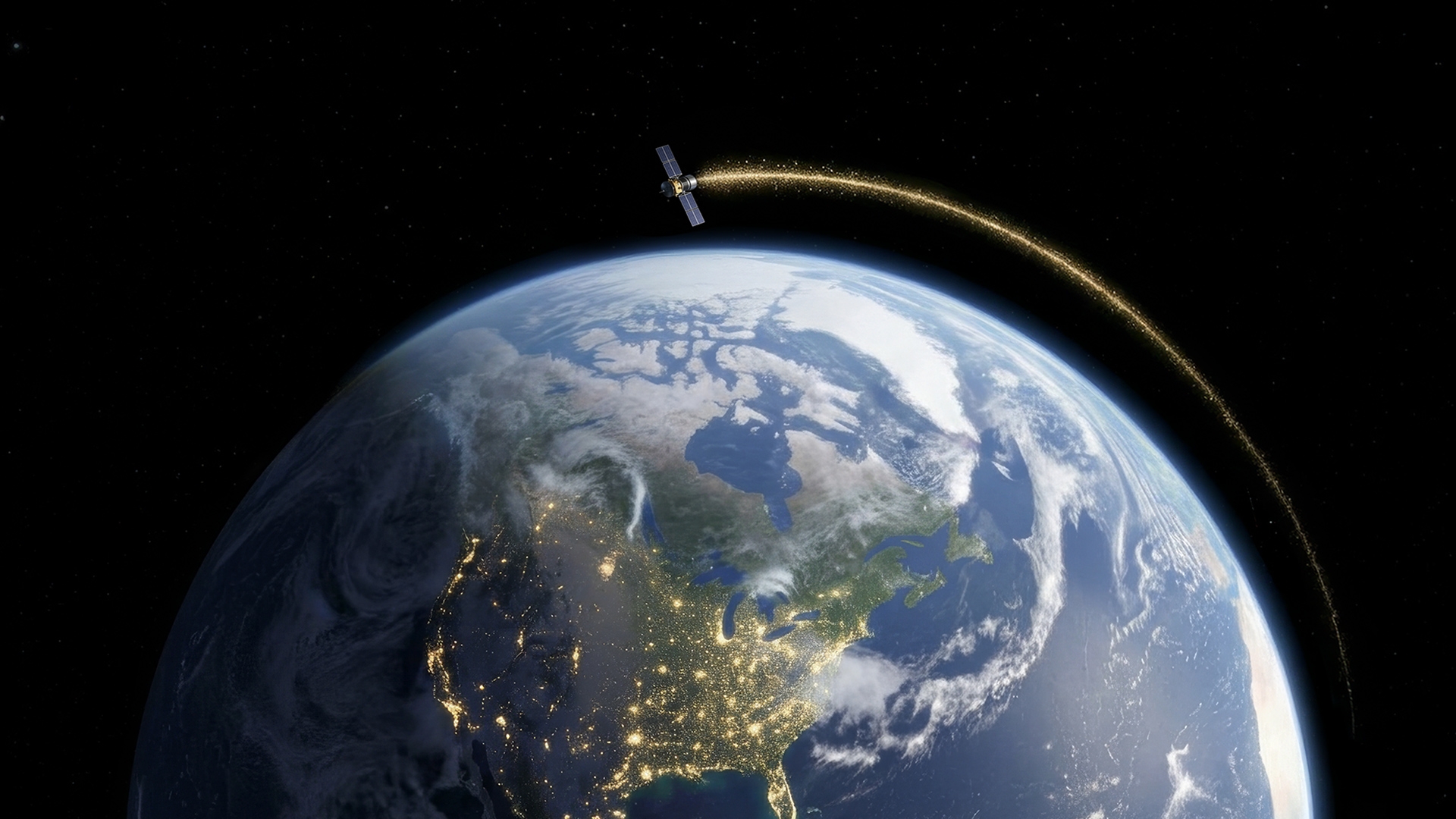
SANTA CLARA, Calif. - Nvidia has officially introduced the Space-1 Vera Rubin Module, a compact and specialized computing system engineered to execute complex artificial intelligence workloads while in orbit. This development marks a significant shift in the silicon giant’s hardware strategy, as the company adapts its high-performance architecture to meet the rigorous constraints of the aerospace environment. According to the chipmaker, the module integrates its latest Vera Rubin architecture into a physical design specifically optimized for the extreme power, weight, and thermal limitations that characterize modern satellite hardware.
The introduction of the Space-1 module represents a strategic expansion of Nvidia’s edge-computing ecosystem, moving beyond terrestrial applications in smart factories, autonomous vehicles, and industrial robotics. By bringing its compute capabilities to the space sector, Nvidia is effectively positioning itself at the center of a growing move toward autonomous orbital operations. The company has situated the Space-1 alongside its existing IGX Thor and Jetson Orin platforms, offering aerospace manufacturers a tiered range of computing options for satellites, space stations, and various orbital systems that require high-speed data processing.
Central to the utility of the Space-1 module is the ability to process sensor data locally without the need for a persistent, high-bandwidth connection to Earth. Currently, many satellites must downlink massive volumes of raw data to ground stations for processing, a process that is often bottlenecked by bandwidth limitations and latency. By performing inference directly at the source, the new module aims to enable real-time decision-making in orbit, which is becoming increasingly critical as the number of active satellites continues to grow at an exponential rate.
Potential applications for the new hardware are wide-ranging, according to the company. Nvidia expects the module to be utilized for scanning and analyzing high-resolution imagery aboard Earth-observation satellites, which would allow for the immediate detection of environmental changes or security events. Furthermore, the platform is intended to assist in coordinating the maneuvers of autonomous spacecraft and significantly reducing the volume of raw data that must be transmitted back to ground stations by filtering out irrelevant information at the edge.
In terms of raw performance, Nvidia claims that the Space-1 can deliver as much as 25 times the orbital inference performance currently achieved by systems based on its H100 architecture. This metric, while notable, is based on the company’s internal testing and reflects the architectural efficiency gains inherent in moving from general-purpose data center hardware to a design focused on the specific thermal and power profiles found in the vacuum of space. As space missions are strictly governed by 'size, weight, and power' (SWaP) requirements, such a performance jump could redefine what is possible for small-form-factor satellites.
The move into orbital compute also aligns with broader industry trends in the 'New Space' economy, where private enterprises are increasingly taking the lead on innovation formerly reserved for government agencies. For Nvidia, this represents a new addressable market at a time when its data center business is already seeing record growth. By tailoring its most advanced architecture for the space sector, the company is ensuring that its software ecosystem remains the standard for developers, regardless of whether they are working on local servers or in low Earth orbit.
Nvidia has already secured a roster of early collaborators and customers for its space-computing technology. The company named Aetherflux, Axiom Space, Kepler Communications, Planet Labs, Sophia Space, and Starcloud as organizations currently working with its platforms. These partners range from operators of large satellite constellations to firms building the next generation of commercial space stations, suggesting a broad interest in integrating AI-native hardware into mission-critical orbital infrastructure.
A major selling point for these aerospace partners is the continuity of the software environment. Nvidia’s broader portfolio allows developers to utilize the same familiar tools for training models on Earth before deploying them to radiation-exposed, bandwidth-constrained systems in space. This 'code once, deploy anywhere' philosophy reduces the friction of developing for space, where custom hardware and specialized instruction sets have historically been the norm, leading to long development cycles and high costs.
Despite the high performance specifications, the commercial success of the Space-1 module will depend on its ability to survive the harsh realities of the space environment. Hardware in orbit is subjected to massive temperature fluctuations and constant bombardment by cosmic radiation, which can cause electronic components to fail or produce computational errors. Industry observers note that while terrestrial AI performance is easy to quantify, validating long-term reliability and radiation tolerance remains the primary hurdle for any new entry into the space hardware segment.
The power consumption of the module will also be under intense scrutiny. Satellites operate on limited power budgets provided by solar arrays and batteries, meaning every watt consumed by the processor must be justified by the value of the data processed. Nvidia's challenge will be proving that the Space-1 can maintain its high inference throughput without overwhelming the delicate thermal management systems of a standard satellite bus, where heat dissipation must be handled entirely through radiation rather than convection.
The rollout of Space-1 occurs as competitors in the semiconductor industry also begin to eye the orbital edge. Companies like Intel and AMD, along with several specialized startups, have been developing radiation-hardened or radiation-tolerant chips for years. Nvidia’s entry brings a massive software library and a dominant AI developer base to the field, which could accelerate the adoption of machine learning in space while simultaneously raising the competitive stakes for established aerospace component manufacturers.
Nvidia did not announce a general availability date for the Space-1 module at the time of the launch. This lack of a specific timeline suggests that the hardware may still be undergoing final qualifications or is being selectively distributed to the aforementioned lead partners for testing and integration. The delay in a wide commercial release allows the company to refine its designs based on telemetry from initial test flights and pilot programs with its early-access customers.
Ultimately, the burden of proof lies with Nvidia’s partners to demonstrate that the touted performance gains translate into dependable, mission-ready systems. If successful, the Vera Rubin-based module could become a cornerstone of the next generation of orbital infrastructure, enabling satellites to act as intelligent agents rather than simple relay points. The industry will be watching closely for the first deployment reports to see if Nvidia can replicate its terrestrial dominance in the vacuum of space.
As the space sector moves toward more complex operations, including orbital manufacturing and autonomous debris removal, the need for high-density compute will only increase. Nvidia’s introduction of the Space-1 reflects a long-term bet that the future of space exploration is inextricably linked to the advancement of artificial intelligence. By bridging the gap between Earth-bound data centers and orbital platforms, the company is positioning its architecture as the essential foundation for a data-driven space economy.
Sources
Written by
The Company Wire
Inside the companies building what’s next. Reporting on startups, technology, funding and the people shaping them.


