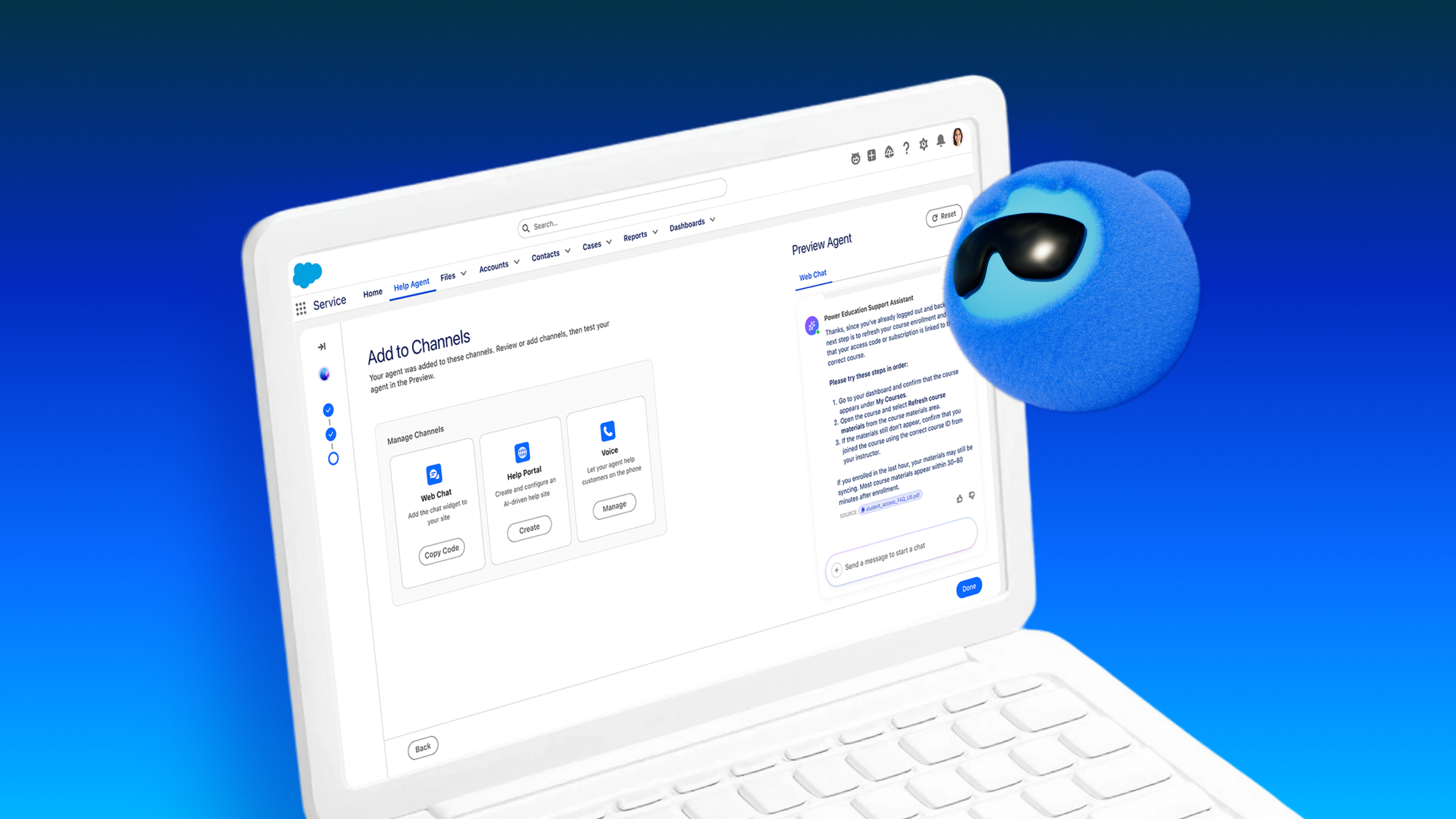
Salesforce Launches Agentforce Operations for Back-Office Work
The platform uses configurable agents and process blueprints to coordinate manual workflows across teams and systems.
SAN FRANCISCO, Calif. - Salesforce has launched Agentforce Operations, a new software platform designed to convert fragmented back-office processes into coordinated workflows managed by a combination of artificial intelligence agents and human oversight. The announcement marks a strategic expansion for the cloud software giant, which is increasingly focused on autonomous agents as the next frontier for enterprise efficiency. By targeting manual work such as supplier onboarding, invoicing, compliance checks, and exception management, Salesforce is moving deeper into the internal plumbing of the modern corporation, addressing tasks that historically rely on a disjointed mix of spreadsheets, email chains, and disconnected business systems.
The launch of Agentforce Operations follows a broader industry shift where legacy enterprise software providers are attempting to integrate generative and autonomous technology directly into core business functions. While Salesforce built its reputation as a leader in Customer Relationship Management, focusing primarily on sales and marketing teams, this latest move signals an intent to capture more of the operational spend associated with the back office. The platform specifically targets the inertia caused by data silos, offering a centralized layer where AI can orchestrate complex tasks that span multiple departments and software environments.
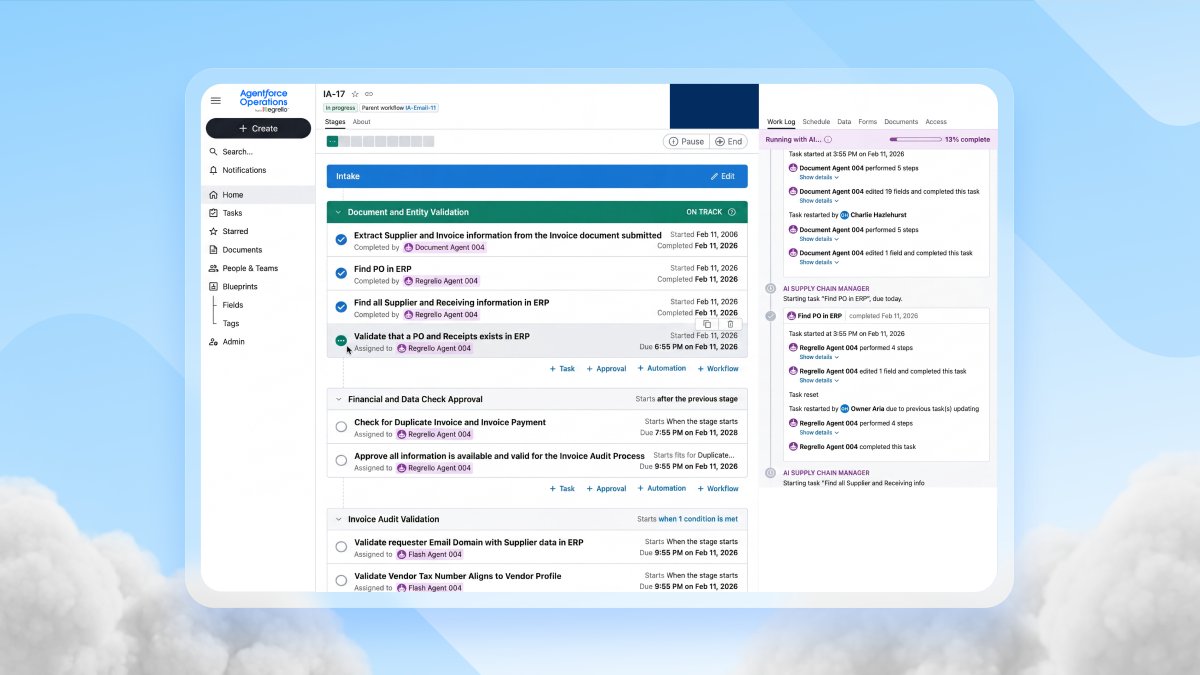
Teams utilizing the new platform can begin their implementation with process blueprints, which serve as foundational templates for common business requirements. From these starting points, organizations have the ability to customize specific tasks, approval hierarchies, and agent responsibilities. Critically, the platform is designed to allow these configurations without requiring teams to build entirely new applications from the ground up, a low-code approach that aligns with Salesforce's existing development philosophy. This modularity is intended to lower the barrier to entry for departments that lack extensive engineering resources but suffer from high manual workloads.
Architecturally, Agentforce Operations is built to serve as an intelligent router for enterprise data and tasks. The logic engine is designed to identify the appropriate next step in a business process, route the necessary work to the correct stakeholder or system, and escalate exceptions when the parameters of a task exceed the agent's autonomous authority. Throughout these maneuvers, the platform preserves a comprehensive record of the process inside Salesforce, providing a layer of auditability that is frequently missing from processes that occur across disparate legacy systems or via manual communications.
Connectivity remains a core tenant of the new offering, as back-office work rarely exists in a vacuum. Salesforce has stated that the product can connect to various outside systems and trigger Salesforce Flows, the company's existing automation toolset. While the core product entered general availability immediately, Salesforce noted that some specific ecosystem integration features will enter a beta phase following the initial launch. This phased rollout suggests a cautious approach to the complex world of third-party system interoperability, where data structures and security protocols can vary significantly between vendors.
The push into back-office automation is particularly attractive to the enterprise sector because these processes typically contain vast quantities of repetitive, high-volume work that is prone to human error. For many years, companies have sought to solve these problems through Robotic Process Automation, but those tools often struggled with the unstructured data found in emails and invoices. By utilizing the logic capabilities of modern agents, Salesforce is betting that it can manage more nuanced tasks that require a level of comprehension beyond simple screen-scraping or rigid, rule-based scripts.
However, the move into internal operations also carries significant institutional risk. Unlike front-office marketing automations where a mistake might result in a poorly timed email, back-office exceptions often involve tangible assets, including capital, inventory, employment status, or sensitive regulatory obligations. Because of these stakes, an agent in this environment requires narrow permissions and very clear approval thresholds. Analysts have noted that for AI to succeed in these roles, there must be a transparent and reliable way for the system to demonstrate why it selected a particular action during a complex financial or compliance workflow.
Market observers like Constellation Research have highlighted that Agentforce Operations expands Salesforce’s reach beyond its traditional customer-facing stronghold and into the internal systems that keep a business running day-to-day. This puts the company in more direct competition with providers of Enterprise Resource Planning software and specialized supply chain management tools. The success of this move will likely depend on how well the Salesforce platform can harmonize with the existing financial and operational records that many large corporations already have stored in other cloud environments.
The maturity of the platform will ultimately be judged by specific operational metrics: cycle time, error rate, and the efficiency of recovery from unusual cases. While automation is the primary goal, Salesforce is emphasizing that organizations should not measure success solely by the number of steps they can remove from human hands. A shorter process is only truly useful if records remain accurate and if the system provides sufficient visibility for human employees to intervene before a programmatic mistake spreads through an organization’s financial ledgers.
Implementation strategy will be another critical factor for early adopters. Salesforce has advised that customers should carefully distinguish currently released functionality from roadmap items when evaluating their specific implementation plans. This transparency is vital in an AI market that has occasionally been characterized by rapid-fire announcements and varying levels of feature readiness. By grounding the launch in the reality of current availability versus future integration betas, the company is attempting to manage expectations for a technology that is still evolving.
The broader competitive landscape for AI-driven operations is intensifying as tech giants race to prove that agents can deliver measurable return on investment. As organizations look to consolidate their software stacks to reduce costs, a platform that can handle both customer interactions and the subsequent back-office fulfillment or invoicing could be highly compelling. If Salesforce can successfully bridge the gap between the 'front' and 'back' of the house, it could redefine its role from a specialized CRM tool to a more holistic operating system for the entire enterprise.
As Agentforce Operations moves into wider use, the industry will be watching to see how the platform handles high-compliance environments such as banking, healthcare, and manufacturing. These sectors require rigorous data governance and clear trails for auditors. The ability of the Agentforce agents to operate within these constraints—while still delivering the speed and coordination promised at launch—will determine whether Salesforce can truly capture the operational heart of the global economy.
Looking ahead, the evolution of the beta features and the integration with the wider Salesforce ecosystem will be the primary milestones for the product. The company’s focus on process blueprints suggests a template-led growth strategy, where it can quickly roll out industry-specific solutions for common bottlenecks. For now, the general availability provides a foundation for enterprises to begin testing how much of their manual toil can safely be handed over to autonomous agents, provided the proper guardrails and human oversight remain firmly in place.
Sources
Written by
The Company Wire
Inside the companies building what’s next. Reporting on startups, technology, funding and the people shaping them.