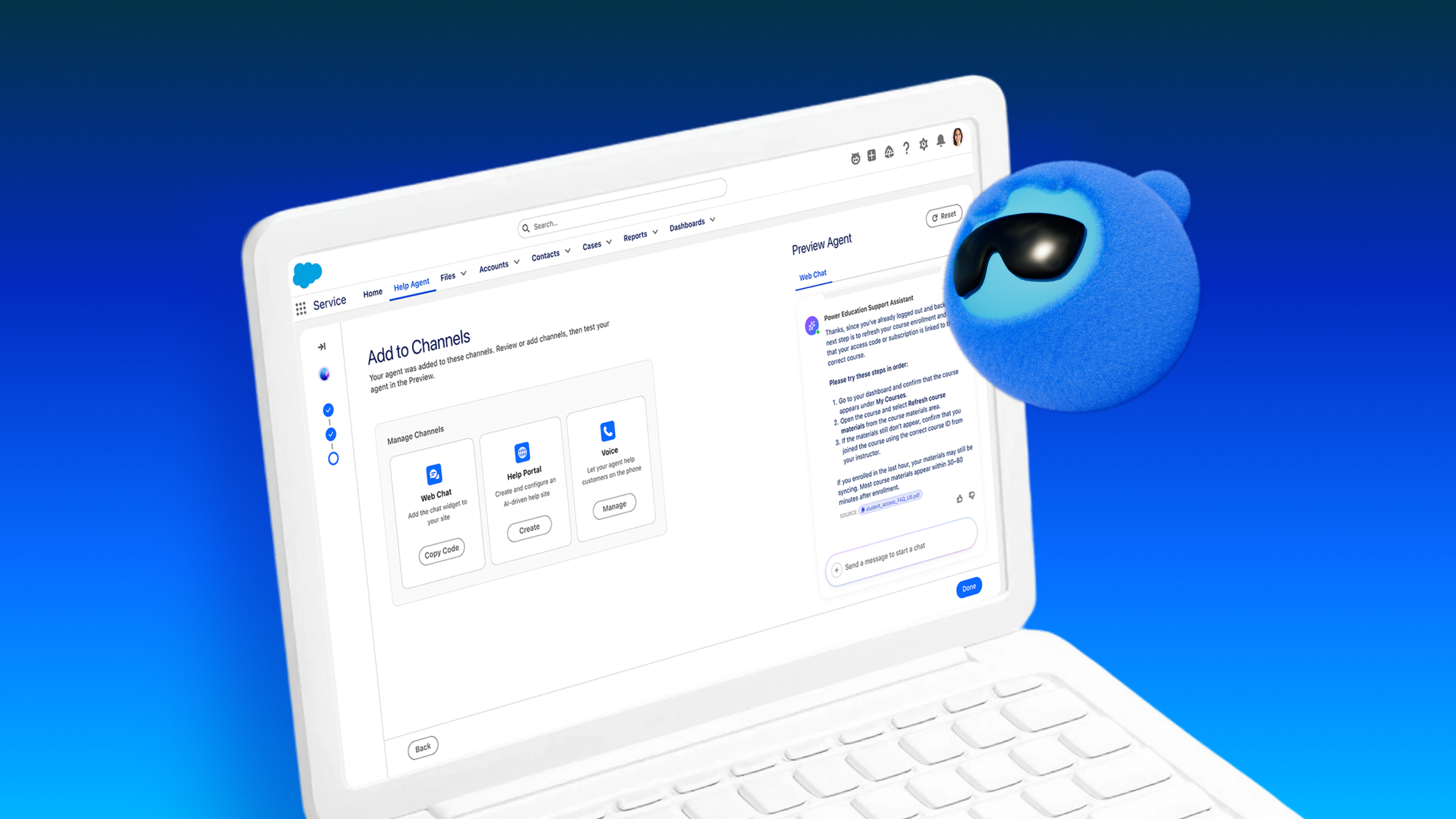
ZoomMate Launches as an Agentic Assistant for Workplace Tasks
The product combines enterprise search, generated deliverables and actions across connected applications.
SAN JOSE, Calif. - Zoom has announced the launch of ZoomMate, an agentic workplace assistant designed to streamline corporate workflows by searching internal company information, generating professional deliverables, and executing autonomous actions across a wide range of connected third-party applications. This development represents a significant step in the company's evolution, building upon its existing AI Companion technology while providing employees with a more direct mechanism for delegating complex tasks that extend far beyond the duration of a video conference or a chat thread.
The launch arrives as the Silicon Valley technology landscape shifts focus from basic generative text to agentic AI—systems capable of not just answering questions, but performing multi-step tasks across disparate software silos. By integrating into the daily operations of an enterprise, ZoomMate allows users to ask for context gathering, the drafting of documents or presentations, and the subsequent updating of external systems of record. These capabilities position Zoom as a central coordinator in an increasingly fragmented software-as-a-service environment.
Central to the functionality of ZoomMate is its ability to interface with industry-standard platforms including Salesforce, Jira, Slack, and ServiceNow. Zoom has stated that the assistant is designed to operate seamlessly across internal conversations, specialized files, and business applications. To address mounting data privacy concerns, the company emphasized that the assistant adheres to existing company permissions, ensuring that AI-driven information retrieval is strictly limited by the specific access levels assigned to each individual employee.
For Zoom, the introduction of this assistant reflects an ongoing strategic effort to redefine itself as a comprehensive work platform rather than a specialized video-conferencing utility. Since the global surge in remote work, the company has faced intense pressure to diversify its revenue streams and deepen its utility within the enterprise. By leveraging meeting transcripts and persistent communications, ZoomMate gains access to a rich repository of context that can be used to bridge the gap between a verbal discussion and a completed operational task.
The move into agentic AI is symptomatic of a broader trend in the enterprise software sector, where incumbents are racing to embed automation directly into the user interface. Analysts have noted that the sector is entering a phase where 'action' is the new currency of productivity. While traditional search provides information, agents like ZoomMate aim to reduce the cognitive load on employees by handling the rote administrative work that typically follows a high-level strategy meeting or project kickoff.
However, ZoomMate enters an exceptionally crowded market where workplace agents are increasingly bundled with existing productivity suites and enterprise applications. Microsoft, Google, and Salesforce have all introduced similar layers of intelligence within their own ecosystems. The challenge for Zoom will be to demonstrate that its cross-application context and vendor-neutral positioning can produce superior outcomes compared to the proprietary assistants already included in many corporate software contracts.
Industry observers suggest that for a standalone platform like Zoom, the depth of its integrations will ultimately matter more than the total number of partner logos listed at the time of launch. To be effective, an agent must do more than simply trigger a notification in another app; it must understand the specific data structures and workflows of platforms like Jira and Salesforce to ensure that its actions are accurate and helpful rather than disruptive to the organization's existing data integrity.
Beyond technical integration, the launch of ZoomMate highlights the growing importance of the 'system of action' in the modern workplace. Historically, companies have focused on systems of record—databases that store information—and systems of engagement, such as messaging apps. By positioning ZoomMate as an agent that moves between these layers, Zoom is attempting to own the execution layer, where work actually gets finished and reported back to management.
Businesses considering an implementation are advised to evaluate ZoomMate using controlled workflows before permitting the assistant to perform highly consequential actions. The risks associated with autonomous agents include the potential for hallucinations or the incorrect execution of tasks within critical business systems. Therefore, organizations may require a period of pilot testing to ensure the AI's logic aligns with internal business rules and compliance standards.
Transparency and verification remain critical components of any enterprise AI strategy. For ZoomMate to gain widespread adoption, its search answers will require clear citations, and all generated materials must undergo human review before being finalized. Furthermore, experts suggest that any updates made to systems of record by an artificial agent should be meticulously logged to maintain a clear audit trail for security and governance purposes.
The competitive landscape will likely be defined by which provider can offer the most trustworthy execution. While the promise of an agentic assistant is high, the long-term value of products like ZoomMate will depend on their ability to maintain clear accountability. If a delegated task goes wrong—such as an incorrect update to a customer's record in Salesforce—the platform must provide the necessary tools for administrators to identify and rectify the error quickly.
Looking ahead, the success of ZoomMate will be a bellwether for Zoom's broader ambitions in the AI space. As organizations look to consolidate their software spending, platforms that can demonstrate tangible time savings through automation will have a significant advantage. The transition from a video tool to a workflow orchestrator is a bold pivot, requiring not just technical excellence but a shift in how customers perceive the brand's core value proposition.
As the rollout continues, the industry will be watching to see how frequently these agentic features are utilized in real-world scenarios. The true test for ZoomMate will be its ability to handle nuanced tasks that involve multiple stakeholders and complex data sets. If Zoom can prove that its assistant reduces the friction between communication and execution, it may secure its place as the underlying fabric of the modern digital headquarters.
Ultimately, ZoomMate represents the next logical step in the evolution of the virtual office. By giving employees a way to delegate work that extends beyond the boundaries of a single meeting, Zoom is betting that the future of productivity lies in the hands of intelligent agents that can navigate the vast and often disconnected world of enterprise software. The coming months will reveal whether this agentic approach can deliver the efficiency gains that global businesses are increasingly demanding.
Sources
Written by
The Company Wire
Inside the companies building what’s next. Reporting on startups, technology, funding and the people shaping them.