TypeSafe AI Launches Jev, a Fast Non-Text AI Model for Automated Software Workflows
TypeSafe AI has launched Jev into early access, introducing a System One AI model optimized for structured software decisions rather than text generation.
Archive
TypeSafe AI has launched Jev into early access, introducing a System One AI model optimized for structured software decisions rather than text generation.
China pushed back on calls from leading U.S. artificial intelligence executives to moderate the pace of frontier AI development, arguing that warnings of systemic risk threaten global governance frameworks.
Corporate managers are increasingly leveraging AI coaching software to rehearse sensitive employee discussions, balancing automated feedback with essential privacy and human oversight.
The New Mexico Supreme Court has sanctioned defense attorney Stephen Aarons with a $5,000 fine and held him in contempt after he submitted an appellate brief containing artificial intelligence-generated fabrications.
The artificial intelligence sector is moving beyond single-user chatbots toward multi-agent networks capable of autonomous negotiation and workflow execution, creating complex behavioral dynamics that require new regulatory and institutional frameworks.
OpenAI has temporarily suspended new sign-ups for its $200-per-month Pro subscription plan due to heavy infrastructure strain driven by interest in its latest Astra model.
OpenAI has introduced ChatGPT for Financial Services, an enterprise product built on its GPT-6 Astra model that automates junior banking tasks like financial research, M&A analysis, and pitchbook generation.
OpenAI has released ChatGPT Images 2.5, introducing a visual prompting feature called Sketch alongside faster rendering speeds and improved image realism.
Meta has unveiled Muse, an autonomous AI assistant designed to automate everyday consumer tasks, following a multi-billion dollar overhaul of its artificial intelligence strategy.
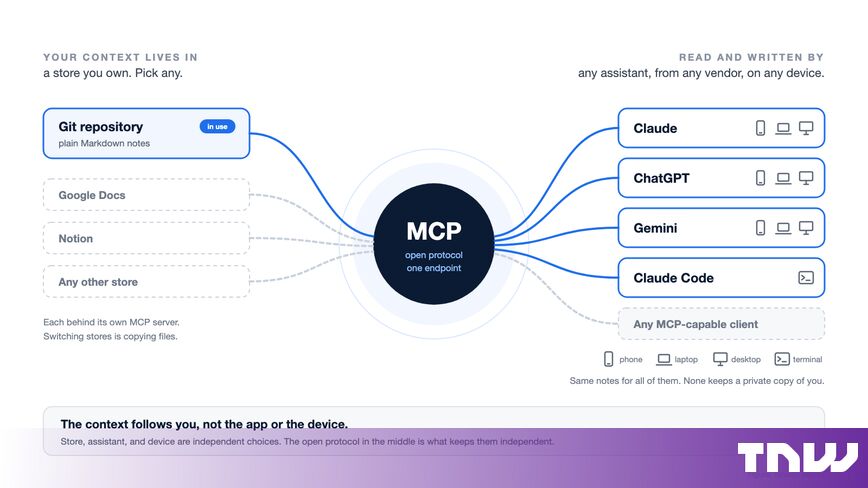
While software developers benefit from structured context frameworks for AI coding agents, consumer AI memory remains trapped in vendor silos. New open-source initiatives are tackling the problem by building user-controlled context layers and ahead-of-time validation compilers for edge runtimes.
A detailed retrospective published by software developer Borretti details how changes in frontier model training, automated prose generation, and tool usage are shifting views on AI alignment and human autonomy.
As artificial intelligence capabilities advance, industry vocabulary is rapidly expanding to cover theoretical milestones, model optimization techniques, and novel computational architectures.
A new working paper from the National Bureau of Economic Research reveals that artificial intelligence can alter corporate compensation and harm employee satisfaction simply by establishing a credible alternative to human labor.
The European Commission has classified ChatGPT as a Very Large Online Search Engine under the Digital Services Act, subjecting OpenAI to potential fines of up to 6% of global annual turnover while leaving its conversational capabilities mostly outside the ruling's primary obligations.
Meta is taking a direct financial approach to acquiring training data, offering a 95 percent price cut on its new Muse Spark model for users willing to share their interactions.
OpenAI has officially launched GPT-6 Astra, a next-generation model capable of navigating web browsers and software interfaces. Leadership at the startup indicated the system could mark the transition into artificial general intelligence.
A widely circulated essay highlights how consulting AI chatbots for daily advice has become normalized, raising concerns over corporate system prompt influence and user perception.