August 2026 Set for Rare Celestial Events, Including Total Solar Eclipse and Meteor Shower
Astronomy enthusiasts can anticipate a remarkable August 2026, featuring a convergence of several significant celestial phenomena.
The month of August 2026 is poised to be an exceptional period for skywatchers, with multiple prominent astronomical events scheduled to occur within a single week. These phenomena, many of which are observable without specialized equipment, present an opportune moment for detailed viewing and planning.
Among the anticipated spectacles is the Perseid meteor shower, recognized as one of the year's most impressive, alongside the Geminids in December and the Quadrantids in January. This annual event happens as Earth traverses the debris field left by Comet 109P/Swift-Tuttle. In 2026, the shower's peak activity is projected for the night of Wednesday, August 12, extending into the early hours of the subsequent day. The timing coincides with a new moon, ensuring exceptionally dark skies and optimal conditions for viewing the meteors, which appear to originate from the constellation Perseus.
The primary astronomical highlight of the month will be a total solar eclipse. The path of totality for this event will span a narrow band across Spain, Portugal, Iceland, and Greenland, offering a full view of the eclipse. Regions outside this path will experience a partial eclipse. The timing of totality, occurring at sunset on August 12, will create an especially dramatic and visually striking scene due to the Sun's low position near the horizon.
This particular total solar eclipse marks the first occurrence for the Iberian Peninsula in over a century. Spanish locations within the path of totality include Madrid, along with various regions such as Galicia, Asturias, Castile and León, Aragon, Catalonia, Valencia, and the Balearic Islands. For the rest of Spain, only a partial eclipse will be visible. Organizations like NASA and the European Space Agency are expected to provide live broadcasts of the event for those outside the viewing path. Observers are cautioned to avoid looking directly at the sun under any circumstances.
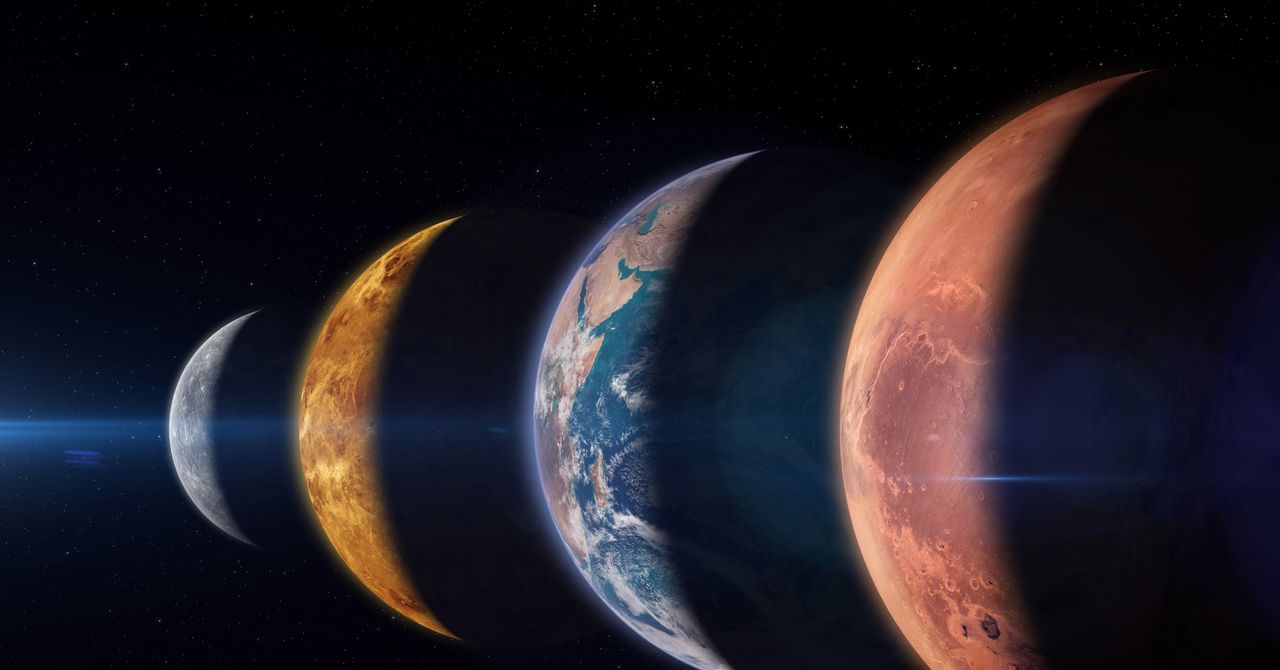
Adding to the celestial flurry, the early morning of August 12 will also feature an alignment of six planets: Jupiter, Mercury, Mars, Uranus, Saturn, and Neptune, forming a visible line in the sky. Observing this alignment presents a greater challenge than the meteor shower due to the varying brightness of the planets. Nevertheless, under favorable atmospheric conditions, Mercury, Mars, and Saturn may be visible to the naked eye near the horizon just before sunrise. A telescope will be necessary to observe Uranus and Neptune.
The month will conclude with a partial lunar eclipse on August 27, which is expected to obscure up to 96 percent of the moon's disk. Unlike solar eclipses, which follow a narrow terrestrial path, lunar eclipses are observable from much broader areas of the planet. This specific event will be visible across nearly all of the Americas, from Canada down to Argentina. No special eye protection is required for observing a lunar eclipse; locating a dark viewing spot away from light pollution and with a clear horizon is sufficient. Depending on the hemisphere, appropriate clothing for cooler temperatures might be advisable.
Sources
Written by
The Company Wire
Inside the companies building what’s next. Reporting on startups, technology, funding and the people shaping them.