Blue Origin Identifies Cause of New Glenn Explosion
Blue Origin has determined the root cause of its New Glenn rocket explosion at Cape Canaveral in May, attributing the incident to a faulty oxygen valve in one of its BE-4 engines.
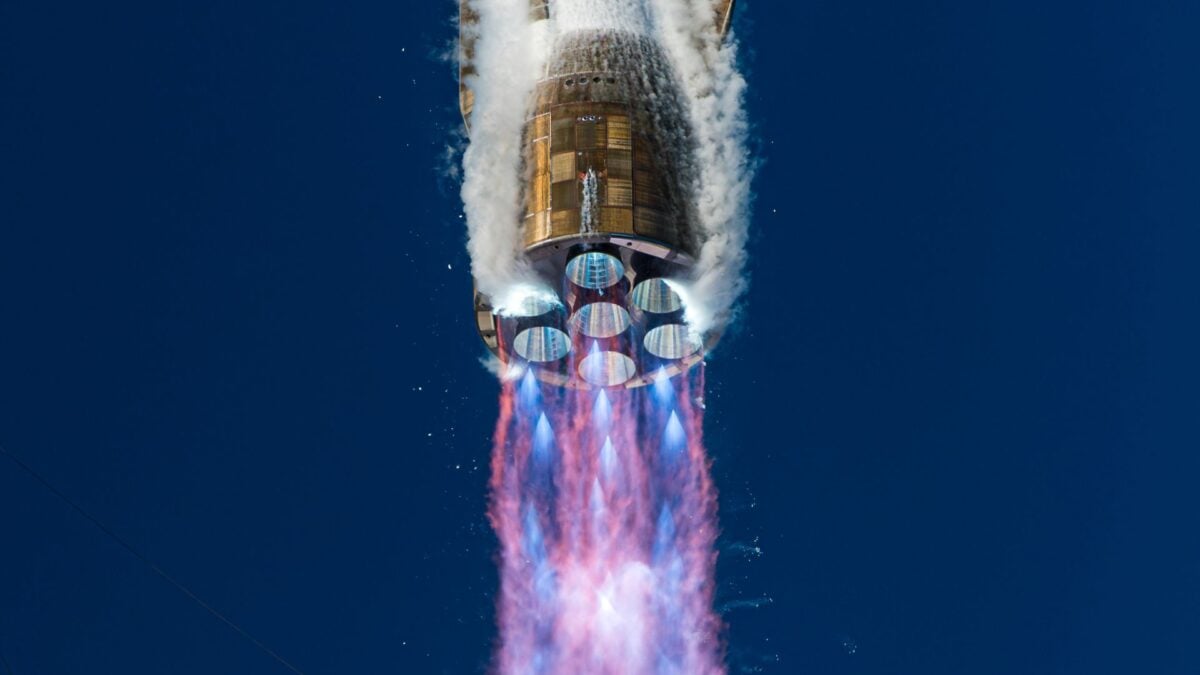
Blue Origin has announced the resolution to the inquiry surrounding its New Glenn rocket's explosion at Cape Canaveral Space Force Station in May. The event, which occurred during a pre-launch hotfire test, caused substantial disruptions within the spaceflight sector and presented a potential challenge to NASA's Artemis mission schedule for lunar astronaut returns.
Dave Limp, Blue Origin's chief executive, confirmed on Wednesday that the explosion resulted from an equipment malfunction. The specific issue, a defect within the reusable BE-4 rocket engines, may also affect future launches of United Launch Alliance's (ULA) Vulcan Centaur, a spacecraft developed collaboratively with Lockheed Martin and Boeing.
Limp stated via X, an online platform, that the anomaly originated in the main oxygen valve of a BE-4 engine, a finding corroborated by hardware recovery and subsequent inspections. He added that extensive testing at both component and engine hotfire levels was conducted to fully understand the failure mode and to develop appropriate mitigation strategies. Limp indicated that the path forward is clear, involving minor valve modifications that can be rapidly integrated into existing engines.
The New Glenn rocket's explosion on May 28, 2026, at Cape Canaveral, resulted in significant damage to its launchpad, Launch Complex 36A (LC-36A). This facility had undergone a decade of extensive renovations following Blue Origin's lease acquisition in 2015. LC-36A had been operational for approximately 18 months, having reopened with New Glenn's inaugural launch in January 2025.
In the aftermath of the accident, Blue Origin's updates have largely focused on efforts to restore LC-36A to service. The company has identified methods to reuse the launch bridge, which remains intact, and has initiated the removal and inspection of the two-million-pound (900,000-kilogram) launch table. Furthermore, the company plans to modernize the site, aligning it with improvements made to its sister launch pad, LC-36B.
Reuters reported that behind these public announcements, Blue Origin, owned by Jeff Bezos, has conducted a thorough technical investigation into the explosion, under Limp's supervision. The company's goal is to make New Glenn operational again by the close of the year. Limp posted on X this week that the updated hardware is in production and expected by the end of the month, with parallel work continuing on the fault tree analysis.
The BE-4 engines developed by Blue Origin power the first stage of the company's partially reusable New Glenn launch vehicles. Additionally, two BE-4 engines are used in each of United Launch Alliance's Vulcan rockets. ULA has confirmed its collaboration with Blue Origin in the post-accident investigation concerning the BE-4 engines but has not elaborated on potential impacts to its own future launch schedules.
Separately, Vulcan has encountered its own challenges, including an unrelated anomaly in February that involved the loss of a solid rocket booster (SBR) nozzle during a mission to deploy a U.S. Space Force satellite into geosynchronous orbit. While Vulcan successfully completed that mission, it has not flown since. During a July 21 earnings call, Northrop Grumman, the supplier of the GEM 63XL motors for Vulcan's SBRs, stated that corrective actions have been implemented and a redesigned motor will be delivered by year-end. Blue Origin's CEO has expressed similar optimism regarding New Glenn's future, stating that progress is ongoing.
While it could take more than a year for Blue Origin's New Glenn to be fully prepared for flight again, NASA remains committed to its Artemis timeline. Following an assessment of the launchpad damage, Blue Origin executives anticipate that rocket flights can recommence by the end of the current year. The company's investigation into the rocket's previous failure to deliver its payload, which occurred during a hot fire test ahead of its fourth mission, has concluded.
Sources
Written by
The Company Wire
Inside the companies building what’s next. Reporting on startups, technology, funding and the people shaping them.