Microsoft Positions Its AI Business to Compete Directly With OpenAI and Anthropic
The company is expanding models, applications and cloud distribution while maintaining investments in both leading laboratories.
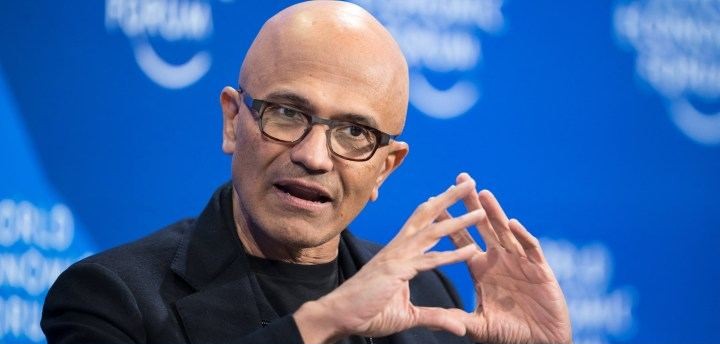
Microsoft is becoming more explicit about competing with OpenAI and Anthropic across the artificial-intelligence stack. The company continues to invest in and distribute both laboratories' technology, but it is also building its own models, agents and enterprise products under a strategy designed to keep customers inside Azure and Microsoft's application ecosystem.
The relationship with OpenAI began as a close infrastructure and product partnership. Microsoft gained early access to models and embedded them across Copilot offerings. As OpenAI expanded into enterprise applications and infrastructure, the companies increasingly entered the same markets. Microsoft has responded by adding alternative models and strengthening internal research.
Anthropic adds another layer. Microsoft invested $5 billion in the company while Anthropic committed to substantial Azure spending. Offering Claude alongside OpenAI and Microsoft models lets enterprise customers choose among systems and reduces the cloud provider's dependence on a single laboratory.
The multi-model approach is commercially sensible, but it can confuse product boundaries. Customers need to understand which company is responsible for security, uptime, model behavior and data retention when a Microsoft interface connects to an outside model hosted through Azure.
Competition may also improve Microsoft's negotiating position. If Azure customers can move between OpenAI, Anthropic and internal models, no single supplier controls the full economics of the platform. Microsoft must make that portability real through common evaluation, security and orchestration tools, or the promise of choice will remain a collection of separate integrations.
The competitive posture could benefit Azure customers if it produces better prices, model choice and less dependence on one supplier. It could also create confusion about product road maps when Microsoft sells OpenAI services while promoting alternatives. Enterprises need consistent identity, safety and billing controls across models so experiments can move into production without rebuilding governance. Microsoft should state which capabilities are portable and where a vendor-specific feature creates lock-in. The relationship with OpenAI will remain strategically important, but the platform's credibility increasingly depends on serving customers whose preferred model comes from somewhere else.
Microsoft's strongest advantage is distribution through Office, GitHub, Windows and its cloud business. It does not need to win every model benchmark if it controls the tools where companies deploy AI. The competitive question is whether that distribution produces better integrated products or simply places more overlapping assistants in front of the same customer.
Sources
Written by
The Company Wire
Inside the companies building what’s next. Reporting on startups, technology, funding and the people shaping them.