Supermicro, Hammerspace, and Sandisk Partner to Eliminate Enterprise AI Storage Bottlenecks
Executives from Supermicro, Hammerspace, and Sandisk outlined how software orchestration, QLC flash, and modular hardware combine to solve data pipeline constraints and boost GPU utilization.
As enterprise artificial intelligence deployments expand, legacy storage architectures designed prior to the AI era are creating critical operational bottlenecks. Traditional systems, often burdened by isolated data silos and aging hardware, struggle to feed data quickly enough to keep high-cost compute assets running efficiently. To address these infrastructure constraints, technology vendors are forming strategic alliances to modernize data systems for demanding machine learning workflows.
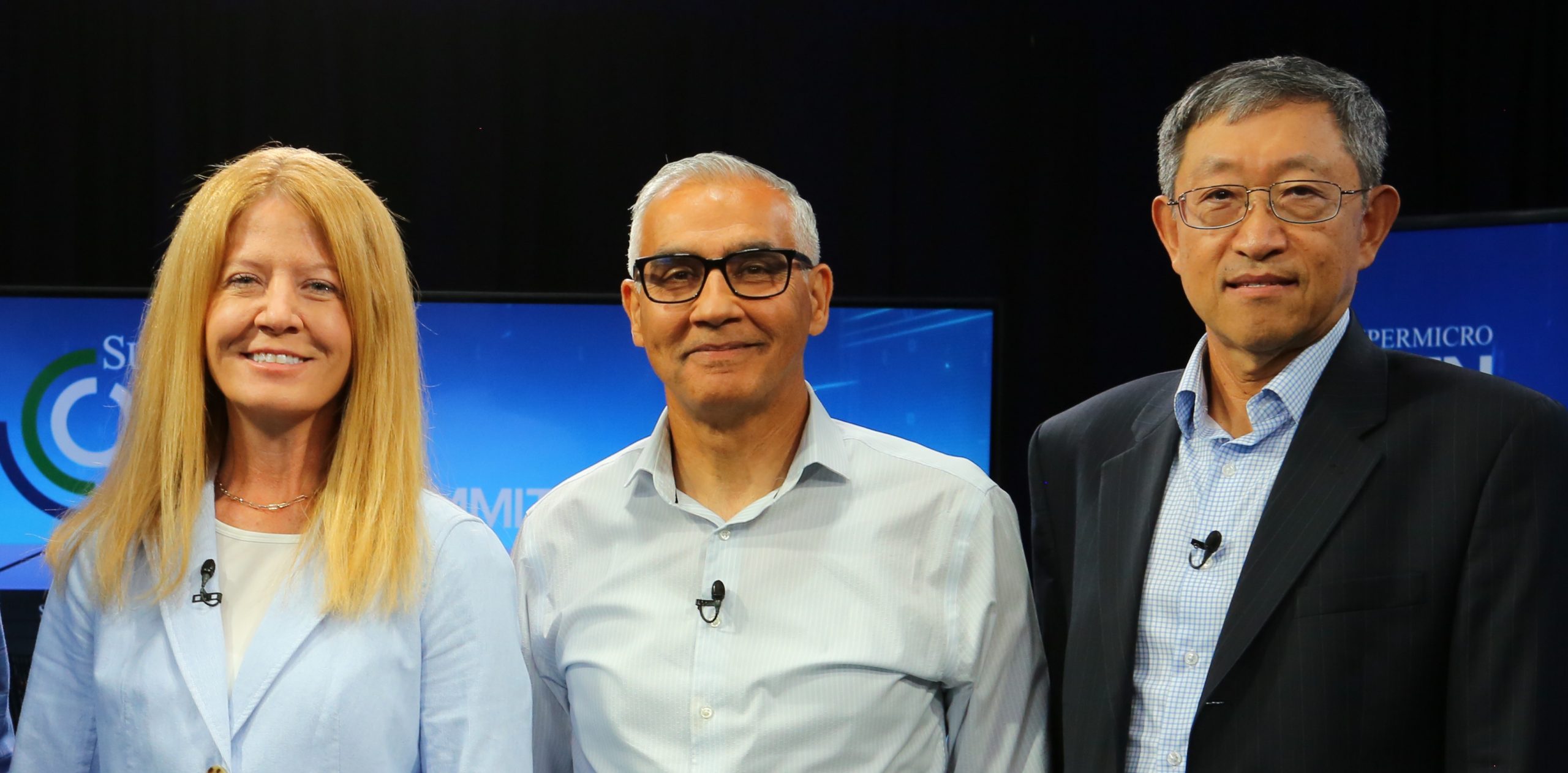
During a panel discussion at the Supermicro Open Storage Summit, first reported and broadcast by SiliconANGLE's theCUBE livestreaming studio and hosted by theCUBE Research analyst Rob Strechay, executives from Super Micro Computer Inc., Hammerspace Inc., and Sandisk Corp. detailed how their combined technologies target storage constraints holding back enterprise AI. The participants explained that modern storage must evolve beyond simple capacity metrics to deliver high throughput, lower total cost of ownership, and seamless access across multi-vendor environments.
Allen Liu, senior product manager of architecture solutions at Super Micro Computer Inc., outlined Supermicro's core priorities for building AI-ready hardware foundations. According to Liu, the company focuses on maintaining high performance and scalability while ensuring composability so that modular hardware can be assembled into tailored enterprise solutions. Liu noted that efficiency encompasses usability, total cost of ownership, and integrated system performance rather than just raw storage capacity.
Addressing the challenge of accessing scattered enterprise data, Hammerspace Inc. Chief Marketing Officer Molly Presley detailed how software orchestration can bypass lengthy data migration pipelines. Presley explained that Hammerspace operates as a software layer deployed across existing physical data centers, cloud environments, and edge locations. By ingesting data into metadata, the system presents a unified, AI-ready dataset directly to models and workflows without requiring organizations to conduct large-scale data copy or transfer projects into a separate storage cluster.
The collaboration also aims to resolve GPU underutilization, as expensive graphics processors frequently operate at average utilization rates of just 30% to 50% due to data delivery delays. Praveen Midha, director of enterprise SSD product management at Sandisk Corp., explained that the company’s quad-level cell (QLC) solid-state drives offer the density and low latency needed to bridge performance gaps between traditional hard disk drives and compute engines. Midha noted that Sandisk's flash media operates across multiple infrastructure stages, extending directly into GPU rings to supply high-speed data feeds to active processing units.
To enable fluid data movement across disparate systems, the vendors emphasized the necessity of open industry protocols. Supermicro has adopted standards such as NVMe over Fabrics, which leverages Remote Direct Memory Access networking technology to extend local ultra-low latency NVMe performance across data center networks. Presley underscored during the broadcast that standardized networking interfaces are critical for organizations seeking to maintain flexible operations across multiple vendors and geographical sites.
Beyond basic data delivery, advanced AI reasoning workloads are driving significant expansions in key-value (KV) cache sizes, according to slides presented by Midha during the panel. To shorten response times for complex AI inference requests, flash storage is increasingly being integrated directly into the memory tier. Midha highlighted that modern flash drives allow systems to efficiently retrieve archived KV cache data from lower storage tiers, reducing latency and accelerating output generation.
Summarizing the division of labor among the three technology providers, Liu noted that enterprise AI infrastructure requires a synchronized stack spanning software, media, and server components. Within this framework, Hammerspace manages the data orchestration layer, Sandisk provides the solid-state media to hold and serve data efficiently, and Supermicro delivers the foundational hardware building blocks that unify the integrated storage solution.
Sources
Written by
The Company Wire
Inside the companies building what’s next. Reporting on startups, technology, funding and the people shaping them.