Trump Dials Into NASA Press Briefing as Administrator Isaacman Seeks Broader Space Policy Wins
A surprise phone call during a space telescope briefing highlights growing executive interest in NASA programs as the agency prepares for its next budget cycle.
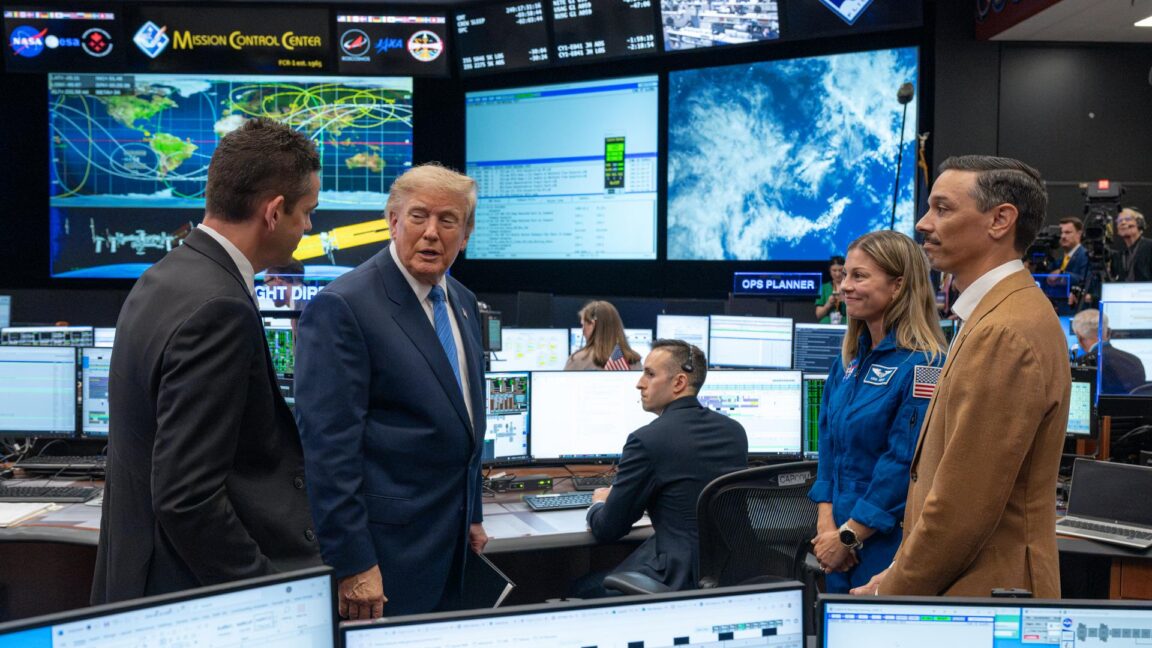
NASA Administrator Jared Isaacman paused a post-launch press conference on Sunday at Kennedy Space Center in Florida to take a phone call from President Donald Trump, who spoke directly to reporters and agency personnel over Isaacman's mobile device following the launch of the Nancy Grace Roman Space Telescope.
The unexpected call occurred roughly 25 minutes into the scheduled briefing. Isaacman looked at his phone, excused himself, and briefly stepped away from the dais. Upon returning, he interrupted NASA Chief of Science Nicky Fox to inform the room that the president wished to offer his congratulations. Trump, speaking over speakerphone, commended the launch performance, praised Isaacman's leadership, and noted his administration's financial support for the agency.
As first reported by Ars Technica, the direct outreach represents an unusual level of presidential involvement in routine civil space operations. The incident comes amid a series of space-focused events for the White House, including a multi-hour visit by Trump to Johnson Space Center in Houston on Friday. During that visit, Trump awarded the Congressional Space Medal of Honor to the crew of Artemis II and announced plans to establish a United States Space Academy.
The ongoing public backing marks a clear turn in the relationship between Trump and Isaacman. Just over a year ago, the administration withdrew Isaacman’s nomination to head the space agency, citing concerns over political alignment due to his previous donations to Democratic candidates. Trump reversed course late last year and reinstated the nomination, later publicly remarking in Houston that leaders from both parties had endorsed Isaacman's credentials for the role.
Isaacman, a private astronaut and technology executive, has spent the past year cultivating bipartisan ties across Capitol Hill and the executive branch while seeking to modernize agency operations. High-profile mission successes—including the Artemis II lunar flyby and the deployment of the Roman observatory—have provided positive milestones for the administration amid broader economic and geopolitical challenges.
However, the administration's historical budget positions contrast with Trump's public statements regarding agency funding. The White House’s fiscal year 2026 budget proposal, crafted under Office of Management and Budget Director Russ Vought, originally sought a 25 percent overall spending reduction for NASA and a 50 percent cut to its science division, which included a proposal to cancel the Roman space telescope before Congress stepped in to preserve funding.
Sources indicate that Isaacman has met frequently with Trump in recent days to lobby for future scientific ventures and continued funding for the Artemis lunar program. Agency officials are aiming to translate the president's current interest into formal support during the early planning stages of the fiscal year 2028 budget request.
Securing consistent backing remains critical for NASA's broader portfolio. Beyond the scheduled 2028 launch of the Dragonfly mission to Saturn's moon Titan, the agency’s pipeline for major new science initiatives remains limited. Meanwhile, accelerating lunar research initiatives from international competitors, including China, continue to increase pressure on the U.S. to maintain its timeline for returning crewed missions to the Moon.
Sources
Written by
The Company Wire
Inside the companies building what’s next. Reporting on startups, technology, funding and the people shaping them.