Zoox Details Robotaxi Safety Model Following Fleet Recall
The Amazon subsidiary revealed the quantitative framework behind its safety claims as it works to narrow a vast mileage gap with rival Waymo.
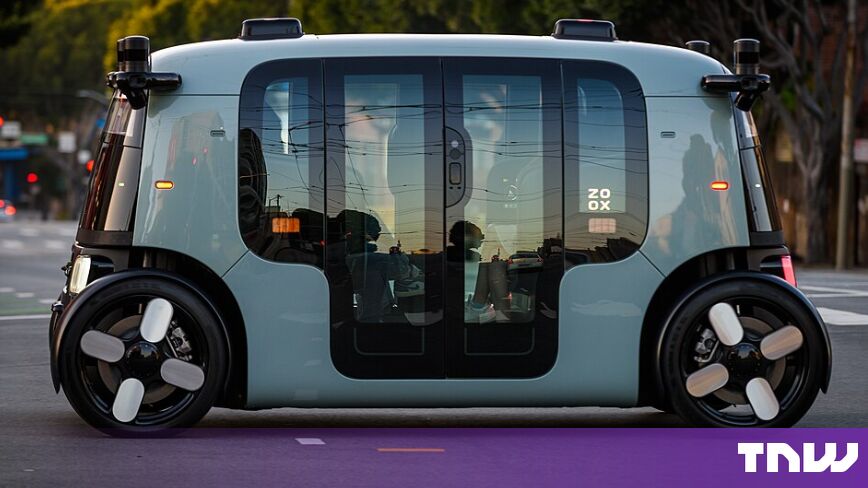
Autonomous vehicle developer Zoox has publicly released the quantitative framework it uses to substantiate claims that its custom robotaxis drive more safely than human motorists. The disclosure, detailed in reporting by The Next Web, arrives less than a month after the Amazon subsidiary was forced to pause operations and recall its entire vehicle fleet following a software failure.
At the center of Zoox’s safety evaluation is a consolidated mathematical metric that measures predicted rates of crashes, injuries, and fatal occurrences expressed in operational miles per event. This statistical estimate combines risk factors across three core pillars: autonomous software code, vehicle hardware systems, and broader fleet support operations.
Zoox utilizes this unified figure as a mandatory deployment threshold. Prior to executing any safety-critical software update, altering hardware configurations, or modifying operating procedures, engineers update the calculations to ensure the revised profile meets or exceeds pre-established internal risk targets.
To define its safety baselines, the company extracts human driving benchmarks from federal databases, including the National Highway Traffic Safety Administration's (NHTSA) crash sampling and fatality reporting programs, alongside two Federal Highway Administration data sets. Zoox filters these figures by speed tier and weights them to match the precise distribution of urban and suburban roadways where its autonomous vehicles operate.
Despite detailing the underlying framework, Zoox has chosen not to publish its specific numerical benchmarks. The company asserts that its target is to perform significantly better than human operators, but it does not clarify what numerical threshold qualifies as significant, nor does it disclose the current real-world safety score achieved by its active fleet.
The technical architecture relies on ISO 26262 functional safety standards, platform integrity ratings, and simulation testing designed to locate scenarios with the highest crash probabilities, which are subsequently weighted by real-world operational exposure. Additionally, Zoox incorporates an isolated safety checker featuring a secondary perception system capable of overriding and vetoing navigation trajectories generated by the primary planner. To account for edge cases where statistical models fall short, the firm maintains a benchmark suite requiring robotaxis to perform at or above the level of an attentive human driver in rare avoidance conditions.
Human oversight is also factored directly into the quantitative model. Remote support workers, termed TeleGuidance tacticians, provide higher-level path adjustments without taking direct control of steering or acceleration. The potential risks associated with technician mistakes or software tool outages are explicitly included in the overarching fleet risk calculation.
The transparency effort comes three weeks after Zoox issued a recall covering all 105 of its purpose-built robotaxis. That action was triggered when a vehicle failed to perceive dense smoke and navigated into an active firefighting area in Las Vegas. The incident represented Zoox's fourth software recall in approximately 13 months and followed regulatory scrutiny over autonomous vehicles impeding emergency responders. Federal records indicate NHTSA had logged 123 crashes involving Zoox vehicles in autonomous mode through March.
Developing a predictive safety model allows Zoox to evaluate risk without relying solely on vast real-world mileage. Zoox has accumulated roughly 3 million autonomous driving miles to date, trailing competitors like Alphabet's Waymo, which surpassed 100 million miles over a year ago. As Zoox scales its paid commercial transport service, the framework serves to validate software updates while the company works to close that operational gap.
Sources
Written by
The Company Wire
Inside the companies building what’s next. Reporting on startups, technology, funding and the people shaping them.