AI Coding Agents Are Disrupting Traditional Code Refactoring Practices
Engineering teams are increasingly skipping structural code rewrites as AI tools easily navigate complex logic that overwhelms human developers.
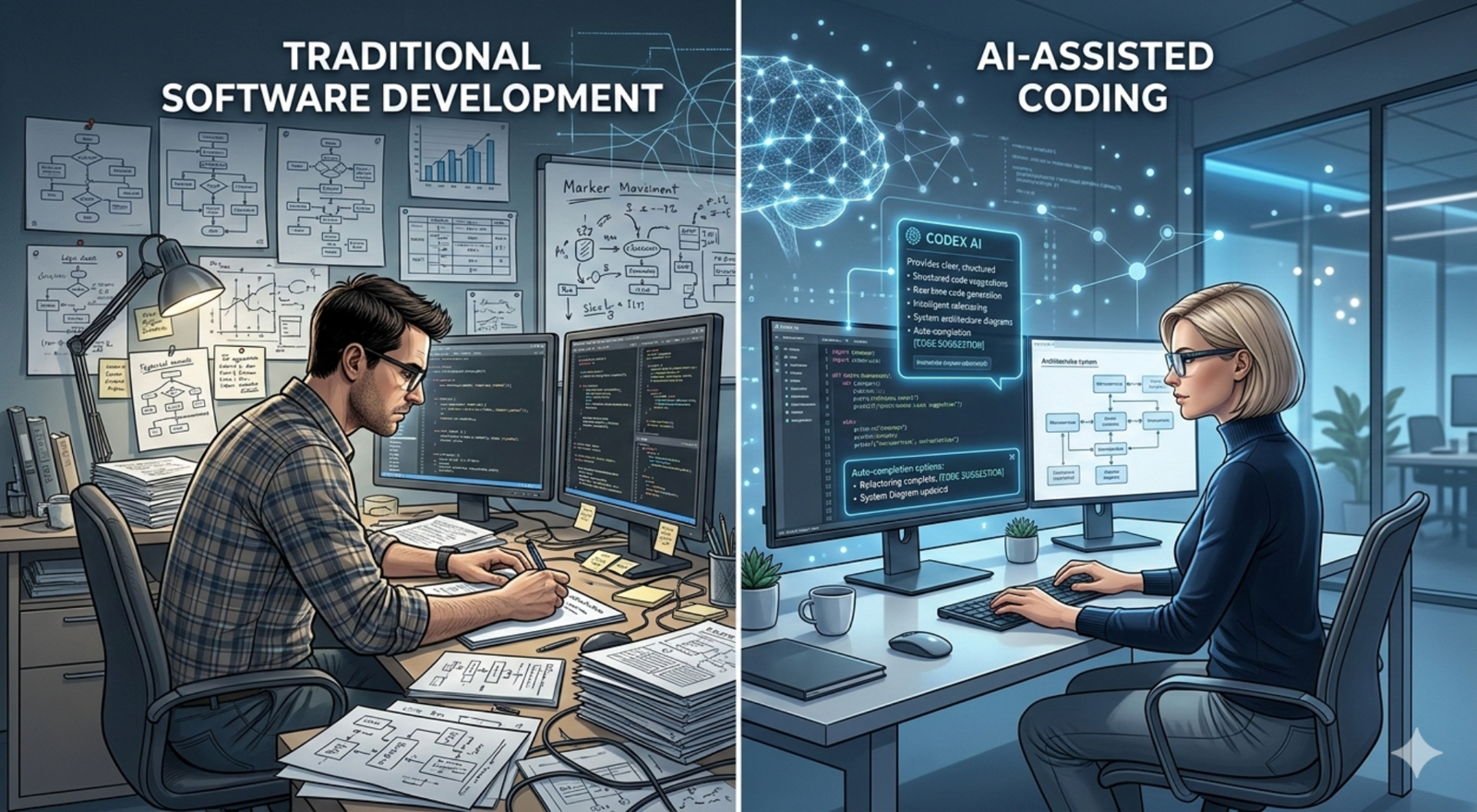
The rapid adoption of artificial intelligence coding agents across software engineering organizations is quietly dismantling a long-standing developer practice: structural code refactoring. According to an industry analysis published on Hacker News, software teams—including experienced senior engineers—are increasingly refraining from rewriting or restructuring the most complex portions of their codebases. While autonomous AI tools excel at reading and writing convoluted software, their ability to navigate messy systems eliminates the natural cognitive friction that historically prompted engineering groups to pause feature development and clean up unmanageable application architectures.
Historically, the decision to refactor software was directly driven by human cognitive limitations rather than aesthetic preferences. Core software engineering principles such as modularity, encapsulation, and clear architectural layering developed as practical concessions to the finite capacity of human working memory. Because human developers cannot retain dozens of interconnected, branching logic paths in their minds simultaneously, traditional software methodologies mandated dividing large applications into distinct, self-contained components that individual programmers could easily comprehend, safely alter, and review during routine maintenance.
Software components rarely begin in a state of disorganization. Typically, code is initially written with clean, transparent structures designed to fulfill simple early specifications. However, as underlying business requirements evolve, developers iteratively introduce new conditional logic, edge-case patches, and special overrides on top of existing exceptions. Over numerous development cycles, the primary rules that originally governed the code become buried, resulting in complex modules that consist almost entirely of edge cases without a clear overarching structural design.
In traditional engineering environments, senior developers relied on an internal feedback loop to initiate essential codebase cleanups. When tracing logic through a complex module during bug fixes, an engineer reaching a state of confusion recognized that the system had drifted beyond manageable bounds. That experience served as a vital operational trigger to halt new feature additions and refactor the code so that present and future team members could safely make changes. Although product roadmaps, project deadlines, and managerial pressure frequently threatened maintenance efforts, the visceral experience of getting lost in a codebase remained the ultimate catalyst for triggering necessary refactoring.
AI coding agents operate without human context limits, fundamentally disrupting this traditional feedback loop. An automated agent can read through dense, highly tangled functions, trace every connected caller, and reliably append new logic into software frameworks that human developers no longer fully understand. While this capability offers short-term productivity benefits, it removes the warning trigger that previously prevented code quality from degrading. Because AI tools do not experience cognitive overload or get lost, they continue layering additional logic branches onto messy codebases without evaluating whether the overall system structure remains sound.
This dynamic creates significant systemic risks for enterprise software organizations over time. As automated agents continuously modify poorly structured systems without performing refactoring, human engineering teams gradually lose the ability to reason about, audit, or modify their own software without using AI models as mandatory intermediaries. Codebases drift beyond human understanding without generating immediate software failures, leaving development teams increasingly reliant on automated tools to execute basic maintenance on applications they built.
In addition to long-term maintainability concerns, neglecting code organization imposes concrete financial and operational costs on AI execution itself. Highly interconnected code forces language models to expand their working context windows, requiring them to parse more files, trace longer dependency chains, and process significantly more tokens for routine code edits. This increased computational overhead directly raises token expenditure and infrastructure expenses for every code change made by the agent.
Furthermore, excessive structural complexity diminishes the accuracy and reliability of AI coding tools. When software logic lacks clear, bounded modules, language models become far more susceptible to hallucinations, misinterpreting conditional branch behaviors or overlooking edge cases buried deep within nested structures. Well-defined, modular code boundaries protect AI precision in the same way they assist human reasoning, reducing error rates and lowering operational costs across the entire software development lifecycle.
To prevent ongoing codebase degradation, technical leaders are advised to deliberately reinstate structural review checkpoints within their modern development workflows. Software engineering teams can implement rules within agent harnesses, system prompts, and automated criteria to direct AI agents to flag oversized functions, identify high branching complexity, and recommend refactoring projects alongside regular feature development. Technical managers emphasize that while AI tools can assist in monitoring system quality, the final responsibility for maintaining clean, understandable software architecture rests with human developers.
Sources
Written by
The Company Wire
Inside the companies building what’s next. Reporting on startups, technology, funding and the people shaping them.



