Five9 Champions 'Humantic' Contact Center Model over Complete AI Automation
Chief Executive Amit Mathradas outlines a hybrid customer experience strategy that pairs artificial intelligence agents with human service representatives.

As enterprise technology providers evaluate the long-term effectiveness of full artificial intelligence automation in customer service, cloud contact center software vendor Five9 Inc. is refocusing its product strategy around a hybrid model designed to combine human workers and digital agents. The company refers to this framework as "Humantic," a concept intended to counter the industry's recent focus on maximizing the proportion of customer interactions resolved entirely without human intervention. Instead of positioning automated tools to replace human staff, Five9 is advocating for an architecture where software agents handle routine operational requests while directing complex or high-priority inquiries to live customer service professionals.
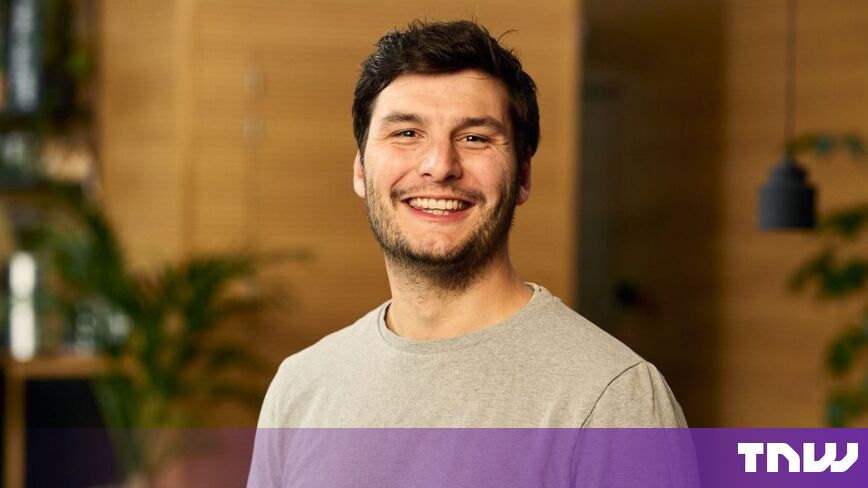
Five9 Chief Executive Officer Amit Mathradas discussed the company's strategic priorities during an interview broadcast on theCUBE, SiliconANGLE Media’s livestreaming studio, at "The AI ROI in Contact Center Summit," as first reported by SiliconANGLE. Speaking with analysts Bob Laliberte of theCUBE Research and Zeus Kerravala of ZK Research, Mathradas emphasized that complete automation was never a realistic destination for the contact center sector, describing current developments as an ongoing market correction. Mathradas joined Five9 as chief executive in February after previously serving as CEO of workflow automation provider Nintex and prior to that as president and chief operating officer at tax compliance software company Avalara.
Addressing industry expectations regarding the trajectory of artificial intelligence, Mathradas noted that total human displacement in customer operations remains a misconception. “We at Five9 have a very strong belief that the future world is what we are calling Humantic,” Mathradas said during the broadcast. “Humantic is the combination of humans and agentic sitting in your contact center. I think there is a misconception that all humans are going away in the contact center. That is not true.”
To determine how customer calls should be processed, Five9 categorizes inbound requests across three primary parameters: complexity, business value, and emotional vulnerability. High-volume, low-risk requests—such as basic balance checks or password resets—are delegated to automated agents. In contrast, scenarios that involve an enterprise's highest-value clients, delicate circumstances like navigating a death in the family, or intricate discussions surrounding complex financial options warrant direct access to a human representative capable of providing tailored assistance and empathy.
The push for a balanced service deployment comes as market data indicates a growing divergence between how enterprise executives and consumers view the quality of AI-driven contact centers. According to research cited by Mathradas, 99 percent of business practitioners who have deployed artificial intelligence report that their contact center operations and overall serviceability have improved. However, only 66 percent of end users share that positive assessment. Among dissatisfied consumers, more than 50 percent cited an inability to reach a human representative as the primary reason for their negative experience.
To accommodate organizations seeking to bridge this disconnect, Five9 has adopted an open platform strategy rather than forcing enterprises onto a single proprietary software stack. The company recently expanded its ecosystem by opening its AI Agent Connect initiative to third-party voice artificial intelligence software vendors. The approach is currently being utilized by moving and storage company PODS, which is on pace to process more than 100,000 calls through Five9’s Voice AI Agents by the end of the year. PODS reported achieving a 44 percent call containment rate through the implementation, surpassing the company's initial performance targets.
Looking forward, Mathradas highlighted system integration and workflow orchestration as the critical priorities for enterprise software architectures. “The next big thing is around how these systems of record all work together to enable the next shift that is coming,” Mathradas said. “Orchestration is the next big layer that a lot of customers should be thinking about, and companies like us are thinking about, in terms of where it needs to go.” By establishing an orchestration layer across disparate customer databases and AI agents, Five9 aims to support enterprise environments where automated and human-led customer touchpoints function cohesively.
Sources
Written by
The Company Wire
Inside the companies building what’s next. Reporting on startups, technology, funding and the people shaping them.