Meta Launches Autonomous AI Assistant 'Muse' in Bid to Close Gap With Industry Rivals
Powered by the new Muse Spark model, the personal assistant handles online tasks, browsing, and purchases within isolated cloud environments.

Meta Platforms is launching a new autonomous virtual assistant named Muse, marking the company’s latest attempt to establish a stronghold in the consumer artificial intelligence market. The announcement follows a multi-billion dollar strategic realignment aimed at reversing recent product setbacks and mounting a stronger challenge to sector leaders including OpenAI, Anthropic, and Google. Designed to execute everyday consumer tasks ranging from email drafting to trip planning, the agent represents Meta's core push to deliver practical AI functionality to non-technical users.
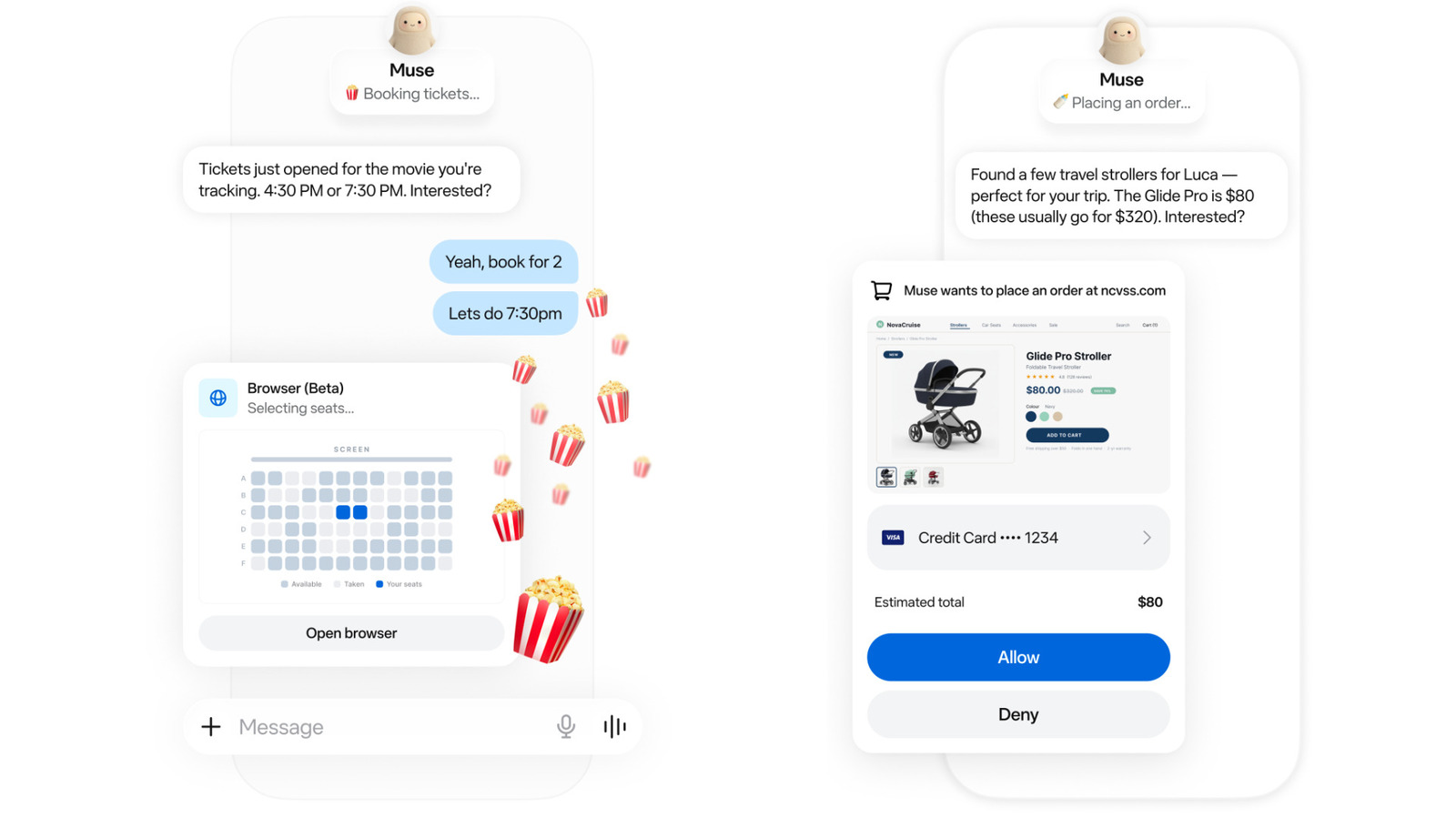
Driven by Meta's proprietary underlying model, Muse Spark, the assistant operates with a notable degree of autonomy. According to company specifications, once a user assigns an objective, Muse can independently navigate web browsers, complete online forms, and handle digital negotiations. For multi-step or time-intensive assignments, the software continues to execute tasks in the background after the primary application is closed, prompting users for explicit permission only when necessary—such as approving financial transactions or confirming final choices.
The software is making its initial debut in the United States across iOS, Android, and the dedicated web portal muse.ai, with integrations for smart glasses slated to launch in the near future. Meta plans to offer the base version of Muse free of charge to general users, alongside paid subscription tiers intended for individuals who require higher operational thresholds. However, the company has not yet disclosed pricing structures, feature differences, or precise usage boundaries for the free and paid tiers.
"Muse is a first step: an agent that takes on more of the work so people can focus on what matters to them," Meta stated regarding the release. While the company is positioning the system as the premier personal AI assistant built for general consumers, the software enters a crowded market populated by comparable digital assistants. Competitors have largely focused on enterprise and developer demographics, offering tools such as OpenAI's ChatGPT Work, Anthropic's Claude Cowork, Microsoft's Copilot Tasks, SpaceXAI's Grok Bot, the open-source Moltbot, and Google's consumer-focused Gemini Spark assistant.
To differentiate Muse from existing options, Meta is highlighting user accessibility and deep messaging integration. Users can interact with the assistant directly through a standalone mobile app or via WhatsApp, eliminating complex setup procedures or technical prompting guidelines. The agent is built to retain information disclosed during conversations—even from isolated references—allowing it to provide tailored, unprompted recommendations over time based on user preferences and past interactions.
Addressing widespread industry concerns regarding privacy and credential safety, Meta has structured Muse to run inside isolated cloud-based virtual environments designed to keep user data strictly segregated. The core agent is blocked from viewing sensitive credentials, such as saved passwords or raw payment details. To further mitigate security risks, Meta deployed a secondary internal monitor called Sentinel, an AI agent tasked with auditing the virtual machine's output and preventing unapproved data transmissions to the broader internet.
Meta also noted that users can opt out of allowing their interaction data to be harvested for downstream AI model training, while also offering commands to instruct Muse to purge specific remembered facts. The company plans to release an upgraded "confidential" virtual machine environment later this year, utilizing end-to-end encryption so that even Meta employees cannot inspect the processing environment. On the payments front, Muse currently supports checkout through Stripe's Link framework, with upcoming integrations planned for 1Password and Shop Pay.
The aggressive push into consumer agents comes as Meta seeks to overcome a series of previous AI deployment challenges, as noted in reporting from The Verge. Previous initiatives suffered public setbacks, including a "Discover" showcase that inadvertently exposed private user prompts and generated images, an automated support bot exploited to compromise over 20,000 Instagram profiles, and a short-lived automated news feature that ran afoul of internal content policies. The company is now placing Muse at the center of its consumer software ecosystem, attempting to leverage its massive social media distribution network to capture market share despite persistent trust hurdles stemming from historical privacy controversies.
Sources
Written by
The Company Wire
Inside the companies building what’s next. Reporting on startups, technology, funding and the people shaping them.