Cost Pressures and Runtime Governance Drive Enterprise AI Toward On-Premises and Edge Compute
As proof-of-concept trials transition to production, technology leaders face soaring token expenses and governance hurdles that favor local hardware and runtime agent monitoring.
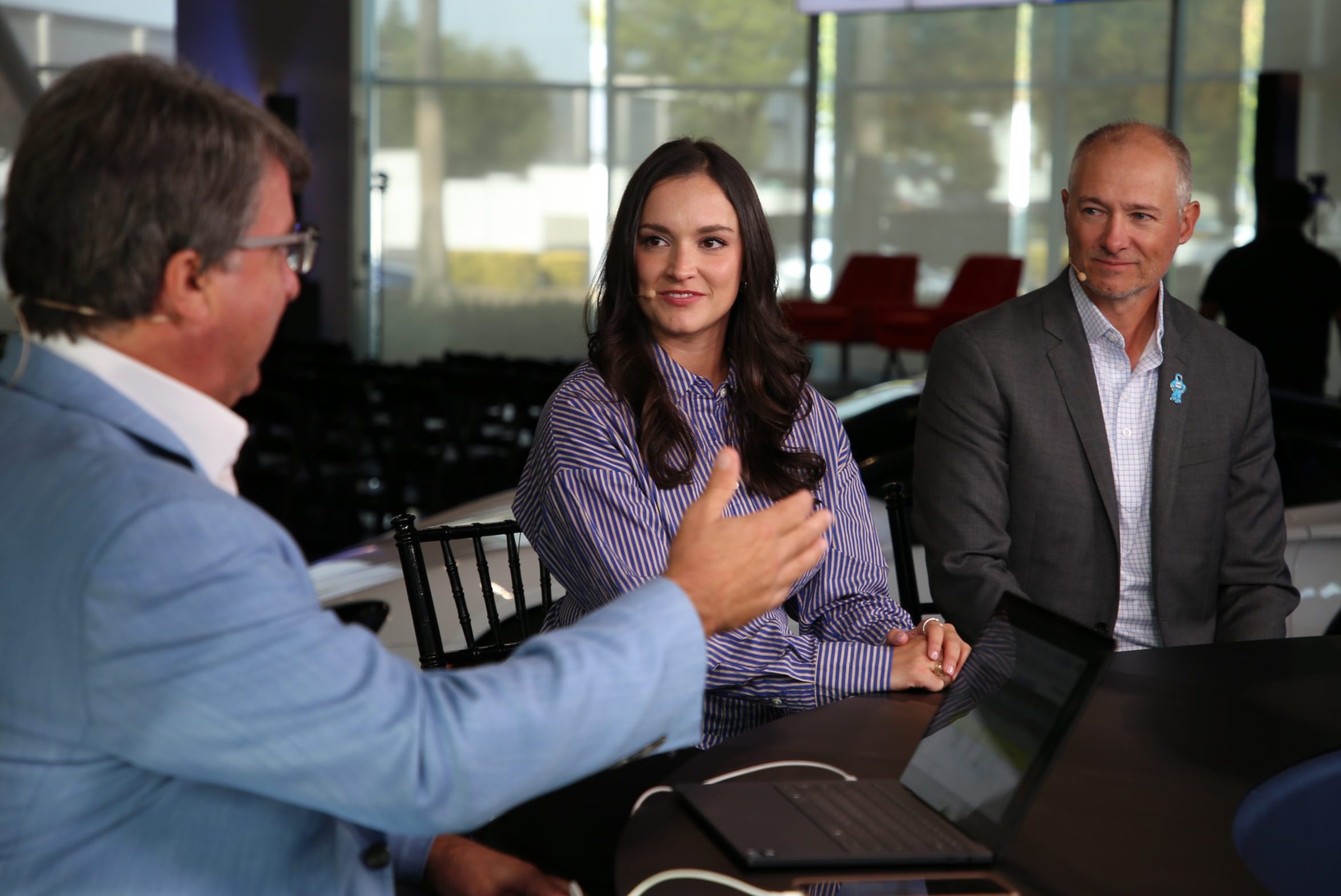
As corporate technology departments transition artificial intelligence initiatives from experimental proof-of-concept trials to production systems, organizational priorities are pivoting away from foundational model parameters toward underlying infrastructure, data sovereignty, and operational costs. Discussions at the Dell Technologies AI Leadership Symposium in San Jose highlighted how escalating API token bills and the governance requirements of autonomous software agents are prompting enterprises to reconsider cloud-centric strategies, according to reporting by SiliconANGLE (https://siliconangle.com/2026/09/29/enterprise-ai-deployment-strategy-shaped-cost-control-dellaileadershipsymposium/).
The central friction in this deployment phase centers on governance and execution environments rather than adoption decisions. John Furrier, executive analyst at theCUBE Research, observed during the symposium that enterprise buy-in for AI is established. Corporate leadership teams are no longer debating whether to adopt AI, Furrier noted, but are instead focused on determining who controls the systems, where workloads execute, and under whose legal framework they operate.
To support these shifting infrastructural requirements, hardware vendors are adapting deployment timelines and expanding partner ecosystems. Sean O'Connor, regional manager of ENT West, large enterprise and acquisition at Dell Technologies Inc., stated that established semiconductor partnerships allow Dell to roll out 350 server racks within two weeks. Dell is also expanding its ecosystem reach into venture capital networks to support organizations taking AI proofs of concept into production.
Edge deployment and localized compute topologies are also gaining traction among voice and speech model providers. Deepgram Inc. trains its speech-to-text, text-to-speech, and voice agent models on Dell infrastructure, and a substantial share of its enterprise customers host those models themselves. Nick Mann, staff technical program manager at Deepgram, explained that the next phase involves running voice models natively and air-gapped on AI-enabled laptops to bring processing directly to end users.
Simultaneously, the deployment of always-on autonomous AI agents is shifting corporate security requirements toward continuous monitoring. Enterprises increasingly require autonomous agents to operate within their own virtual private clouds, moving governance from static rule sets to runtime behavioral tracking. Startup founders—including Victor Jakubiuk, co-founder of MisaLabs Inc.; Shiv Agarwal, co-founder and CEO of Singulr AI Inc.; and Sri Viswanath, founder and CEO of Sycamore Labs Inc.—emphasized the necessity of runtime oversight. Sycamore Labs is currently raising funding to build governance layers specifically for AI agents.
Escalating token costs are further prompting organizations to test workloads on-premises and re-evaluate traditional central processing units for agentic workloads. Enterprise customers exhausting monthly token budgets within weeks are bringing workloads in-house. Helen O'Sullivan, AI business development manager and solutions specialist at Dell, and Tim Wood, sales director for the Northwest region at Intel Corp., emphasized that keeping data and models colocated—including on AI PCs—curbs expenses while returning the CPU to a central operational role in agentic AI deployments.
Sources
Written by
The Company Wire
Inside the companies building what’s next. Reporting on startups, technology, funding and the people shaping them.