HYFIX Raises $15 Million for a U.S.-Made Control Chip for Autonomous Machines
The Santa Clara startup is combining navigation, communications and computing functions in silicon intended for drones and robots.
SANTA CLARA, Calif. - HYFIX has raised $15 million in seed financing to develop a U.S.-made semiconductor platform for drones, robots and other autonomous systems. The investment round was led by Craft Ventures, with participation from Catapult Ventures, Multicoin Capital, Finality Capital and prominent technology entrepreneur Sky Dayton. This capital infusion arrives at a pivotal moment for the domestic robotics industry, which is increasingly seeking to untangle its hardware dependencies from global supply chains that have faced recent geopolitical and logistical volatility.
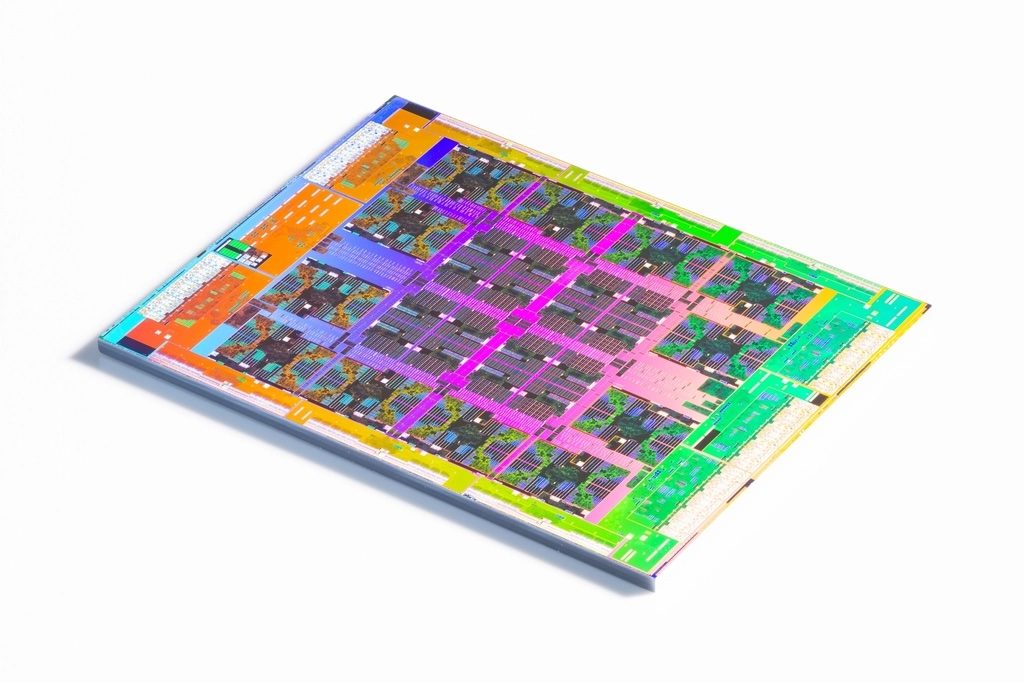
The Santa Clara-based company is designing a specialized chip architecture that aims to consolidate several critical functions typically handled by a disparate array of discrete components. By bringing together flight control, precise positioning and navigation, secure communications and onboard computing into a single platform, HYFIX intends to streamline the internal architecture of autonomous machines. This consolidation is not merely a matter of convenience; it represents a fundamental shift in how hardware designers approach the electronic 'brain' of a mobile autonomous unit.
From a performance standpoint, integrating these tasks onto a singular silicon footprint could significantly reduce the physical size and power consumption of an autonomous vehicle's electronics. In the world of small unmanned aerial vehicles and mobile ground robots, every gram of weight and every milliwatt of power saved can be reinvested into longer flight times or increased sensor payloads. By reducing the integration burden, HYFIX hopes to lower the barrier for hardware developers who previously had to stitch together components from multiple vendors to achieve basic functionality.
HYFIX is strategically positioning its product around the themes of domestic supply and system security. This focus aligns with a broader trend where government and commercial buyers are reconsidering the origins of their critical components. As policy discussions around the security of autonomous systems intensify, there is a growing appetite for components that are designed and manufactured within the United States. Such domestic sourcing provides a level of transparency and supply-chain continuity that is becoming a requirement for sensitive applications in infrastructure, logistics and defense.
The technical ambition of the company is to provide a tightly integrated chip that allows developers to build a repeatable hardware stack across different types of vehicles. While this modularity could accelerate time-to-market for new drone and robot models, the company acknowledges that its chip is one part of a larger ecosystem. Future customers will still require software, sensors, motors and specialized communications equipment tailored to each specific mission, meaning HYFIX must ensure its silicon maintains high interoperability with third-party peripherals.
The semiconductor sector is notoriously difficult for early-stage companies due to long development cycles and the immense capital required for validation and manufacturing. Unlike software-as-a-service startups that can iterate in real-time, hardware companies must contend with the rigid timelines of silicon fabrication. HYFIX enters this space knowing that the margin for error is slim, particularly when the end applications involve moving machinery that must operate reliably in the physical world.
A chip designed for autonomous systems faces environmental challenges that standard consumer electronics do not. HYFIX’s platform must be engineered to perform under constant vibration, extreme temperature fluctuations and frequently unreliable connectivity. For customers in safety-sensitive industries, the primary metric of success is predictable performance. Any failure in the navigation or control chip could lead to catastrophic asset loss, making the validation process a critical hurdle for the startup to clear before achieving mass-market adoption.
Beyond technical hurdles, the company faces the challenge of disrupting established procurement habits. Encouraging manufacturers to redesign their existing hardware around a young and relatively unproven supplier is a significant sales task. This process is inherently slower than selling stand-alone software, as it requires physical engineering changes and long-term commitments to a specific hardware architecture. HYFIX will need to prove that the long-term gains in efficiency and supply-chain security outweigh the immediate costs of a platform migration.
The venture capital community’s interest in HYFIX reflects a growing belief that the next generation of computing will happen at the edge, in moving parts rather than stationary servers. Analysts have noted that as drones and robots move from experimental novelties to essential industrial tools, the underlying silicon must evolve to be as specialized as the chips found in modern smartphones or electric vehicles. This seed round provides the runway necessary for HYFIX to move from prototypes to production-level silicon.
The newly secured funding is earmarked for engineering, product development and the initiation of early customer programs. By engaging with lead customers early in the design cycle, HYFIX can refine its feature set to meet the specific demands of the robotics market. These early partnerships will be vital in proving that the chip can handle the complex real-world data processing involved in autonomous navigation without compromising on speed or security.
The broader market context reveals an opening for specialized silicon, particularly as the demand for robotics scales across agriculture, delivery and industrial inspection. As these industries mature, the 'DIY' approach to electronics is becoming less viable. Buyers are increasingly valuing supply-chain control and the reliability that comes with integrated, purpose-built hardware. HYFIX’s long-term opportunity lies in its potential to become a common computing layer across many diverse machine types, a 'standard' for autonomous mobility.
As HYFIX progresses, the industry will be watching its ability to deliver production-ready hardware that lives up to the reliability and cost claims underpinning its vision. The success of the venture will likely hinge on whether its integrated approach can truly out-compete the status quo of modular, multi-chip designs. For now, the $15 million seed round serves as a vote of confidence in the necessity of a domestic, secure and highly efficient silicon foundation for the future of autonomous systems.
The involvement of Sky Dayton and established venture firms suggests that the market sees a vacuum in the domestic semiconductor landscape for specialized robotics. If HYFIX can successfully navigate the transition from design to high-volume manufacturing, it could serve as a central pillar for a new generation of U.S.-made autonomous technology. The next eighteen to twenty-four months will be a critical test of the startup's ability to execute on its complex roadmap.
Ultimately, the goal for HYFIX is to simplify the complex. By condensing navigation, communication and computing into a single piece of silicon, they are betting that the future of autonomy is not just about smarter software, but about more integrated and efficient hardware. As the company expands its engineering team in Santa Clara, the focus remains on transforming the theoretical benefits of their architecture into a tangible, marketplace-ready product that can withstand the rigors of autonomous operations.
Sources
Written by
The Company Wire
Inside the companies building what’s next. Reporting on startups, technology, funding and the people shaping them.