Huawei Debuts 798-Gram MateBook Pro S Powered by Custom Kirin XE90 Silicon
The ultra-thin notebook features HarmonyOS 6.1, a 3.1K OLED display, and advanced alloy construction for the Chinese market.
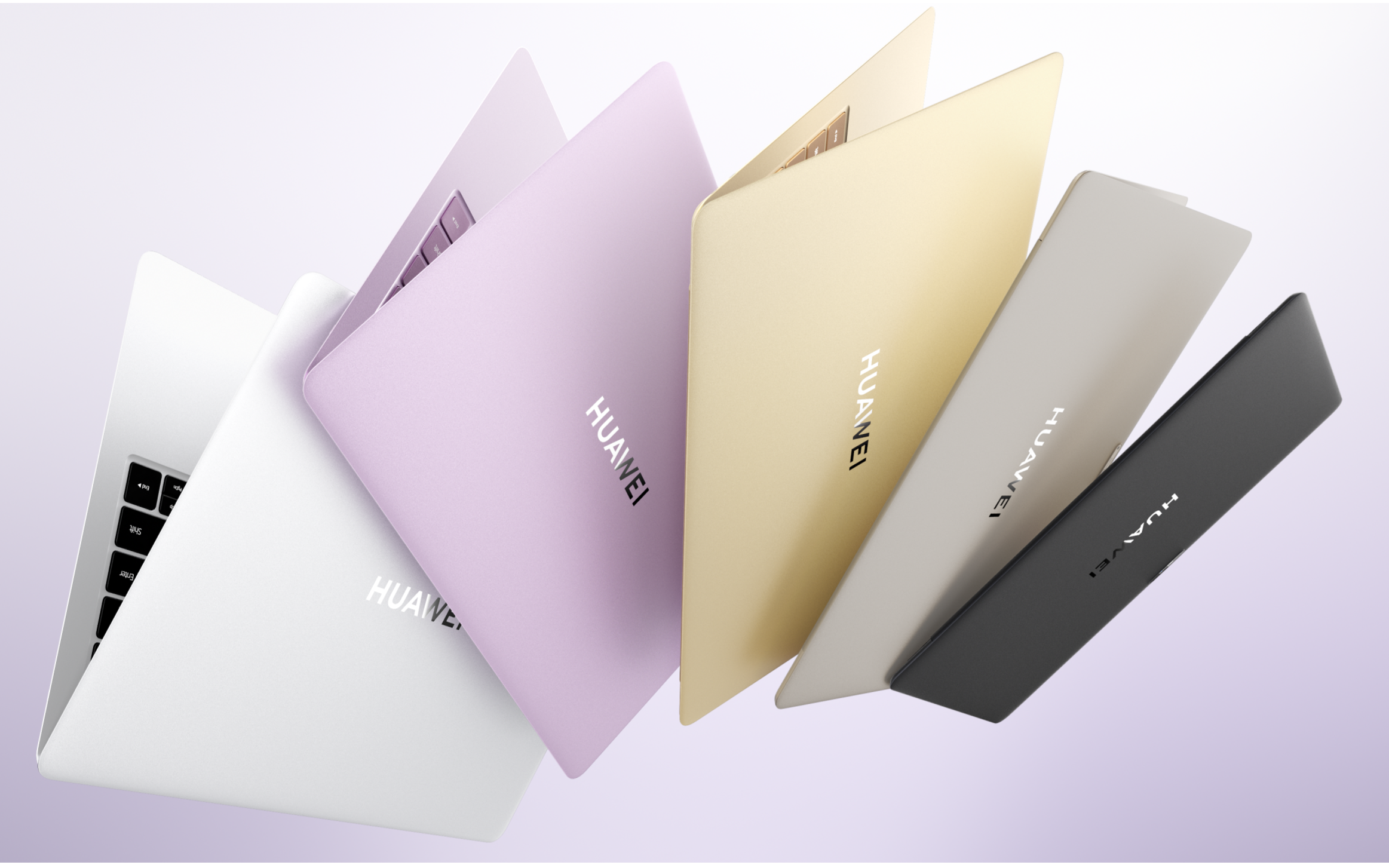
Huawei has released the MateBook Pro S in China, introducing an ultra-lightweight 14.2-inch notebook powered by its proprietary Kirin XE90 processor and HarmonyOS 6.1 operating system rather than Windows, according to reporting by TechRadar Pro.
The device debuted in its home market on Aug. 14 with a starting price of 7,999 yuan, equivalent to roughly $1,200. While Huawei has not outlined any official rollout plans for Western markets, international consumers can access the hardware through third-party global exporters operating at a markup over official retail pricing.
Measuring 11.9 millimeters at its thickest edge in base configurations, the standard and privacy iterations of the laptop tip the scales at 798 grams. Huawei achieves the reduced mass through a chassis constructed from a magnesium-lithium alloy base alongside magnesium-aluminum top and keyboard decks. Internal weight reductions stem from a three-section motherboard architecture, a compact dual-fan cooling module featuring Shark Fin blades, and a high-silicon-anode battery cell.
The lineup extends across four distinct configurations, resulting in varying physical profiles across the family. Beyond the 798-gram Standard and Privacy editions, the Soft Light model weighs 805 grams, while the flagship Collector's Edition expands to 825 grams with a maximum profile depth of 12.2 millimeters.
At the center of the hardware package is a 14.2-inch flexible OLED touchscreen displaying a 3.1K resolution alongside a 120Hz refresh rate. The display panel achieves 1,000 nits of sustained full-screen luminance and reaches a maximum peak brightness output of 1,600 nits.
Underneath the display, the notebook features the custom-built Kirin XE90 silicon. Huawei claims the chipset generates 23 percent higher single-core computing performance, 25 percent greater power efficiency, and a 40 percent boost in neural processing unit throughput compared to the baseline Kirin X90. The onboard thermal management framework supports a continuous power envelope of up to 20 watts.
Despite domestic media coverage in China suggesting the processor utilizes a 5-nanometer manufacturing process, technical teardowns suggest otherwise. Physical chip analysis performed by TechInsights on the Kirin X90 within Huawei's MateBook Fold revealed the use of Semiconductor Manufacturing International Corp.'s (SMIC) 7-nanometer N+2 node. The Kirin XE90 appears to represent an architectural iteration of that same design rather than a transition to a smaller process node.
Additional specifications for the laptop include an estimated 18 hours of video playback time per charge and a six-microphone array designed to record clear voice input from distances of up to 10 meters. For wireless networking, Huawei claims the MateBook Pro S supports WiFi 7+ connectivity capable of maintaining stable transmissions at distances reaching 1,000 meters in unobstructed environments.
Sources
Written by
The Company Wire
Inside the companies building what’s next. Reporting on startups, technology, funding and the people shaping them.


